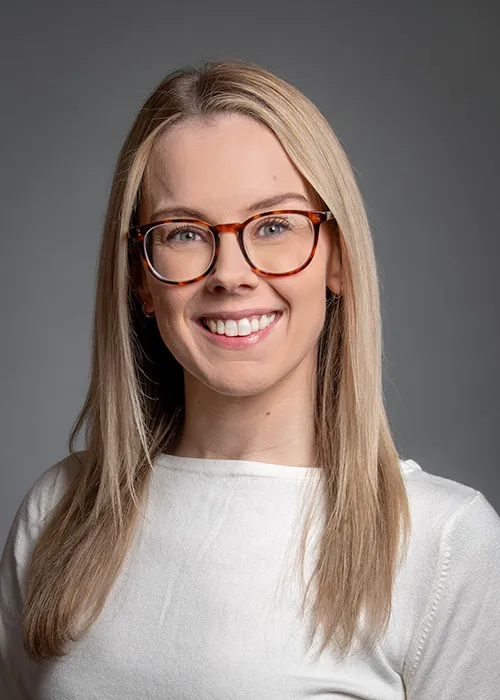
On a cold morning in Kansas City’s Historic Northeast neighborhood, a massive RV equipped with medical machinery sits beside the Hope Faith Homeless Assistance Campus. Inside, nurses treat patients like Keith Hardin, a 67-year-old who has been without a home since November 2023. He’s dealing with high blood pressure and chest pains that feel like a heart attack. He’s watched three unhoused people die—one from a heart attack just down the street.
Hardin keeps coming back to this mobile unit for one reason: nurse practitioner Rachel Melson.
For ten years, Melson has directed Swope Health’s Outreach Clinic, bringing care to people who can’t or won’t visit a traditional clinic. The mobile unit travels to shelters, halfway houses, and recovery spaces. In 2025 alone, medical providers saw more than 2,600 patients through mobile outreach, more than half the total from the previous five years combined.
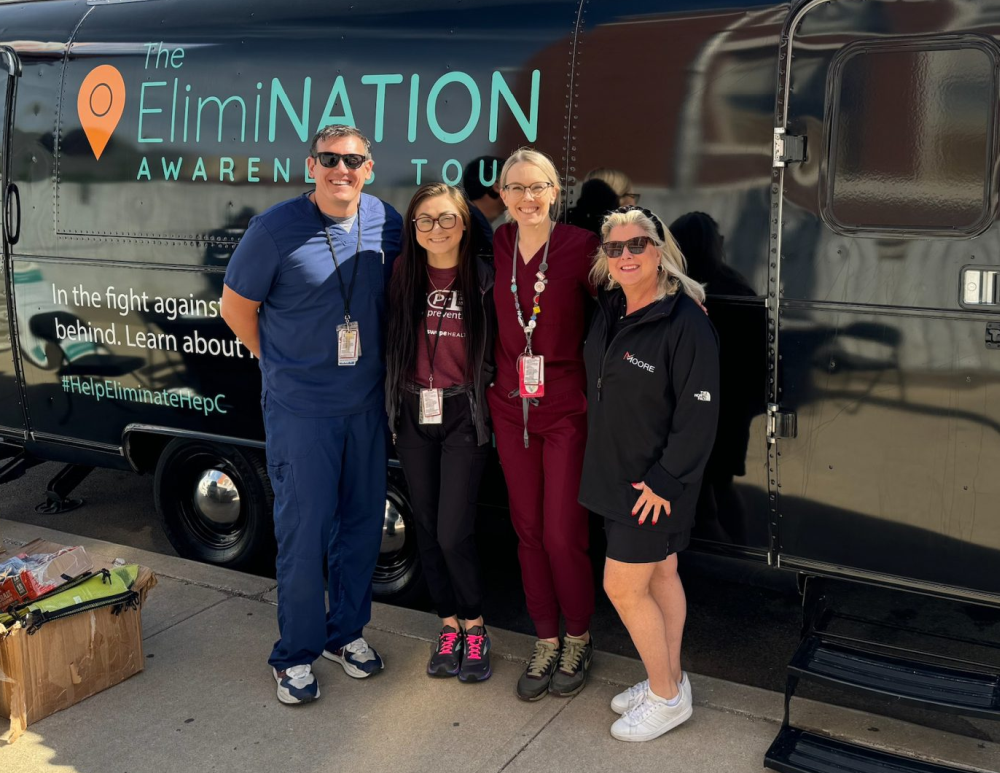
Swope Health has operated its Healthcare for the Homeless program since 1987, adding the mobile medical unit in the early 2000s. The unit visits partners across the Kansas City metro—including the Salvation Army, Hope Faith, City Union Mission, and Heartland Center for Behavioral Change—at least twice a week, with plans to expand to three or four days. Each visit brings a team of four: a driver, a caseworker, a medical assistant, and a provider. Every patient receives a standardized evaluation including vital signs, medical history, and point-of-care screenings for hepatitis C, HIV, and diabetes.
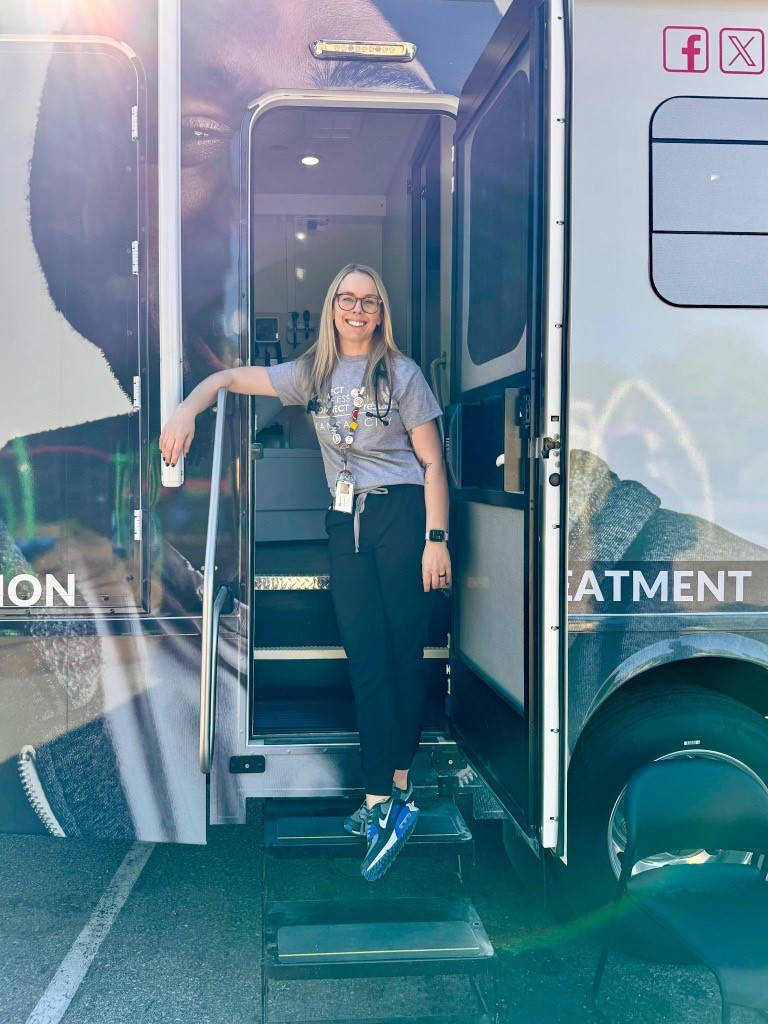
Melson, who joined Swope Health in 2015, sees the mobile unit as a way to break down the final barrier to care: transportation. Consistency matters too. As she has noted, people experiencing homelessness often lack consistency in their lives, so showing up when and where they expect builds trust.
Melson attributes the program’s broader growth to its human-centered approach. She gets to know patients as people, shares meals with them, and recognizes barriers that other providers miss. Many unhoused individuals avoid clinics because they feel judged or ashamed. When patients regain a sense of dignity, she has found, they’re more likely to take their medicine, keep appointments, and commit to their health.
The numbers bear this out. Under her leadership, HIV testing increased 46 percent, PrEP access rose 127 percent, and more than 700 patients have been cured of hepatitis C through a low-barrier treatment program she built herself when specialty care proved inaccessible. Her clinics have no insurance requirements, no sobriety prerequisites, and no judgment, ensuring access for patients often excluded from traditional systems.
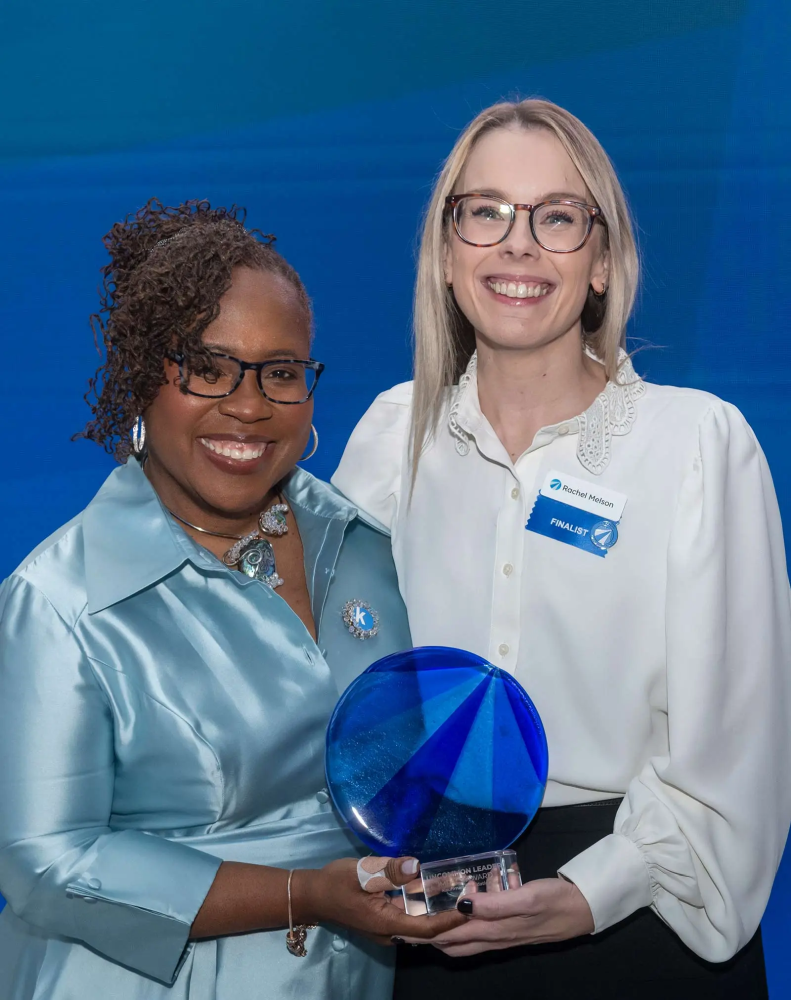
In December 2025, the Kauffman Foundation honored Melson with its inaugural Uncommon Leader Award, selecting her from five finalists. The prize carries $50,000 for her personally and $100,000 for Swope Health Services. Foundation President and CEO DeAngela Burns-Wallace praised her equity-centered leadership, noting that her model meets people with dignity, compassion, and excellence exactly where they are.
At the ceremony, Melson broke into tears mid-speech, describing what happens when people receive care with humanity: they heal, reconnect with family, stabilize in recovery, and begin to imagine futures they once believed impossible.
This summary is based on the following articles:
- A Kansas City nurse is honored for providing unhoused residents greater access to health care, by Brandon Azim for KCUR, Kansas City NPR
- Healthcare on Wheels: Our Mobile Medical Unit’s Journey, from Swope Health
- Hepatitis Awareness Month: Educate yourself today, from Swope Health
- Dr. Rachel Melson, NP bio, from the Kauffman Foundation
Listen to the KCUR story:
Related Articles
A Legacy of Health Equity: Agnes Binagwaho Receives Cameron Award
The Cameron Award, from the RCSI School for Population Health, honors Professor Agnes Binagwaho for her transformative work rebuilding Rwanda’s health system and advancing equitable healthcare access in resource-limited settings worldwide.
Dr. Lloyd Williams: A Humble Visionary in Global Ophthalmology
Dr. Lloyd B. Williams, recipient of the 2025 American Academy of Ophthalmology Outstanding Humanitarian Service Award, and long-time volunteer with Cure Blindness Project, embodies selflessness and dedication in his mission to restore sight worldwide.
Steadfast Care Amid Sudan’s Devastation: Dr. Jamal Eltaeb Receives Aurora Prize
Dr. Jamal Eltaeb has been awarded the 2025 Aurora Prize for Awakening Humanity for keeping Al Nao Hospital operating as one of the last functioning facilities in greater Khartoum despite bombardment, shortages, and Sudan’s collapsing health system.