
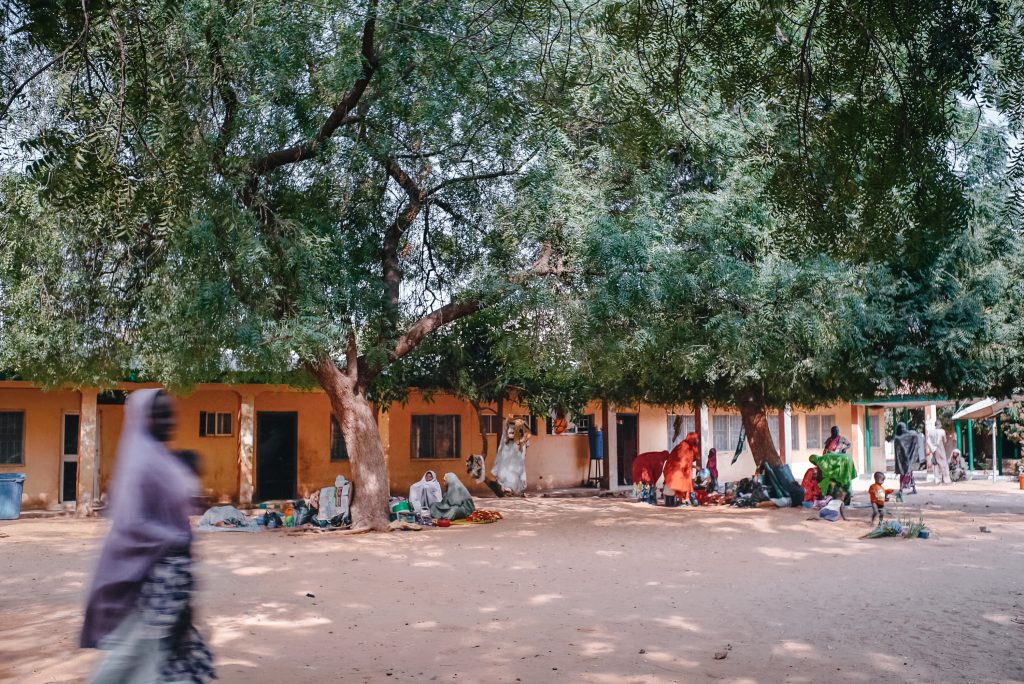
Noma has been quietly devastating children for centuries. The disease, a rapidly progressing bacterial infection that begins as gingivitis and can destroy facial tissue within days, kills up to 90 percent of those it infects if untreated, and leaves survivors with severe disfigurement requiring years of reconstructive surgery.
Noma primarily strikes children younger than seven living in extreme poverty in sub-Saharan Africa and parts of Asia. The World Health Organization estimates 140,000 children are infected annually, though that figure is from 1994. The disease is so neglected that no one has updated it.
That neglect may finally be lifting, with the discovery of previously unknown bacteria. In a recent study, researchers at the Liverpool School of Tropical Medicine, working with partners at the University of Liverpool, Médecins Sans Frontières, and Sokoto’s Noma Children’s Hospital, used metagenomic sequencing and machine learning to analyze saliva samples from children with acute noma.
What is metagenomic sequencing?
Metagenomic sequencing identifies all the genetic material present in a sample at once, allowing researchers to identify every microorganism in a community without having to culture them individually. This makes it possible to detect organisms that would otherwise go unnoticed.
The team identified a previously undescribed species of Treponema bacteria strongly linked to the disease. It is the first time a consistent microbial signature has been established.
What are treponemes?
Treponemes are spiral-shaped bacteria belonging to the genus Treponema. Several species cause serious human diseases, most notably T. pallidum, which causes syphilis. Other treponeme-caused diseases include yaws (tropical regions of Africa, Asia, and the Pacific), bejel (arid regions of Africa and the Middle East), and pinta (parts of Latin America). They thrive in low-oxygen environments like the mouth and gut, and are notoriously difficult to culture in a laboratory, which is one reason metagenomic sequencing has been so valuable in studying them. The species identified in the noma study had not been previously identified.
Crucially, the bacteria appeared in early-stage samples, before the catastrophic tissue destruction that makes treatment so difficult. The bacteria also showed no known antibiotic resistance genes, suggesting they could be effectively targeted with existing drugs if caught in time. The study also found that noma severely disrupts the oral microbiome overall, offering additional clues about how the disease progresses. The findings open a path to diagnostic tools capable of detecting noma at its earliest and most treatable stages.
The disease was added to the WHO’s official list of neglected tropical diseases only in December 2023, after years of advocacy by survivors and their supporters. Despite that recognition, practical resources remain scarce.
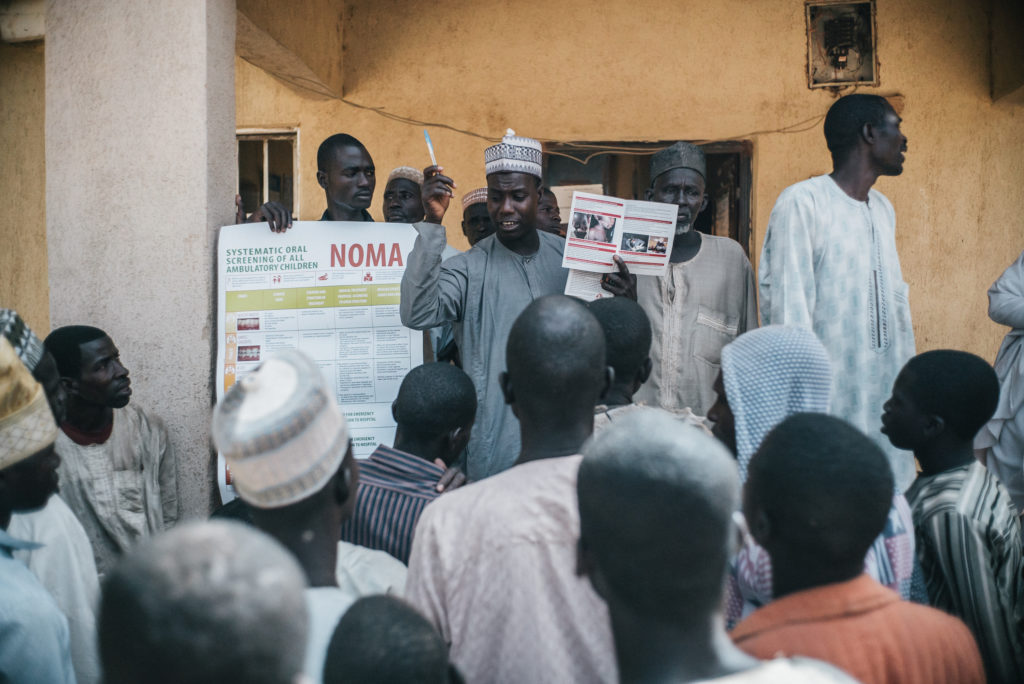
One of the few centers treating noma patients is the Sokoto Noma Hospital in northwestern Nigeria, thought to be the only hospital in the world dedicated specifically to noma. Founded in 1999, it operates in collaboration with the Nigerian Ministry of Health and, since 2014, with support from Médecins Sans Frontières. The hospital provides free care including acute treatment, nutritional support, mental health services, and reconstructive surgery performed by visiting teams of plastic and maxillofacial surgeons who travel to Sokoto four times a year.
MSF outreach workers visit villages across Sokoto, Kebbi, and Zamfara states daily, educating communities about noma’s early signs and promoting oral hygiene and nutrition. Early identification is critical: at the acute stage, basic antibiotics and wound care can resolve the infection within weeks.
A documentary film, Restoring Dignity, directed by Claire Jeantet and Fabrice Catérini and produced in collaboration with MSF, follows noma survivors across Nigeria. It has screened at festivals across Africa, Europe, and the United States.
Noma is preventable, treatable in its early stages, and, with the Liverpool team’s new findings, potentially detectable before the damage becomes irreversible.
This summary is based on the following articles:
- World-first discovery of noma-linked bacteria opens path to early diagnosis and prevention, from LSTM News
- Four diseases you’ve probably never heard of, from MSF
- What is Noma, from MSF
- Sokoto Noma Hospital, from MSF
Related Articles
Celebrating World NTD Day 2025: Honoring Medical Humanitarians and the Fight Against Neglected Tropical Diseases
On World NTD Day 2025, we celebrate the medical humanitarians fighting to eliminate Neglected Tropical Diseases. Their efforts bring hope to millions, offering treatment, prevention, and a path toward a healthier future. Together, we can unite, act, and eliminate NTDs for good.

African Scientist Champions New Era of Equitable Medical Research
Dr. Monique Wasunna, a pioneering African medical researcher, has transformed neglected disease treatment through DNDi, championing locally-led research while fighting against colonial-era medical research legacies.

The Team Hunting for Chagas Disease in the U.S.
Follow Dr. Norm Beatty and his team at the University of South Florida as they track down the “kissing bug” that transmits Chagas disease, an often silent neglected tropical disease now found in the U.S.