
In Dakoro, Niger, a simple bracelet is changing the way malnutrition is addressed. Trained to measure their children’s arms themselves, mothers can spot the first warning signs earlier.
First published May 21, 2026 by ALIMA
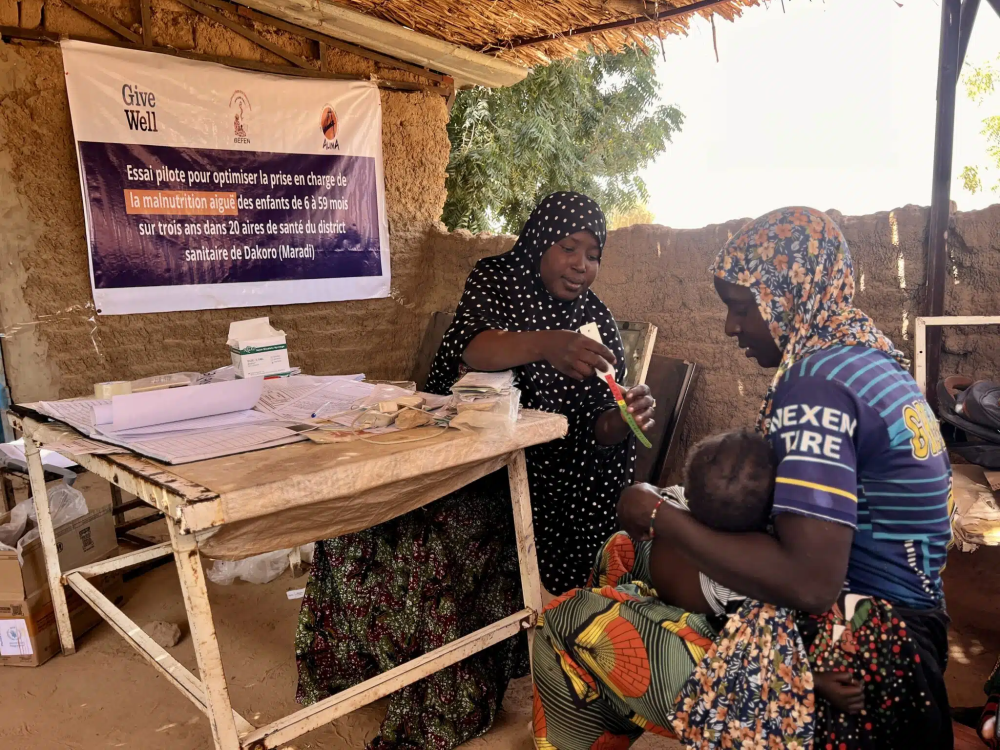
Under the shelter of the Amadou Korandachi Integrated Health Center, known as the AKD health center, in Dakoro health district, a mother gently holds out her child’s arm to a health worker. Just a few days earlier, at home, she had done the same thing herself using a mid-upper arm circumference (MUAC) bracelet. The bracelet’s color had changed from green to yellow. She acted immediately.
Today, her child is already receiving care.
Scenes like this are becoming increasingly common across the district and reflect a major shift: children suffering from malnutrition are reaching health facilities earlier. And that is making a significant difference.
When children arrived too late
For a long time, in the Dakoro health district, children were often admitted at an advanced stage of illness, sometimes already facing complications requiring hospitalization.
“Before, children often arrived late, already in severe condition,” explains Dr. Higuène Kassongo, the district’s referral physician.
This delayed arrival makes treatment more difficult and increases the risks for children.
Simplifying screening to act faster
To address this challenge, ALIMA and BEFEN, in close collaboration with the Ministry of Health, are gradually implementing a simplified approach to treating acute malnutrition among children aged 6 to 59 months. The aim is to provide earlier, faster, and more effective care.
In practice, this approach is based on several simple principles: a single anthropometric screening criterion (the MUAC bracelet), one treatment program for all enrolled children, and the use of a single therapeutic product, with rations gradually adjusted according to each child’s condition.
But above all the strategy relies on one essential lever: early detection at the community level.
“The idea is to begin treatment as early as possible, as soon as the MUAC measurement falls below 125 mm,” Dr. Kassongo explains. “This helps prevent progression to severe forms of malnutrition and related complications.”
A bracelet in the hands of mothers
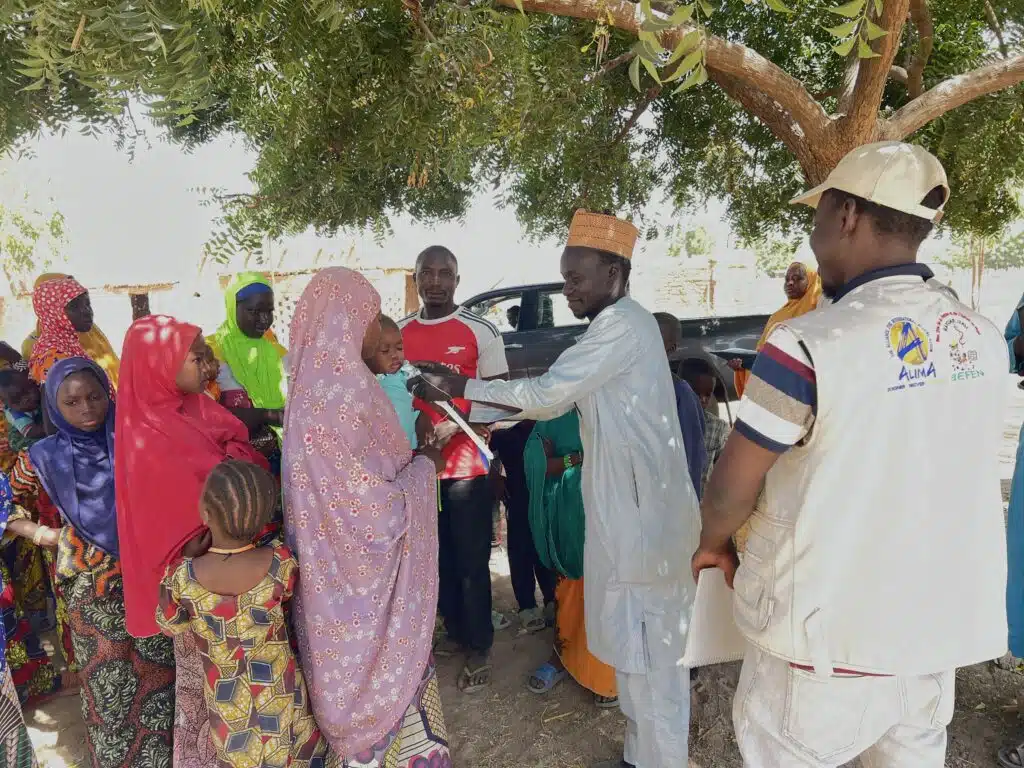
Mothers now play a central role in this effort. Through training sessions organized in villages and health centers by community health volunteers, they learn how to use the MUAC bracelet to monitor their children’s nutritional status at home, while also recognizing warning signs earlier.
“Today, every family is equipped with a MUAC bracelet. Mothers can monitor their children at home and come in as soon as there is a problem,” explains Souley Ousmane, a supervisor.
A major change is taking place: with support from community health volunteers and health workers, mothers can now identify the first signs of malnutrition earlier.
“Mothers are referring their children themselves. That is something that didn’t happen before,” he adds.

Fewer complications, greater chances of recovery
In health centers, the effects of early detection are already visible. Children are arriving sooner, often at a moderate stage of malnutrition, which makes treatment easier and improves their chances of recovery.
“Children come earlier, we treat them earlier, and they recover faster,” says Souley Ousmane.
This earlier intervention means faster care, shorter treatment periods, and more effective recovery.
On average, children are monitored for 4 to 10 weeks, with better chances of recovering without complications. In the field, another major shift is becoming clear: whereas previously “around 80% of admitted children were severe cases,” the trend has now reversed, with more moderate cases being treated.
This evolution has concrete consequences: fewer children require hospitalization in intensive nutritional rehabilitation centers, medical complications are declining, and the most serious situations can be avoided earlier.
A simple action that can change everything
In Dakoro, one thing is becoming increasingly clear: intervening earlier changes the outcome for children. By enabling rapid identification of the first signs of malnutrition and prompt access to care, this approach is deeply transforming how children receive treatment.
Behind this progress is a simple action, learned as close to home as possible, that can make all the difference: a mother measuring her child’s arm and deciding to act in time.
These activities are funded by the GiveWell Foundation.
Related Articles
New Five-Strain Vaccine Offers Hope Against Africa’s Deadly Meningitis Epidemics
A multivalent conjugate vaccine targeting five bacterial strains could help eliminate recurring outbreaks that have killed hundreds of thousands across sub-Saharan Africa’s meningitis belt.

Niger Makes History: First African Nation to Eliminate River Blindness
The Bill & Melinda Gates Foundation, led by Dr. Paulin Basinga, celebrates Niger’s watershed achievement in public health as Dr. Salissou Adamou’s decades-long efforts prove that neglected tropical diseases can be defeated with persistence and partnership.
How are the kids in Dakoro responding to the early treatment? Sounds like a big change for them.