Discarding desperately needed, sterile medical items? Not on our watch, say young people across the U.S.
By Anika Nayak
First published October 9, 2026 by Reasons to Be Cheerful
This story is part of Born Into It, a series about the solutions helping young people thrive in a complex world. It is supported by UPIC Health.
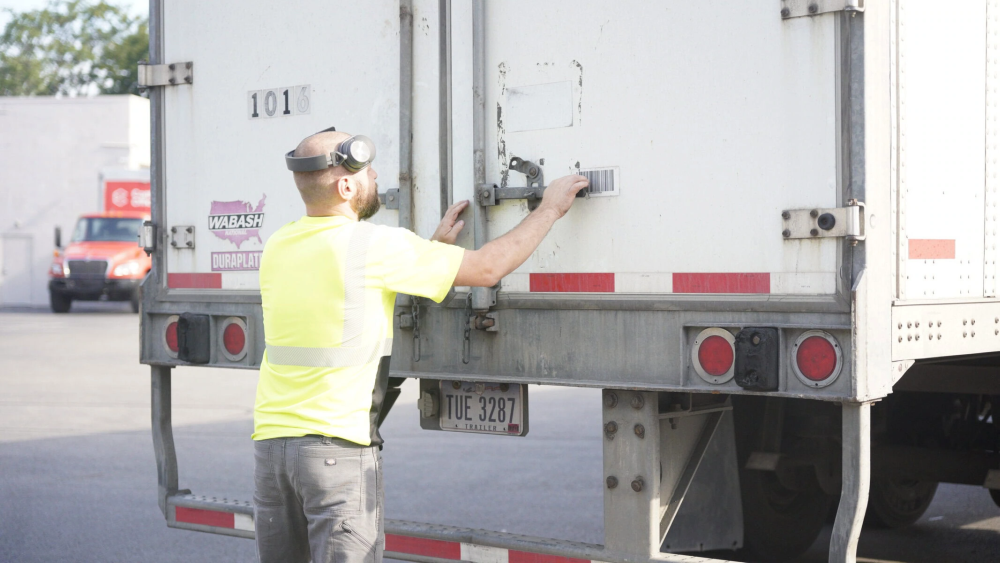
In early August, a freight truck pulled up to an OhioHealth facility in Columbus and took roughly 30,000 pounds of N95 masks and hot-and-cold packs, all boxed, sealed and stamped with expiration dates still a year or two out. Left alone, the estimated $250,000 worth of medical supplies would eventually have been thrown away, deemed unlikely to be required before their use-by date. Instead, the pallets were loaded and driven off toward Pittsburgh, the first leg of a journey to an under-resourced clinic on another continent.
The operation was part of Project MedBridge, a medical redistribution initiative set up by 16-year-old Ben Kurian, a junior at Olentangy Liberty High School in Powell, Ohio. The idea started, as a lot of good ideas do, at the dinner table. His mother is a nurse practitioner and his family friends are doctors and nurses. Over and over he heard the same uncomfortable fact — every year, big hospitals like OhioHealth and Cardinal Health discard thousands of pounds of good quality supplies simply because they won’t be used before their expiration date passes, a problem greatly exacerbated by the pandemic-driven overstock.
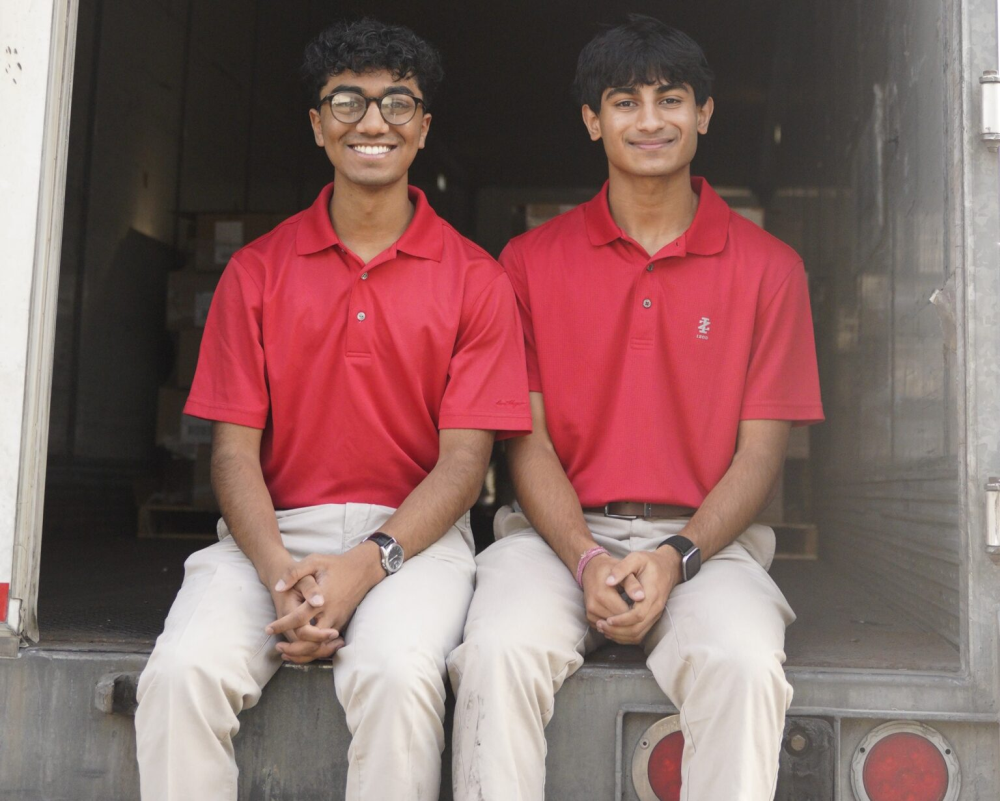
“These are perfectly usable, sterile supplies,” Kurian says. “They don’t come out of the box, and yet no one is putting them to use, despite the fact that there are clinics with little-to-no resources in desperate need.” When he learned that the Carnegie Young Leaders Program funds exactly the kind of social impact idea he had in mind, Kurian started cold-emailing distributors that route surplus overseas, and eventually the Pittsburgh-based nonprofit Brother’s Brother Foundation stepped in to handle shipping.
Project MedBridge only started this year, but Kurian is far from alone in his desire to curb excess medical waste. Most of the established medical supply redistribution organizations, or MSROs, like Project C.U.R.E. and World Medical Relief (WMR), are staffed full-time by adults operating at industrial scale. But around the country, a quiet network of young people has taken up the same cause: pulling medical surplus out of the waste stream and redirecting it toward people who need it, both in faraway countries and at underserved U.S. clinics. What’s striking about this newer wave is that it’s run entirely by students, and almost entirely by volunteers — teenagers and Gen Z youth squeezing warehouse shifts in between classes and exams to right a wrong they see unfolding on their own doorsteps.
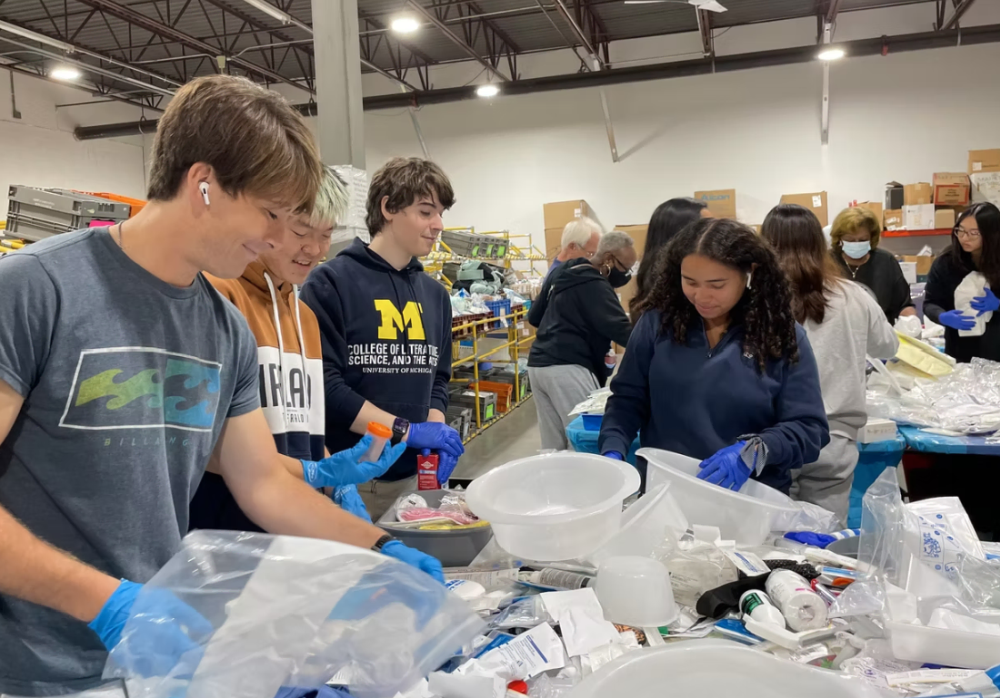
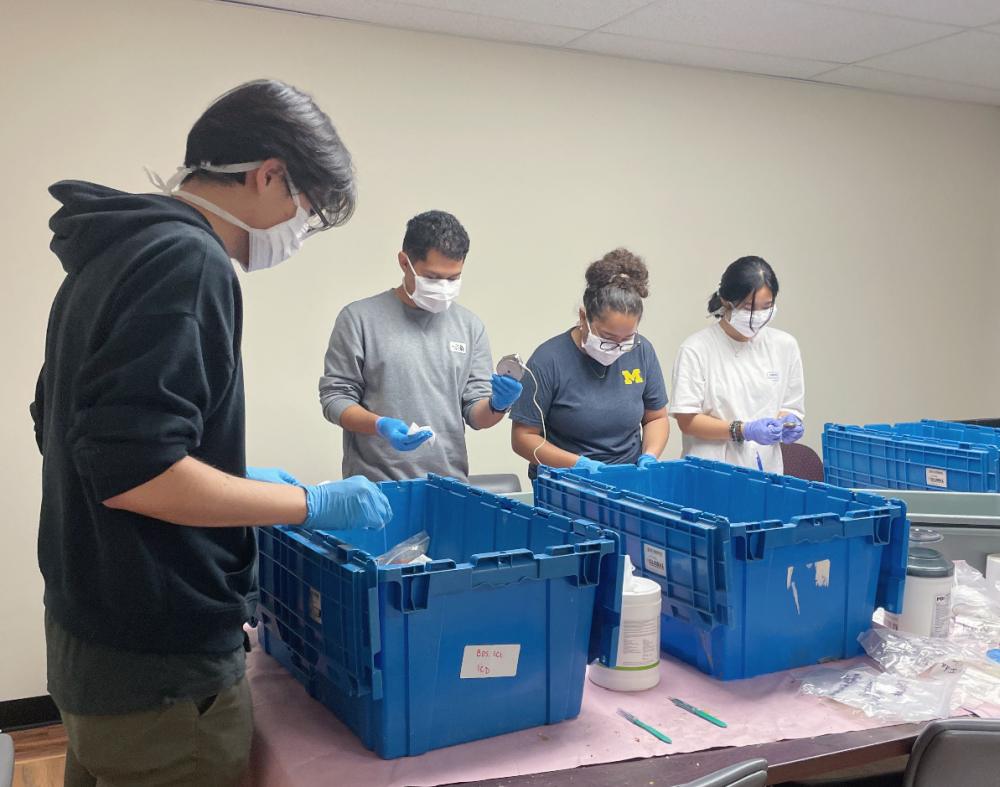
Each group has found its own way to do it. United2Heal, founded at the University of Michigan in 2007 and run by undergraduates, works hand-in-glove with WMR. Every Saturday, over a hundred members meet up — some arriving by 6 a.m. — to check expiration dates and sort through each shipment.
“Anyone who wants to come volunteer with us can,” says Leah Beel, president of the nonprofit and a junior majoring in molecular, cellular and developmental biology. The only real limitation, she says, is how many students have cars, as they all carpool to WMR’s offices 40 minutes or so from the university.
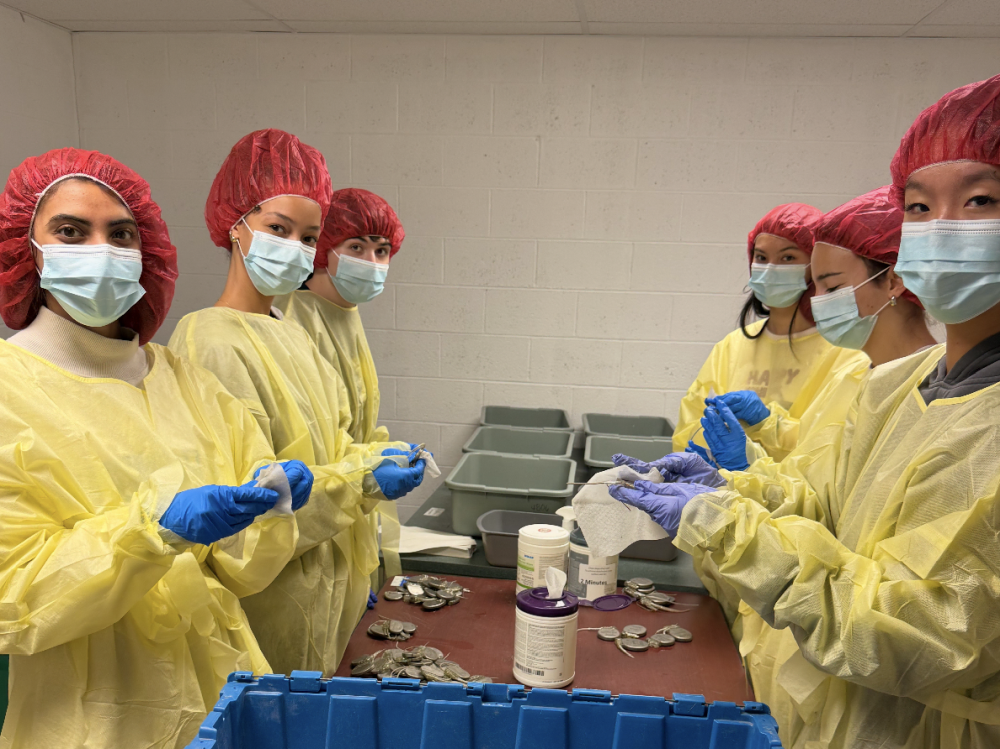
United2Heal is part of one of the more remarkable projects in the field: an FDA-approved effort, run with Michigan Medicine, the University of Michigan’s medical school, that refurbishes pacemakers recovered from the deceased and sends them to patients abroad who could never afford the thousands of dollars a new one costs.
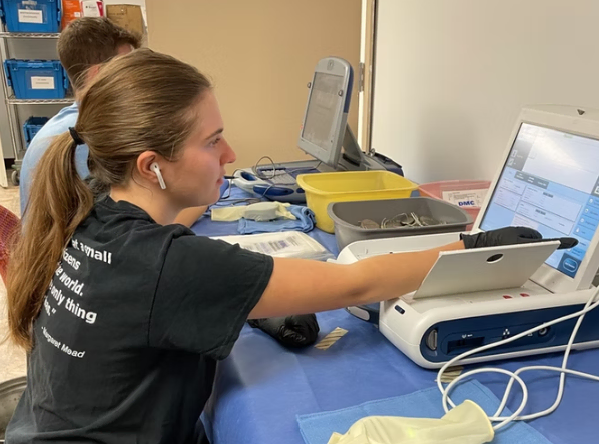
The students’ main tasks are sanitizing and reprogramming the pacemakers, many of which are donated through funeral homes, confirming whether each device has enough battery life to be reimplanted and clearing any previous patient information stored on it.
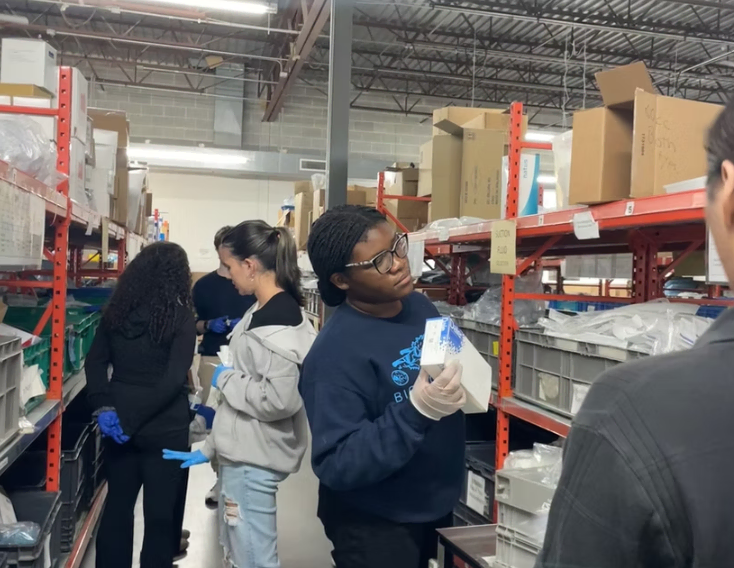
Blueprints for Pangea, another student outfit, founded in 2013 and now with chapters from Ann Arbor to Los Angeles, partners directly with Michigan Medicine, whose supply chain team drops off pallets of excess roughly every two weeks. From there, Blueprints coordinates everything from local hand-offs to ocean-freight shipments that can take weeks to arrive at their destination countries.
The student medical supply redistribution movement is crucial in the current American health care landscape, where coverage is fraying and access is getting harder, and where Medicaid and Medicare cuts hang over exactly the communities with the least cushion. These students aren’t waiting for the system to fix itself. Instead, they are taking action by moving vital equipment to the free clinics that function as the safety net beneath the safety net — places like the Venice Family Clinic in Los Angeles, where Blueprints’ University of Southern California (USC) chapter sends donations, and Hope Clinic, an integrated health care nonprofit in Ypsilanti, Michigan.
“When you’re a nonprofit serving people without insurance, every donation makes a difference, and every dollar we save on supplies can go toward improving conditions for the people we serve,” said Betsy King-McDonald, communications manager at Hope Clinic. “The feeling of having just what you need to help a patient — that’s brought to us in part by Blueprints for Pangea.”
When it comes to the international picture, Blueprints ships in bulk overseas, sometimes as a direct response to crises. The group is currently working to send critical supplies to the Democratic Republic of the Congo because of the Ebola outbreak there. Project MedBridge’s shipments, routed through Brother’s Brother Foundation, have reached maternal health facilities in Nigeria and the front lines in Ukraine.
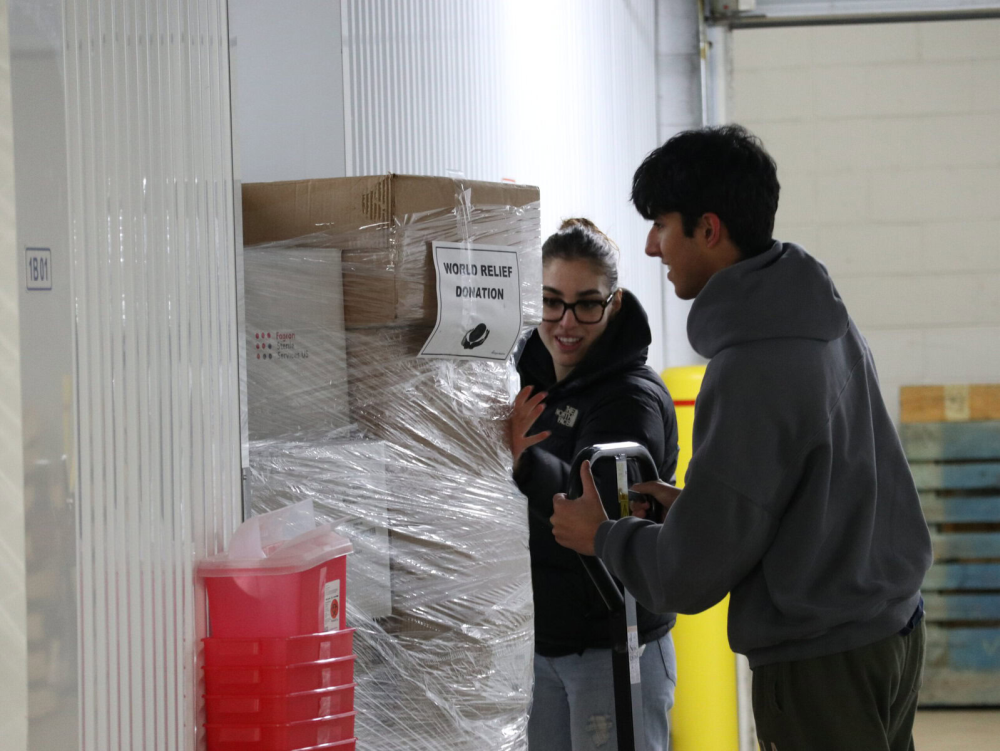
“In any way we can help, we’d love to help,” says Noah Cheng, who leads the Blueprints USC chapter.
Since 2020, that chapter has moved items worth more than $2.2 million to beneficiaries in some 14 countries, pulling much of its stock from USC’s Keck School of Medicine, and from local partners like a nearby pharmacy that regularly donates sterile syringes.
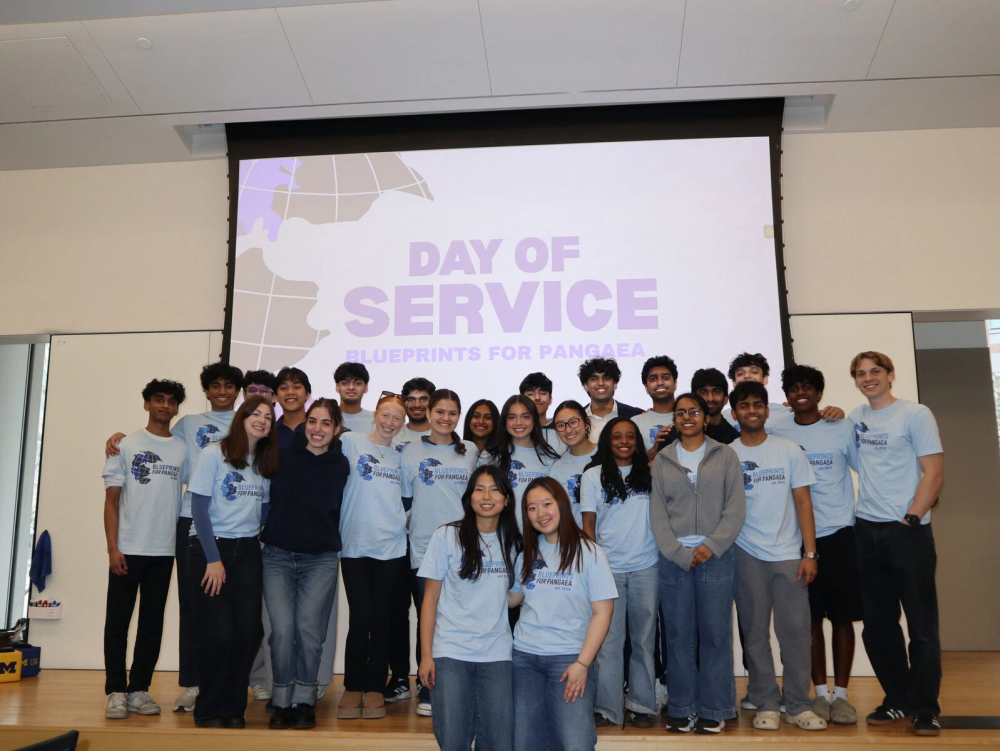
In addition to the redistribution work Blueprints at the University of Michigan does, the team organizes a Day of Service twice every semester where basic hygiene items like shampoo, blankets and toothpaste are collected from grocery stores to be donated to nearby shelters and free clinics like Ozone House in Ypsilanti.
That idea of a second life is really the whole point, and it’s where all the work these student organizations do doubles as climate work. Every pallet rerouted is excess waste that didn’t happen, something the students say is at the forefront of their minds when figuring out what to redistribute where. At United2Heal, sutures that can’t be shipped are turned into hands-on training workshops rather than tossed.
“We are redistributing excess medical waste that would otherwise have turned up in landfills,” says Liya Berry, Blueprints’ chief operating officer and a public health major. She notes, wryly, that sustainability has become a politically loaded idea in the U.S., and that this is a way to “turn it into something good.”
For the students, engaging in this work helps shape their professional development journeys. Many are pre-med and begin their studies envisaging a future of one-on-one patient care. Taking part in projects like Blueprints, they say, gives them a broader, systems-level perspective on supply access at a global scale, with some even considering changing their studies as a result.
Grisham Halapeti, an expansion manager who works with the Berkeley Blueprints chapter, is weighing a pivot from medicine to health policy as a public health major, saying he believes he could help more underserved communities and “have a greater impact.” Belinda Chang, Blueprints’ chief development officer and a pre-med student, says she is keen to continue helping redistribute supplies into medical school and beyond. “I’ve really grown to appreciate being able to work with our community,” she says, “and I hope to have that translate into my future.”
There’s a particular kind of gratification that keeps those committing time and energy going as they help make clinics feel heard and seen. “Last summer we worked on a research project where we called and talked to a bunch of local clinics and community health centers in Michigan, asking about their lack of supplies, any supply needs and what they use the most,” says Mia Zhong, vice president of development at Blueprints’ University of Michigan chapter. “Hearing their perspective was really interesting because I probably would never have talked to them in any sort of way without this experience.”
This kind of work isn’t without its challenges. Funding can be difficult and a $7,500 grant, the amount Project MedBridge’s Kurian received from Carnegie, only stretches so far, which is why Kurian is committed to raising additional money.
Credibility is another hurdle, with some hospitals understandably wary of handing thousands of pounds of supplies to a teenager.
Kurian is betting that a growing record of successful shipments will steadily win that trust.
For the bigger groups affiliated with universities, they face other stumbling blocks. For example, Blueprints’ Michigan warehouse takes in so much from Michigan Medicine that the hard part is finding recipients fast enough. When it overflows, they call Project C.U.R.E. — one MSRO passing pallets to another, as Berry puts it, all of them “working together.”
A common challenge for the students is how much they’re figuring out as they go, from how to run a nonprofit and how the mix of majors and backgrounds within the learning environments becomes its own engine of ideas, to how to negotiate freight and read a customs form.
But these young people didn’t wait for permission, or for the adults in the room to solve the issues they observed for themselves. They looked at a system that throws away invaluable medical supplies while people go without, decided that made no sense, and started loading trucks.
Anika Nayak is an independent journalist based in the United States. She focuses on health equity and enjoys writing about the solutions that help people live healthier lives.
Related Articles

A Brazilian Doctor’s Compassion That Changed the World
A chance encounter between an American economist and a Brazilian medical student in 1987 sparked a humanitarian mission that has delivered over $1 billion in medical supplies to underserved communities worldwide.
Grenada’s Healthcare Receives Boost with Afya Foundation Partnership
Grenada’s healthcare system received a $100,000 boost from the Afya Foundation, strengthening primary care services. The partnership demonstrated the power of collaboration in transforming healthcare delivery and accessibility in small island nations.
One Man’s Trash Is Another Man’s Treasure (Part III)
A chance meeting with a teenager who was not at school may have changed his life. An excerpt from Danielle Butin’s heartfelt story of the Afya Foundation.