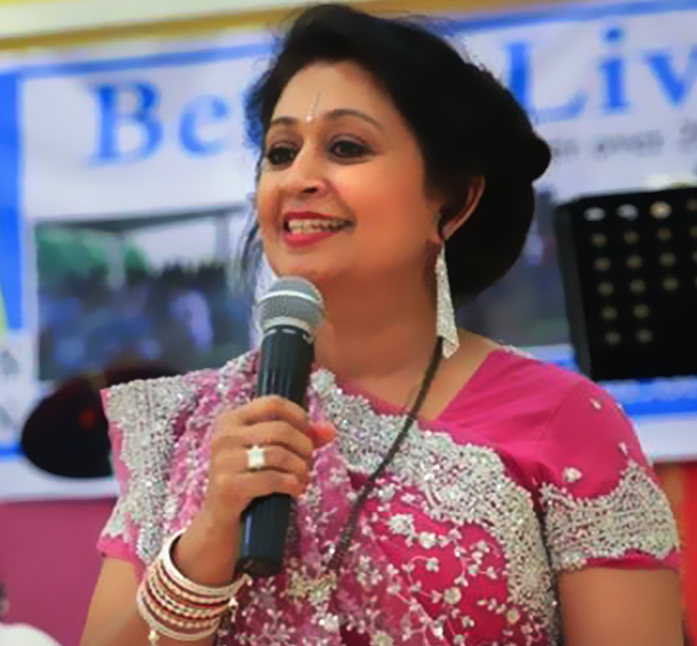
In 2006, Devi Patel flew into Sierra Leone with a team of 36 — doctors, dentists, pharmacists, general volunteers — for what was supposed to be a single ten-day medical camp. The country was barely four years out of a brutal civil war, and a former Sierra Leone ambassador to the UK had spent two years persuading her to come to his home village. There were no reliable flights from London, no logistical information, no data on what they would find on the ground. They came anyway, set up in a secondary school in the village of Yonibana, and treated 5,600 patients in those ten days.
On the last evening, the team sat down together and decided that a one-off camp was not enough. Twenty years later, Patel runs the a hospital in Sierra Leone that treats every patient who walks through its doors completely free of charge.
From medical camp to a free hospital
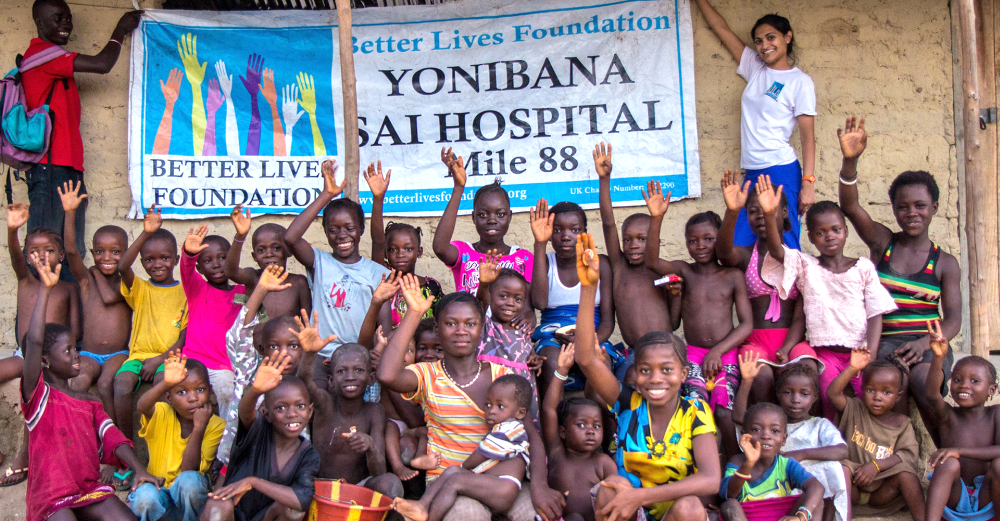
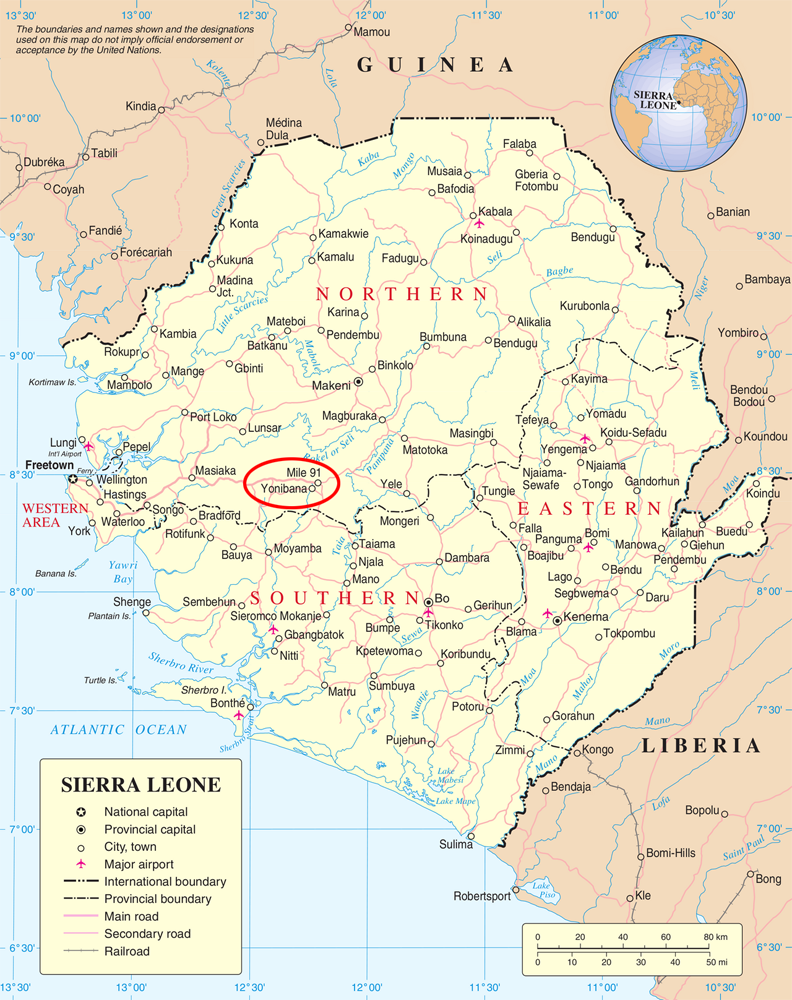
The Better Lives Foundation, the small UK-registered charity Patel co-founded, has spent two decades quietly building Yonibana Sai Hospital. It sits on a 25-acre site about 91 miles from Freetown, deep in the villages of the Yoni chiefdom. The hospital opened in 2009 with an operating theatre, a dental room, and a small guesthouse for visiting teams. The plan, Patel says, was straightforward: build it, employ qualified local staff, and run it remotely from the UK, the way she had supported projects in other countries since 1981.
“Very naively, I thought that we would employ locally qualified staff,” she said. “And then run the hospital remotely and support them.” Unfortunately, there were no qualified staff. The Ministry of Health had none to offer either. The hospital closed.
What followed was the most interesting part of the story. Rather than abandon the project or import a permanent foreign staff, Patel and her team pivoted to something slower and more difficult: they decided to grow their own.
For nearly a decade, between 2010 and 2018, Patel led teams to Sierra Leone four or five times a year. She would fly out early with a couple of people to open and clean the hospital, the team would arrive, they would see between 3,000 and 5,000 patients across ten to fourteen days, and then they would close it back up. Equipment rusted between visits. New supplies had to be hauled in each time. “We couldn’t keep opening and closing the hospital,” Patel said.
So in 2012, the foundation started teaching English and math to local young people who had been working as translators on the camps. They gave exams to everyone they taught; 86 students passed. The foundation sponsored every one of them — secondary school through graduate-level training, medical and non-medical — on the understanding that they would return to work at the hospital. In 2018, the first wave came home with their qualifications. The foundation hired 44 of them. The hospital has run 24/7 ever since.
A model designed to make itself obsolete
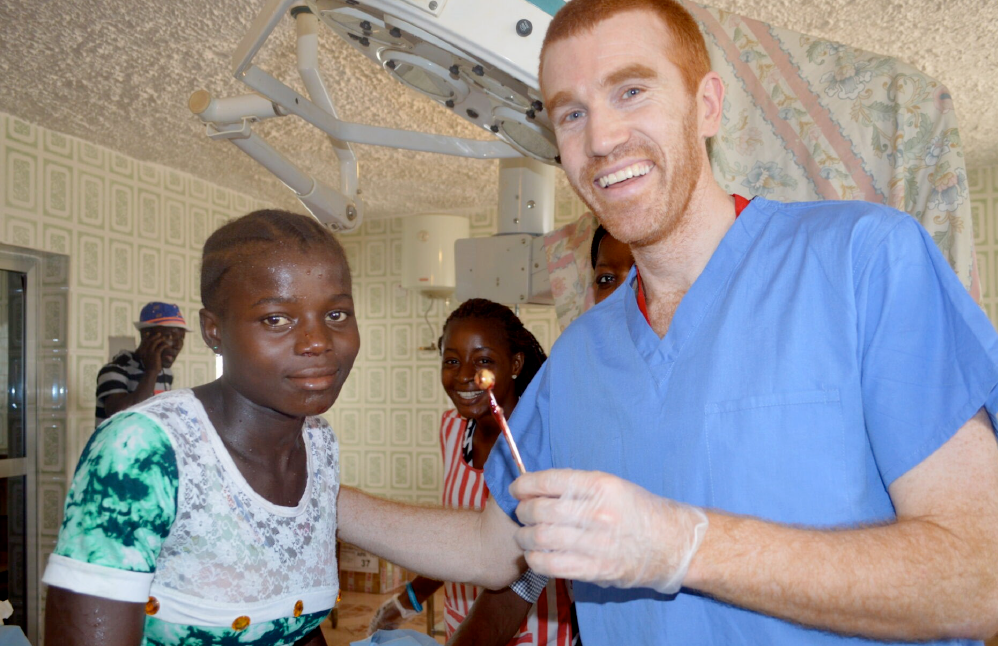
Dr. Mike Rafferty, an orthopedic surgeon in the UK National Health Service and one of the foundation’s trustees, first went to Sierra Leone in 2009. He has been back seven or eight times. In a long interview from his home in the UK, he described what made this different from other places he had worked.
“It’s the type of place where there was literally nothing, full time, nothing — not like you could get some, it’s just nothing,” he said. When he first started going, he recalled, there were six registered physicians in the entire country. The combination of crushing tuition costs and the brain drain that pulls qualified Sierra Leoneans abroad had hollowed out the medical workforce.
He recalled one American cardiac physiologist who came on an early camp and identified a child with a rare cardiac murmur. “He said to me, ‘Where would I refer for a neonatology cardiology interventionalist?’ And I was like, ‘You’d have to probably leave this continent to find one of those.'”
The sponsorship program changed the math entirely. As Rafferty put it, “We learned pretty quickly that you could educate the local population… it was a much more efficient use of people power.” Of the first cohort, several became midwives and registered nurses. Eight or nine qualified as Community Medical Officers — a Sierra Leonean diploma that lets them function as doctors at home, though it doesn’t transfer abroad. A couple became Community Surgical Officers. One, Foday Fofanah, is in medical school in Uganda on full sponsorship; he will return with a full MD.
The endgame is explicit. “Imagine if we did finish this model, and none of us had to go out there,” Rafferty said. “It just ran itself. The local guys were running their local hospital. They had some funding from the government. And the crops they grow, they have solar panels, and we just leave them, leave them to it, and then we can go… take your expertise of that project, and you could go to some other really difficult country, just do it again.”
How the money is spent
The Better Lives Foundation runs on remarkably little overhead. Patel and every UK volunteer, including the consultants who head each department, work without pay. The foundation has no in-house social media person (it brought one on for a three-month trial last year), no in-house accountant, and pays no executive salaries. According to Rafferty, 99% of the money raised is spent in Sierra Leone itself; the only significant non-Sierra Leone expense is the shipping of containers full of equipment, drugs, and supplies, with are mostly from the UK, with some pharmaceuticals from India.
“We have zero overhead,” Rafferty said. It is part of why, he admits, the organization has historically been almost invisible online. “We’d like not to be low key, but we have very small overhead.”
For most of its existence, the foundation has done little to publicize itself. That changed about two years ago, when another major international health program serving the surrounding districts began winding down its operations. Yonibana Sai Hospital became a referral hospital for a growing region of patients suddenly without their usual care. The foundation recorded an 18% increase in patient ailments treated last year compared to the previous year, and the catchment area for the hospital has expanded from a 15-mile radius to 51 miles.
“Our patients are sort of coming out of our ears now,” Patel said.
What they actually treat
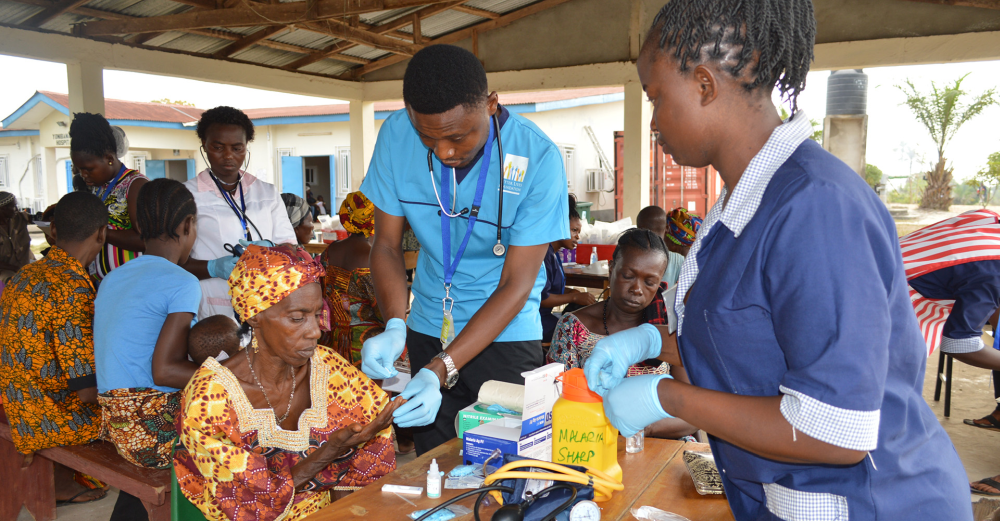
The medical reality of rural Sierra Leone is its own thing. Some conditions show up in extraordinary numbers. Hernias are one — Rafferty explained that there is a genetic component that raises rates in West African populations, compounded by high rates of prematurity in newborns (premature babies are at higher risk for hernias for life). Untreated for decades, some of them grow to extreme size. “The rough sign is if the man is wearing more than one pair of underpants,” Rafferty said. “When they take off three pairs of underpants as a support, that’s when we know it’s a proper hernia.”
The foundation runs two-week hernia camps in which patients are pre-screened against surgical criteria and operated on in concentrated bursts. From mid-December 2024 to early January 2025, a 23-day surgical camp treated 109 patients — ages 19 months to 75 years — for hernias, hydroceles, lipomas, testicular torsion, and related conditions. Patients traveled from Freetown, Mile 91, Waterloo, and more than 20 surrounding villages.
Eye care is similarly transformative. Cataracts and glaucoma run rampant. The foundation distributes prescription glasses by the thousands and runs cataract day-surgery clinics. Patel described what she has watched happen many times: an elderly person brought to the camp by their grandchildren, examined by the optometrist, fitted with glasses, and then — “you see that big smile because they can actually now see what they’re doing. It’s just a simple thing like that.”
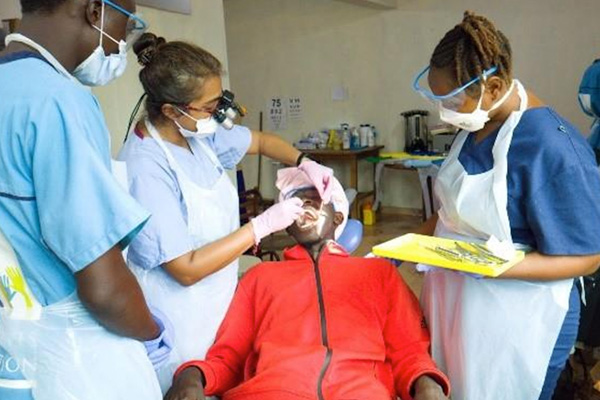
Dentistry is a major focus and the foundation’s most ambitious expansion. Patients arrive with years of untreated dental disease — a combination, the dentists tell Rafferty, of unfluoridated water, irregular brushing, and a heavy intake of natural sugar from mangoes and other fruit.
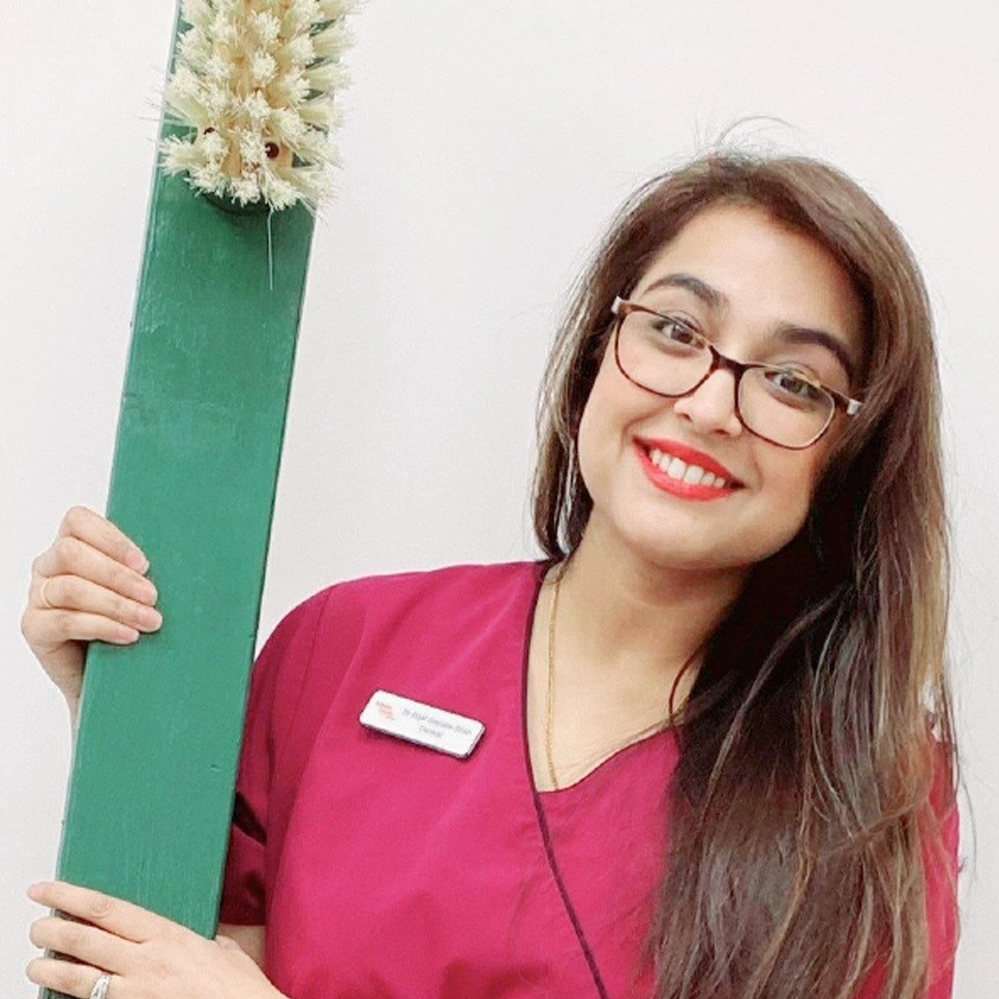
The dental team, led by Director of Dentistry Dr. Bijal Sisodia-Shah, runs intensive treatment camps that resemble, in the team’s own description, “a military operation” — every instrument, every piece of gauze counted in advance and packed in the UK to fly out with the volunteers. On one recent trip, the team realized only weeks before departure that they did not have enough forceps; an emergency outreach to a network of like-minded UK dental charities filled the gap just in time. One of the dentists on that trip later recalled that the last piece of gauze used on the last patient was just enough — they finished the camp with their supplies almost exactly empty.
The foundation is now developing what would be Sierra Leone’s first dental teaching hospital, with a curriculum for dental therapy and dental nursing built in partnership with King’s College Hospital in the UK and the World Health Organization’s regional oral health program for West Africa.
Then there is the daily background of illness: malaria everywhere, and increasingly, maternal and neonatal care. “Everyone’s had it,” Rafferty said of malaria. He recounted playing in the annual friendly soccer match between the visiting UK team and the local Sierra Leonean team, noticing one teenage player who seemed unusually tired and slow. The boy tested positive for malaria the next day and was severely ill for two weeks.
Maternal and neonatal care, finally
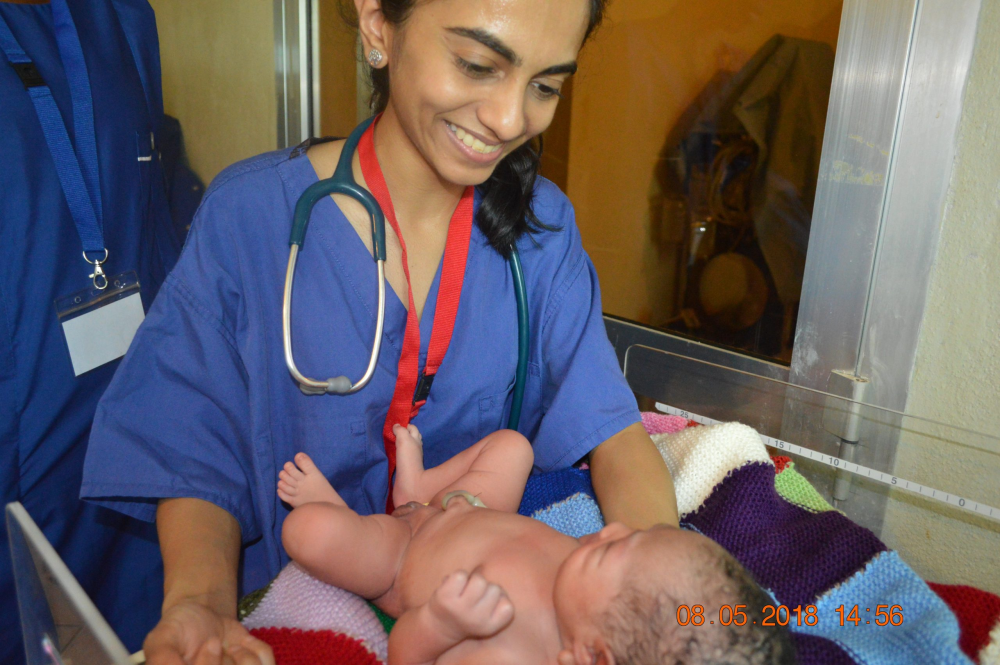
For most of its existence, Yonibana Sai Hospital did not deliver babies. Sierra Leone has one of the highest maternal and infant mortality rates in the world. The hospital opened a maternity ward in June 2024, performed its first cesarean section in September 2023, and is now starting up a full neonatal and maternity wing. Twenty baby incubators and twenty infrared lamps were shipped from China in 2024. Two foundation staff, Fatmata Kanu and Esther Joy Fatorma, began advanced maternal and newborn care training at Njala University to prepare for the wing’s full launch.
Rafferty described what changed his own thinking about what to prioritize. “We’ve changed our focus a little bit to the stuff that we know we can change. We can get more bang for buck, and a lot of it is pediatric stuff. So we do a lot more neonatal stuff. We do a lot more maternity care.”
He went quiet for a moment when he talked about what mortality looks like in conversation with the staff. “You’ll speak to the staff. You’ll say, ‘Do you have any brothers?’ They’ll say, ‘Oh, I had seven. Now I’ve got three.’ And you go, ‘What happened to the other ones?’ ‘Oh, they had chest infections. They had this, they had that.’ So it’s real. Mortality rates are real.”
Working there changes the math
The single thing both Patel and Rafferty kept returning to was how working in Sierra Leone forces a different relationship with resources. Rafferty offered a small example involving cataract surgery. In the UK and US, specialized post-operative dressings provide pressure on the eye and cost thousands of dollars per use. In Sierra Leone, surgeons figured out a tennis ball strapped to the patient’s head does the same job. The tennis ball is cheap and reusable.
Deworming is the other vivid example. Soil-transmitted worms are a leading cause of malnourishment in children in the region. The treatment is a single pill, about ten cents, that clears the infection.
The hospital itself has had to be similarly inventive. The compound has covered wells that the foundation drilled (most of the region’s water still comes from rivers). Solar panels were installed to power the lights and a handful of plug points. At any given moment, Rafferty said, the outlets are full of charging Nokia 3210s, since most of the surrounding region has no electricity. Children walk to the hospital in the evenings just to sit under its lights and read. After a fallen tree damaged the guesthouse, the wood was repurposed into benches for the patient waiting area.
There have been harder problems too. During the 2024 dry season, fires from neighboring land swept into the hospital compound, destroying the wooden perimeter fencing and a stand of recently planted remembrance trees. The hospital responded with a community-led vegetation clearance program, with neighbors volunteering weekends to cut firebreaks around the buildings, the guesthouse, the solar installations, and the generators. The hospital roof took major damage from high winds and required emergency repair before the rainy season. In January 2025, an mpox outbreak hit the region, and the hospital built an isolation ward and was designated an mpox treatment center.
The person behind it
Rafferty was asked who in the project most inspired him to stay involved over more than fifteen years. After a long pause, he gave an answer he tried to keep from sounding sentimental.
“Without being too cheesy about it, I would say Devi keeps me involved,” he said. “If Devi was not involved, I don’t think I would still be involved at that level. It is inspiring to have someone that is that committed, without any real skin in the game.”
Patel was not born in Sierra Leone. She has no family there, no ancestral connection. She was born in Uganda, expelled with her family during Idi Amin’s purge of Asians in 1972, and resettled in the UK. She qualified as a Montessori teacher, then trained in iridology and herbology. She has been organizing medical camps in remote parts of the world since 1981: Zambia, Malawi, the Himalayas, Ukraine, the former Soviet Union, South America, South Africa. She started in the orbit of an ashram in southern India, where the founding ethos of service was first laid down for her. Sierra Leone was just another country until the invitation came, after which it became, in effect, her permanent project.
“I don’t think Devi switches off like normal people,” Rafferty said. “I think she’s just always thinking about it. Sometimes you’ll be having a casual chat with someone, and you’ll be like, ‘Oh, yeah, this is my friend, and he works for this bank.’ And she’ll say, ‘Oh, have you asked him about whether or not they have a charity arm of the bank?'”
She and her husband Raj, who is also a Patel, although no relation, met in college. They work as a unit. The foundation’s volunteers describe them in matched pairs at every meeting, the two of them on a single laptop, finishing each other’s reports.
What’s next
The foundation’s published plan for 2025-2027 is ambitious. The maternal and newborn wing is the immediate priority. A full dental teaching hospital — Sierra Leone’s first — is in design, alongside a planned eye, pharmacy, radiology, and laboratory wings, and a library to support training and research. A Freetown construction company is producing eco-friendly interlocking bricks for the next building phase. Specialist committees — for optometry, obstetrics, pharmacy, and dental — meet regularly in the UK to finalize teaching curricula.
The educational sponsorship program, which has supported 86 students from secondary school through graduate degrees since 2008, has reduced school dropout rates in the Yoni chiefdom from 60% to 30%. The foundation continues to expand it.
Asked what people don’t understand about the work, Rafferty offered something quieter than expected. “The main problem you have when you go there is when you come back, it’s very difficult to adjust to certain things. You come back, and suddenly everything is in abundance. … You find yourself buying coffee, and it’s $4, and you think, oh, $4 — I could buy 26 malaria treatments…. But then eventually you think, well, I do actually have to live my life to survive. I can’t just sit here being guilty about everything.”
He paused. “But it is. It’s a real thing.”
Watch this video to learn more about the new dental clinic and school:
Related Articles
Last Mile Health Wins the 2026 Hilton Humanitarian Prize
Last Mile Health trains and pays community health workers who reach isolated villages in Liberia, Ethiopia, Malawi, and Sierra Leone, bringing basic medical care to communities that once had none. They have now received the world’s largest annual award to a nonprofit.

How Sierra Leone Built Its First Neurosurgery Program
Through grassroots collaboration and support from California nonprofit Mission Brain, Sierra Leone launched its first neurosurgical service, offering hope to eight million people who previously had no access to life-saving brain and spine surgery.
Last Mile Health: Bringing Healthcare to the Most Remote Communities
Last Mile Health transforms healthcare delivery in remote communities by training and paying local health workers, ensuring no patient is out of reach in Liberia, Ethiopia, Malawi, and Sierra Leone.