First published November 12, 2025 by Build Health International
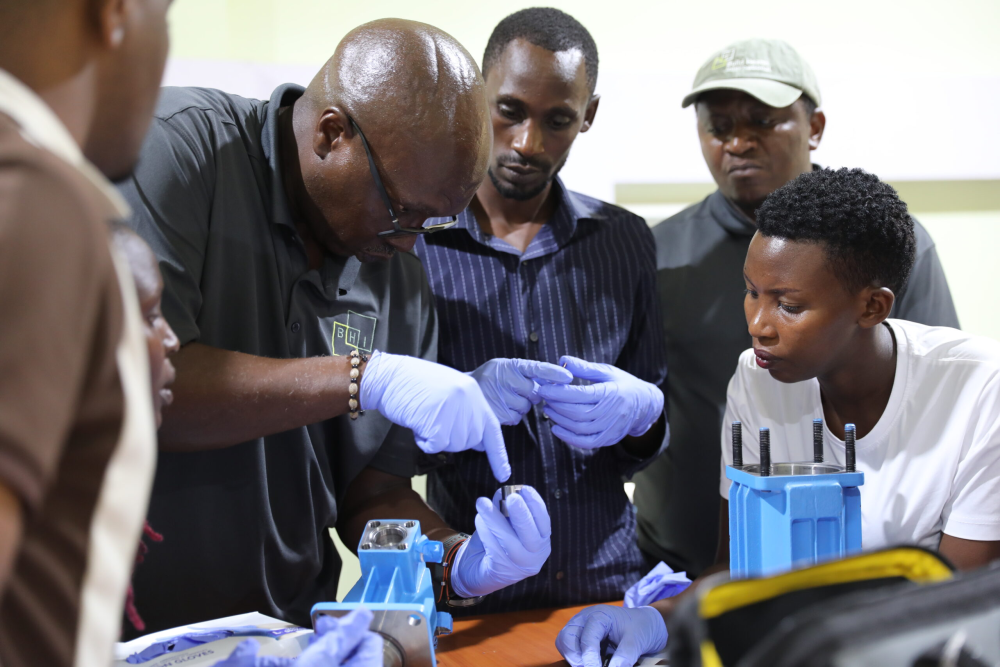
In 2024, Build Health International (BHI) in partnership with Rwanda Polytechnic – Kigali College and the Rwanda Biomedical Centre (RBC), inaugurated the Biomedical Engineering Training Center in Kigali, Rwanda. Supported by the Skoll Foundation and the Wagner Foundation, the center serves as a regional hub for oxygen systems training and biomedical capacity building and is designed to address a critical gap: the need for dedicated technical education that equips healthcare professionals with the skills and knowledge needed to maintain life saving infrastructure and equipment.
Just under a year later, in early 2025, that vision expanded beyond Rwanda’s borders. The Training Center hosted its first international training and welcomed 18 biomedical engineers and technicians from the Ethiopian Ministry of Health for a five-day intensive training on pressure swing adsorption (PSA) plant maintenance. Funded by UNOPS, the training marked a pivotal moment – only for BHI, but for Rwanda and East Africa’s broader commitment to healthcare resilience and collaboration.
Expanding Regional Impact
The establishment of the Kigali Oxygen and Biomedical Training Center reflects a strategic growth, building on BHI’s capacity building programs through in-country trainings embedded in existing healthcare settings. To date, BHI has trained over 2,000 technicians, biomedical engineers, hospital managers, and ministry of health stakeholders. For countries without established oxygen infrastructure – or where on-site work is not feasible – the Kigali center offers an adaptive solution and controlled environment for safe, scalable, and high-impact learning.
“At the training center, we work with our partners to equip the engineers and technicians with the knowledge and skills that they need to keep the oxygen flowing and biomedical equipment functioning. The investments that we have made in equipping the training center with a PSA plant, two booster compressors, and a cylinder filling manifold are really investments in people,” notes Andrew Johston, BHI’s director of medical oxygen education and training. “Getting the right equipment in place is important, but what is most essential is to work with partners to put in place a system for ongoing training and capacity building. It’s exciting that Rwandans and people from neighboring countries are already coming to the training center to learn and to build their skills.”
Designing with Purpose
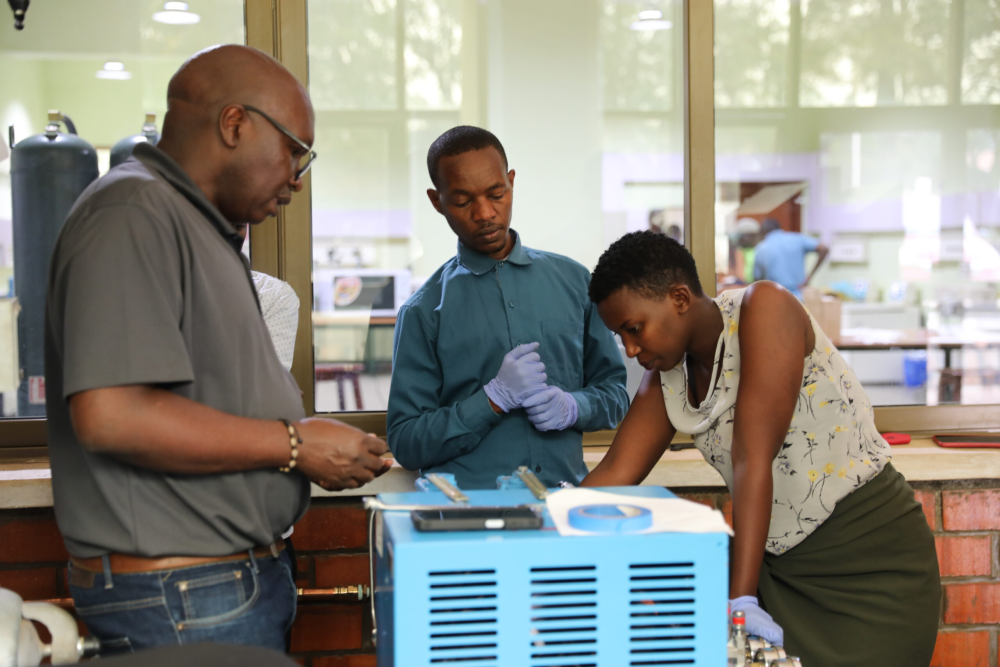
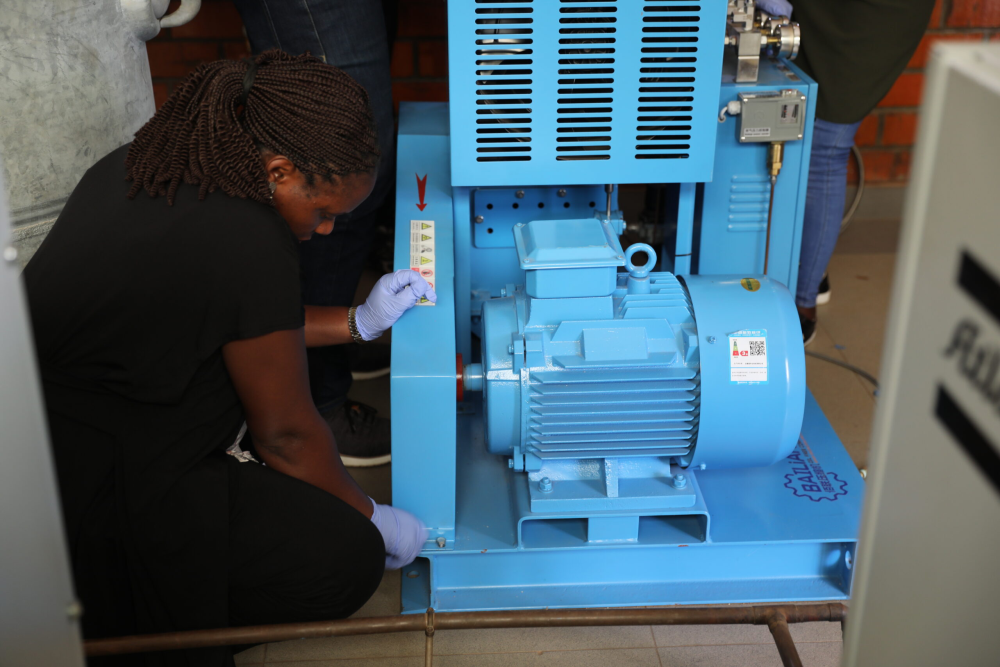
The Training Center is more than a classroom – it’s a hands-on, fully equipped environment, featuring a functioning pressure swing adsorption (PSA) plant, high-pressure oxygen booster compressors, and critical infrastructure upgrades made in partnership with Rwanda Polytechnic. Each component supports a broader vision: enabling healthcare personnel to understand, operate, and maintain complex biomedical systems independently.
BHI’s training strategy is rooted in real-world experience. Trainees not only learn how systems should work – they practice routine service and troubleshoot issues that mirror what they’ll face in the field. By pairing theory with direct application, the program ensures biomedical personnel walk away not only with knowledge but confidence.
Meeting Urgent Needs with Sustainable Skills
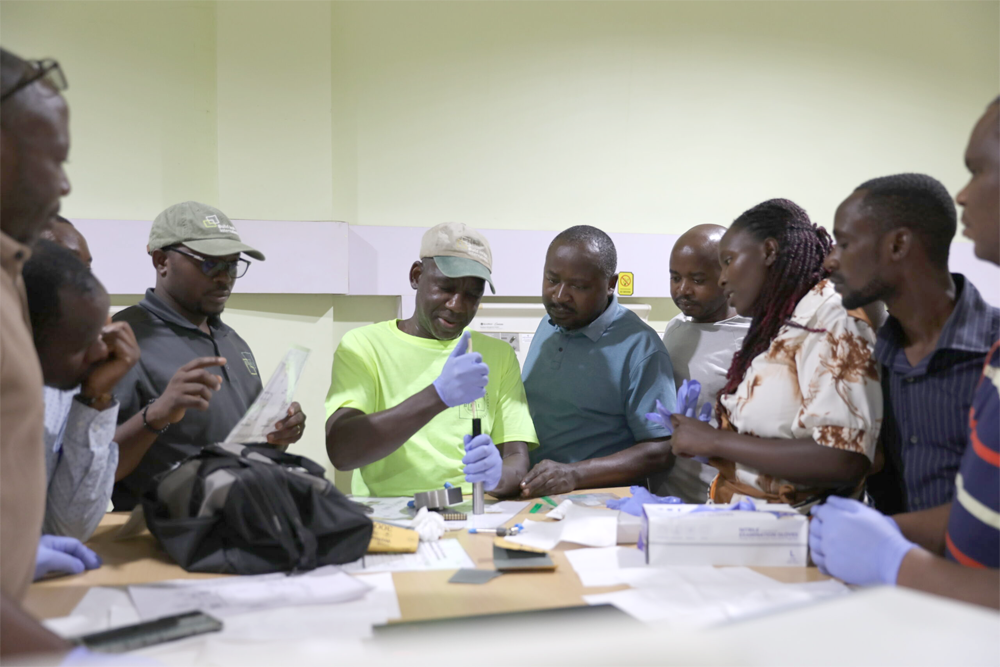
In Rwanda and across low- and middle-income countries (LMICs), oxygen access remains a challenge. Following safety incidents linked to poor oxygen cylinder handling practices, at the request of the ministry partners, BHI developed and delivered targeted training on cylinder safety and use – demonstrating the Training Center’s responsiveness to emerging needs. Additional sessions have supported final-year biomedical engineering students, hospital maintenance teams, and plant operators, preparing them for safe, effective oxygen plant operation and preventive maintenance planning.
Trainings in 2025 have expanded the Training Center’s scope even further, including topics such as:
- High-pressure booster compressor maintenance and cylinder-filling operations, essential to enabling hospitals to store and distribute oxygen more efficiently
- Electrical infrastructure assessments, where trainees will learn to analyze hospital electrical systems and prevent power-related equipment failures
- Repair of the on-site medical air and vacuum system, with real-time Kigali College student engagement
Building the Future of Healthcare Resilience
The Biomedical Engineering Training Center is not just filling knowledge gaps – it is building lasting capacity. By delivering technical education in a centralized, well-resourced environment, BHI is enabling sustainable systems change. In collaboration with regional governments and partners, the center is poised to become a key player in the push toward medical oxygen access and beyond.
As BHI looks ahead, its work in Kigali is a blueprint for impact: scalable, collaborative, and driven by the belief that resilient healthcare requires strong local capacity.
Related Articles
Rwanda is Knocking on Every Door in a Bid to End Cervical Cancer
Getting over the cervical cancer elimination line means both vaccinating girls and screening women. Rwanda’s corps of volunteer health workers are going door to door to get it done. From Gavi, the Vaccine Alliance.

A Legacy of Health Equity: Agnes Binagwaho Receives Cameron Award
The Cameron Award, from the RCSI School for Population Health, honors Professor Agnes Binagwaho for her transformative work rebuilding Rwanda’s health system and advancing equitable healthcare access in resource-limited settings worldwide.

When Science and Courage Meet Crisis: Dr. Tsion Firew and the Battle Against Marburg Virus in Rwanda
A physician who confronted Marburg in Rwanda and, previously, COVID-19 in New York, demonstrated what’s possible with bravery and supportive systems.