
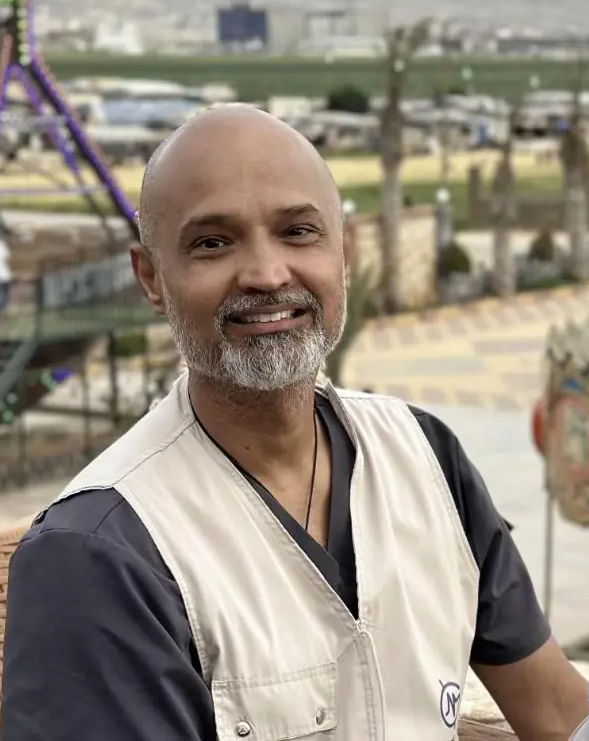
Dr. Chandra Hassan, a bariatric surgeon at the University of Illinois Chicago and MedGlobal board member, was part of the first international medical team in years to gain access to Sudan. What he found was devastating: families who had walked hundreds of miles to escape violence, children with shrapnel embedded in their bodies, and a displacement crisis on a scale difficult to comprehend.
At Al-Afad, the largest camp for internally displaced persons, Dr. Hassan operated on patients like 5-year-old Saida, who arrived with shrapnel burning through her skull after a drone dropped a bomb on a group of children at play. Two died instantly; the rest were seriously wounded. He was able to remove shrapnel from her chest, but the fragment in her skull was too dangerous to extract. He also treated 14-year-old Fatima, who had spent four months walking barefoot through the desert with an exposed bone fracture.
The scale of drone-related injuries surprised him. The camp itself offers little refuge—only 33 percent of displaced people have received food aid, and six toilets serve roughly 10,000 people.
MedGlobal’s recent report, “Surviving the Siege: Voices from El Fasher,” documents how civilians have been deliberately targeted, humanitarian aid blocked, and hospitals destroyed. The organization has supported 86 health facilities in Sudan and trained over 1,000 health workers, even as more than 90 aid workers have been killed since the conflict began.
Dr. Hassan noted one stark difference between Sudan and other war zones he has worked in: the absence of safe corridors for civilians to escape. “If I had to be blunt,” he said, “the world is more interested in African resources than the reality of the people,” he told CBS Chicago.
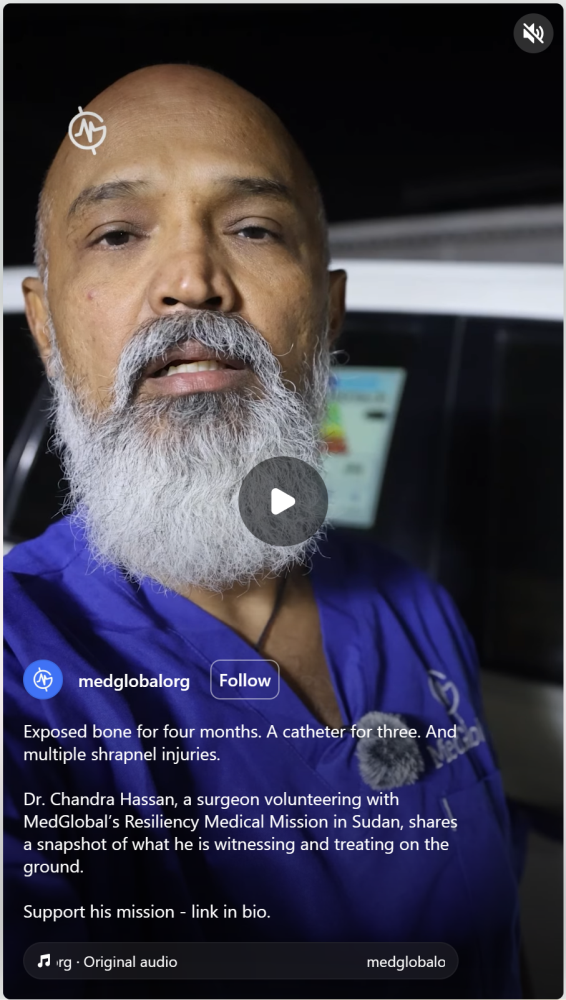
Watch this video to learn more:
Watch this reel from MedGlobal:
This summary is based on the following sources:
- Chicago surgeon operates on children victims of drone strikes in Sudan war, by Mikayla Price for CBS Chicago
- 1,000 Days of Conflict in Sudan: MedGlobal Warns of Deepening Crisis, by MedGlobal
Related Articles
When the State Collapsed, Neighbors Stepped In: Sudan’s Volunteer Networks
In the world’s worst humanitarian crisis, 26,000 Sudanese volunteers risk torture and death to deliver food and medical care to millions. Their grassroots network has become a lifeline, and a target.

Three Organizations Offering Cost-Effective Ways to Save Lives
Nicholas Kristof’s 2025 giving guide highlights nonprofits responding to Sudan’s humanitarian crisis, preventable tropical diseases, and vision impairment in U.S. schools.
Steadfast Care Amid Sudan’s Devastation: Dr. Jamal Eltaeb Receives Aurora Prize
Dr. Jamal Eltaeb has been awarded the 2025 Aurora Prize for Awakening Humanity for keeping Al Nao Hospital operating as one of the last functioning facilities in greater Khartoum despite bombardment, shortages, and Sudan’s collapsing health system.