
Dr. Caspar, from the UC Davis Eye Center, brings sight-saving expertise to underserved communities worldwide through his dedicated volunteer service with Orbis International.

Dr. Jeff Caspar balances his role as Director of Cataract and Refractive Surgery at the UC Davis Eye Center with his passion for global ophthalmology as a dedicated Orbis International volunteer. Since his initial project in Ethiopia in 2012, Dr. Caspar has brought his expertise in advanced small-incision cataract surgery to numerous countries, including Vietnam, China, and Zambia, working to improve eye care capabilities in regions with limited access to specialized treatment.
In 2016, Dr. Caspar made history by performing some of the first surgeries aboard Orbis’s third-generation Flying Eye Hospital following its launch. During this project in Shenyang, China, he collaborated with local eye doctors to enhance their cataract extraction skills. “The training that Orbis provides is really several different facets, and they’re training all members of the surgical team,” Dr. Caspar explained in a video about his volunteer work.
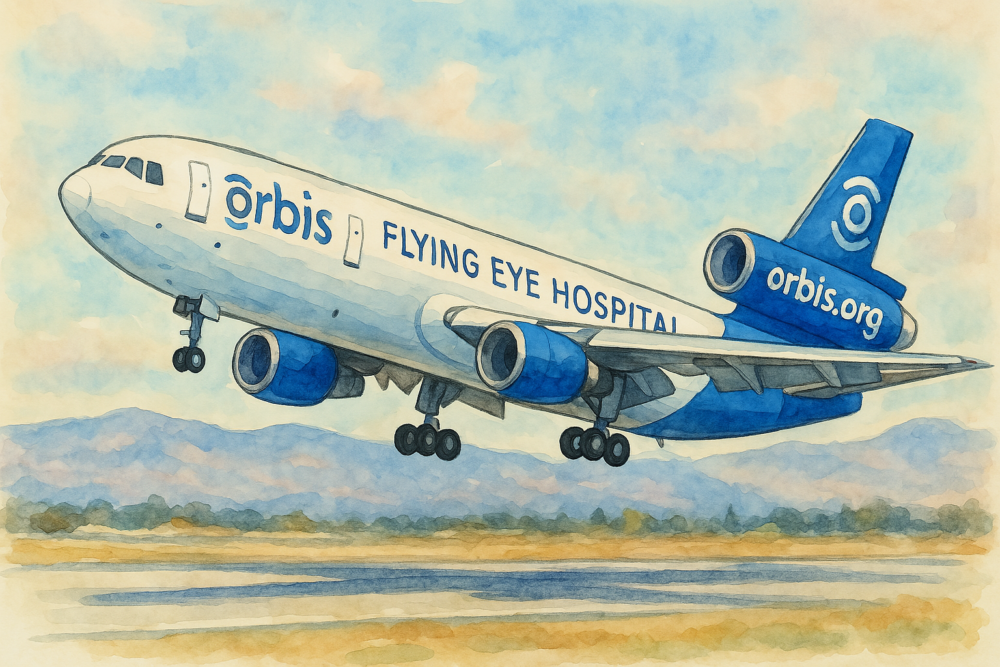
The Flying Eye Hospital’s innovative design enabled this comprehensive approach, with surgeries streamed in 3D to a classroom where observers could interact with surgeons in real-time. As Dr. Caspar noted, “At the same time we’re performing the surgery, the Orbis anesthesiologists are helping teach local anesthesiologists different techniques to improve patient care and nursing staff is also teaching the local nurses how to provide the best patient care they can.”
Most recently in 2024, Dr. Caspar traveled to Lusaka, Zambia, where only 38 ophthalmologists serve a population of 17 million. Working at the UTH Eye Hospital, he focused on teaching phacoemulsification—a sophisticated cataract removal technique that promotes faster healing and better outcomes. Despite having modern equipment, local surgeons lacked specialized training to maximize its potential. Dr. Caspar’s hands-on instruction was tailored to their specific circumstances and resources.
“The program here has been an outstanding one, getting to work with students who are talented, energized, intelligent and really want the best care for their patients,” Dr. Caspar shared during his second training mission in Lusaka. “It allows for the training of surgeons on their own or with their own equipment and with their own staff. This allows me to tailor their training to the strengths and limitations of their equipment, giving them a greater chance of sustaining these techniques after I am gone,” he explained while reflecting on the long-term impact of his work.
Note: Dr. Caspar will be presenting the Alumnus of the Year Lecture titled “Beyond Ophthalmology: Fostering My Passion For Lifelong Learning” at the UC Davis Health – Eye Center Resident, Fellow & Alumni Research Symposium on Saturday, June 21, 2025.
Read more about Dr. Caspar’s work for Orbis International: Volunteer Week 2025: Spotlighting Orbis Legend Dr. Jeff Caspar
Related Articles
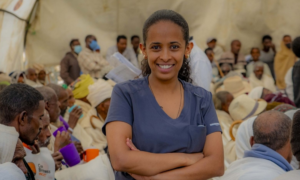
From Residency to Impact: How Cure Blindness Project Empowered My Mission
At Cure Blindness Project, our work is defined by the dedicated clinicians who carry sight-saving care forward in their own communities. We’re honored to share the story of Dr. Abeba Tesfay of Quiha Hospital in Ethiopia—an inspiring ophthalmologist whose journey reflects the resilience, partnership, and long-term impact that strengthen eye care systems even in the most challenging circumstances. Her reflections illuminate how training, mentorship, and sustained collaboration can empower providers to rebuild, innovate, and expand access to quality eye care for all.
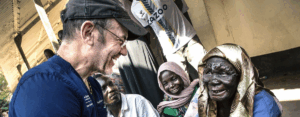
Dr. Lloyd Williams: A Humble Visionary in Global Ophthalmology
Dr. Lloyd B. Williams, recipient of the 2025 American Academy of Ophthalmology Outstanding Humanitarian Service Award, and long-time volunteer with Cure Blindness Project, embodies selflessness and dedication in his mission to restore sight worldwide.
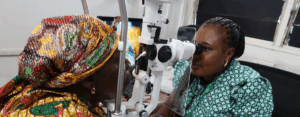
Pilot Program for Primary Eye Care Launches in Ghana
For many people living in remote areas, community health centers are their only accessible source of medical care due to the long distances to larger hospitals. The Cure Blindness Project is addressing this.