
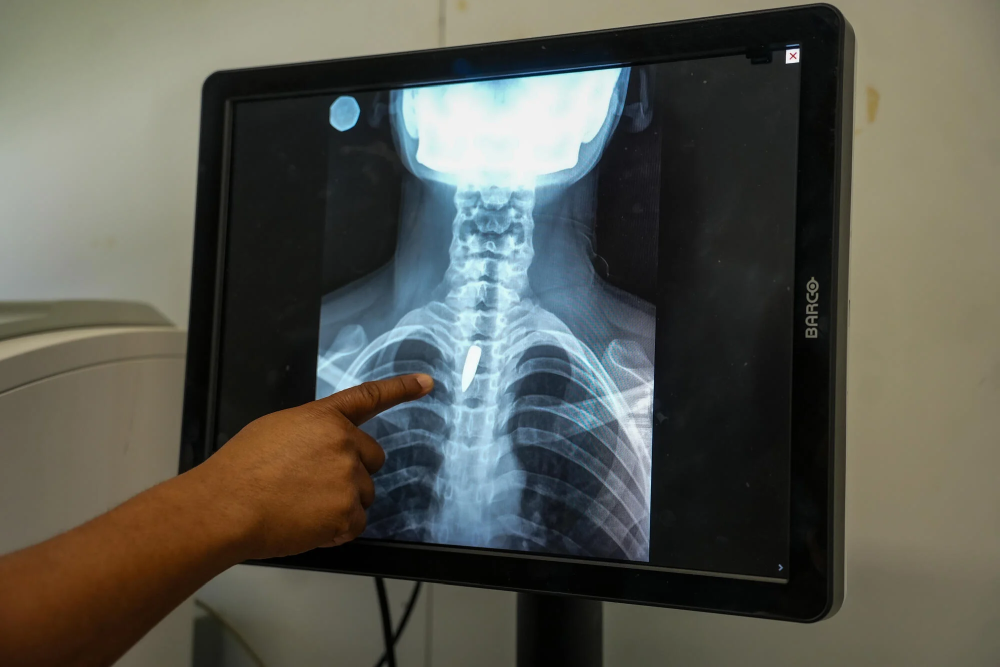
In Port-au-Prince, Haiti, teams from Médecins Sans Frontières are seeing an increasing number of people in need of care for violence-related injuries. Many civilians, including injured people, are trapped by gunfire and drone strikes in their neighbourhoods, making it difficult to reach medical care.
First published January 22, 2026 by Médecins Sans Frontières
In the first two weeks of January, Médecins Sans Frontières (MSF) treated just over 100 people injured by violence at the MSF hospital in Drouillard, in Port-au-Prince, Haiti. Since late December, the city has seen a surge in clashes between the Haitian National Police and armed groups, mainly in densely populated neighbourhoods under armed group control. For thousands of civilians, daily life is now marked by gunfire and drone strikes, leaving many trapped in their armed groups-controlled areas.
In Port-au-Prince, being injured no longer simply means surviving violence: patients must also cross multi-metre barricades, navigate blocked roads, and pass through neighbourhoods under fire to reach one of the few hospitals still operational. Many medical facilities in the capital are closed or only partially functional, some having been attacked or looted by armed groups. Only one public hospital with surgery capacities remains open, while most others are private and largely inaccessible to people who are the most vulnerable in the city.
“In my area, there are no hospitals and no medicines,” says Anderson, a kitchenware merchant and MSF patient. “There are a few doctors, but they barely have enough to provide basic dressings.” He was admitted to MSF’s Tabarre hospital in early January after being shot in the heel while returning home in a Port-au-Prince neighbourhood controlled by armed groups.
In my area, there are no hospitals and no medicines. There are a few doctors, but they barely have enough to provide basic dressings.— Anderson, a kitchenware merchant and patient at MSF’s Tabarre hospital
“People no longer dare to leave these areas. They are afraid,” he says. “Those coming from my area are always seen as criminals, especially if they are shot, even if they haven’t done anything wrong. Ambulances do not come here, and mototaxis often refuse to transport the injured for fear of being targeted themselves.”
Despite these severe constraints people face trying to access care, MSF has recorded a marked increase in violence-related admissions at our Drouillard hospital. Between 29 December 2025 and 12 January 2026, 101 patients injured by violence were admitted in just 15 days, including 66 with gunshot wounds. This two-week figure already far exceeds the monthly average of 54 gunshot wound admissions at Drouillard in 2025. Of these patients, 30% were women and 9% were children under 15.
At Drouillard hospital, between 29 December 2025 and 12 January 2026:
- 101 violence-related injury patients admitted
- 33% of patients were women
- 9% of patients were children under 15
Patients requiring surgical care are referred to Tabarre hospital, one of the last facilities in the capital still able to provide free specialised surgical care. These referrals, however, occur under precarious conditions. For over a year, MSF has had to suspend our ambulance service due to repeated threats and attacks on vehicles and patients during transfers between medical facilities.
Some vehicles from the state ambulance centre remain operational, but their capacity is insufficient. As a result, many critically injured patients arrive late, after fighting has subsided in their neighbourhoods, often transported by non-medical means, such as mototaxis.
“Many patients arrive with worsened injuries because they were unable to access care earlier,” explains Dembélé Dionkounda, physician and medical coordinator at Tabarre hospital. “In the past two weeks, most violence-related admissions involved gunshot wounds, often severe, causing open fractures or abdominal trauma.”
“With over 40 such cases, these injuries make up the majority of patients we treated during this period,” says Dionkounda.
In 2025, 686 patients injured by violence were admitted to MSF’s Tabarre hospital, nearly 90 per cent of them with gunshot wounds. Among those shot, 193 were women and 47 were children under 14. The trend shows no sign of slowing. On 6 January alone, MSF admitted eight patients with gunshot wounds in a single day, highlighting the persistence and intensity of violence in the capital.
Related Articles
Partners In Health Expands Community-Based Mental Health Care Across Six Countries
Six mental health program leaders at Partners In Health pioneer community-based care across Haiti, Peru, Sierra Leone, Liberia, Rwanda, and Mexico. They transform stigmatized, inaccessible treatment into integrated primary health services.
Haiti Crisis: ALIMA Provides Treatment to Over 15,000 Individuals in Camps for Displaced People
Since February 2024, Haiti’s security crisis, especially in Port-au-Prince, has worsened, driving thousands of families to seek refuge in makeshift camps where living conditions are extremely precarious. In response, ALIMA has been offering essential medical aid to support the most vulnerable for the past year.
Haitian Doctor’s Unwavering Mission Persists Despite Personal Trauma and Gang Violence
Dr. Jean William “Bill” Pape, founder of GHESKIO health clinics in Haiti, has provided free healthcare services for over four decades, pioneering treatments for HIV/AIDS, tuberculosis, and cardiovascular disease while facing unprecedented challenges.