Dr. Javid Abdelmoneim leads MSF medical teams in war-torn Sudan, where they work to save pregnant women and newborns dying at alarming rates as the country’s healthcare system collapses under the weight of ongoing conflict.
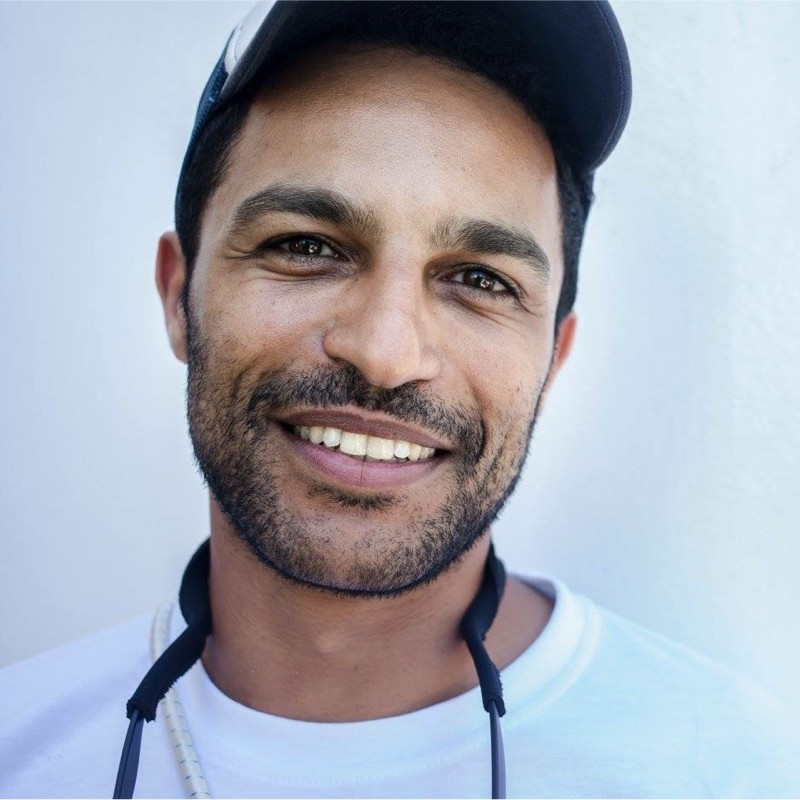
Sudan’s ongoing civil war has created what Dr. Javid Abdelmoneim of Médecins Sans Frontières (MSF) describes as an “enormous emergency,” causing the world’s largest humanitarian disaster as it enters its second year. Working as a medical team leader in Khartoum, Abdelmoneim witnesses firsthand how conflict disproportionately affects the most vulnerable populations.
The war has decimated Sudan’s healthcare system, leading to preventable deaths that often go uncounted in official statistics. These include newborns who die due to maternal malnutrition, women who die during childbirth without proper care, and patients with chronic conditions like diabetes who can’t access medication.
“Conflict is devastating for a population,” Abdelmoneim said in an interview with The Guardian. “You have unborn children affected by war. If they are born at all, they’re underweight, the mother can’t breastfeed them, they’re more at risk of infection, they’re not going to get their vaccinations.”
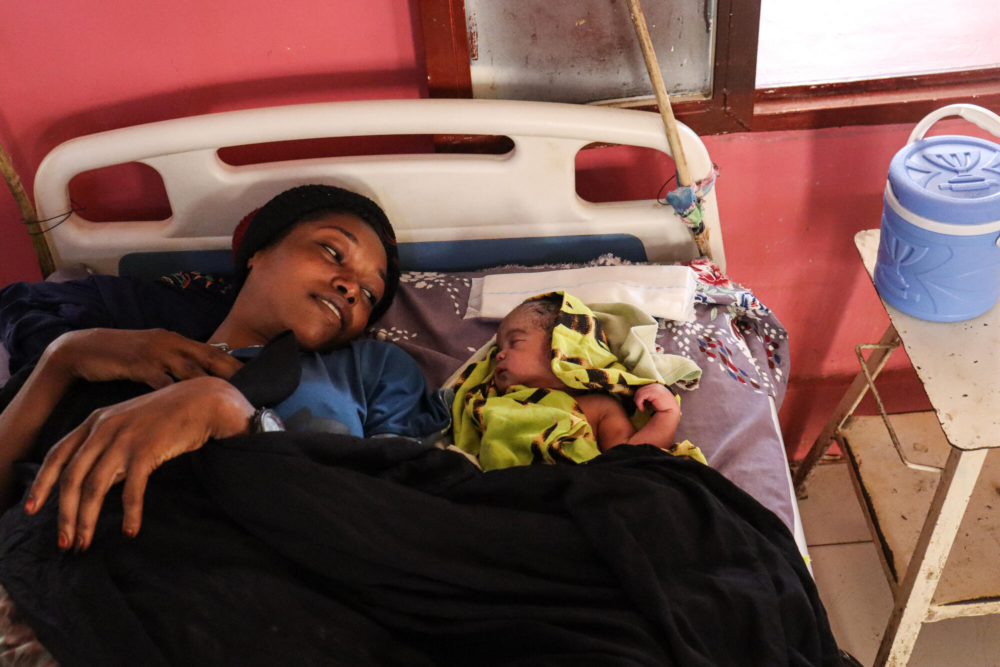
The maternal health crisis is particularly severe. In one Darfur hospital supported by MSF, one in every 30 women died from pregnancy or childbirth complications in July 2024. Women lack access to antenatal care and often arrive at hospitals too late, suffering from infections and sepsis.
For Abdelmoneim, this mission carries personal significance. His father is Sudanese, and he lived in the country as a child before later training in emergency medicine in the UK. He joined MSF full-time three years ago after leaving his NHS position.
Despite the immense challenges and personal connection to the destruction he witnesses, Abdelmoneim remains focused on the lives his team saves. “The hope is on that patient at the bedside, that patient we saved today who is walking out smiling. There are plenty of those,” he said in the interview with The Guardian.
Read the story by Sarah Johnson for The Guardian from January 12, 2025: ‘It’s an enormous emergency’: the doctor saving Sudan’s most vulnerable
Watch this video about MSF in Sudan, from 2023:
Related Articles
“She Has Given Us a Sense of Security”: The Humanitarian Midwives Deployed to Sudan’s Blue Nile State
In Sudan’s Blue Nile State, UNFPA-trained midwives like Sa’aida and Safya deliver babies, refer complicated cases, and track pregnant women camp to camp amid displacement and flooding, offering safe births and reassurance where health facilities have collapsed and funding has fallen short.
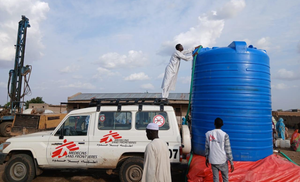
Bringing Water and Healthcare to Displaced People in Abu Jubayhah, South Kordofan, Sudan
Since June 2026, MSF has drilled a borehole and installed a solar-powered water pump for 57,880 displaced people in Abu Jubayhah, South Kordofan, delivering over a million litres of water while expanding clinic care for malaria, malnutrition, and maternal health.

August 2026 Snapshots from the IMC
The work of the International Medical Corps includes mobile clinics reaching flood-hit communities in the Philippines, a busy primary health center serving displaced families in Sudan, first-responder training in Pakistan, and rehabilitated water systems in flood-affected Zimbabwe.