
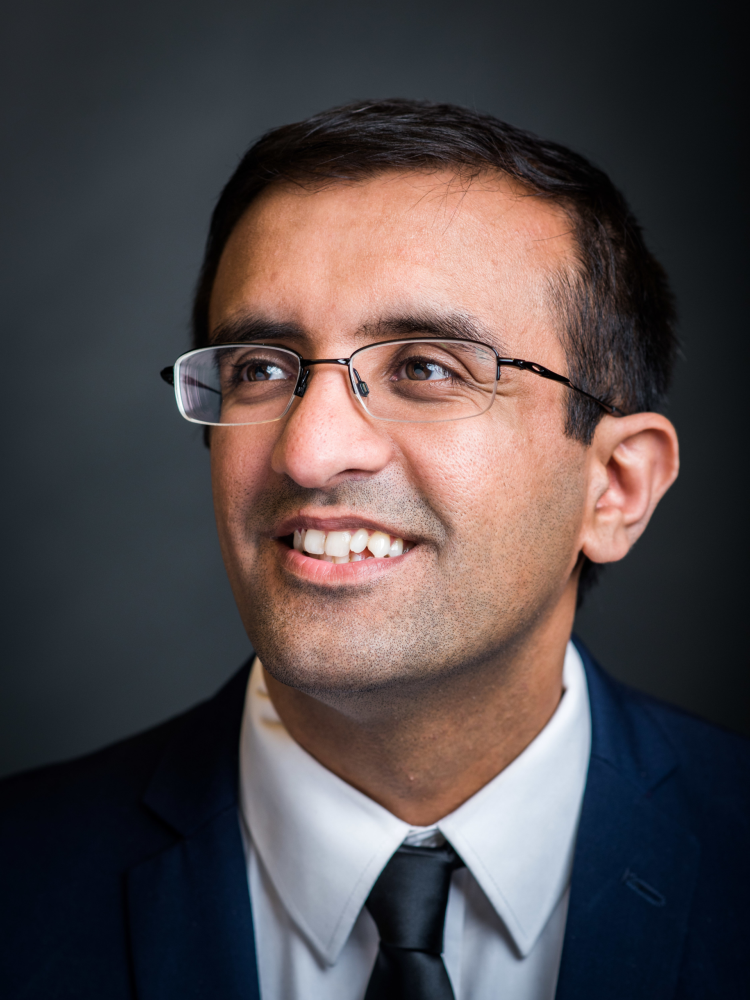
In 2025, Angels in Medicine profiled Last Mile Health, the organization Dr. Raj Panjabi and his wife Amisha Raja co-founded in 2007 with $6,000 collected from their wedding guests. Last Mile Health trains, pays, and supervises community health workers in some of the hardest-to-reach parts of Africa, treating them as salaried healthcare professionals rather than unpaid volunteers. In Liberia, where the organization began, that model helped the country reach full national scale of its Community Health Assistant Program in 2024, putting a trained health worker within reach of every remote community.
The organization has now received a prestigious honor in global philanthropy. On August 11, 2026, the Conrad N. Hilton Foundation named Last Mile Health the recipient of the 2026 Hilton Humanitarian Prize. This is the world’s largest annual humanitarian award — $3 million in unrestricted funding — given to a nonprofit organization. The prize will be formally presented at a ceremony in Los Angeles on October 6, 2026.
Continued Growth
The scale of the work has grown substantially since last year. At that time, roughly 16,000 community and frontline health workers were supported across Liberia, Ethiopia, Malawi, and Sierra Leone, serving more than 19 million people. That number has now climbed to more than 20,000 community health workers, serving over 32 million people across the same four countries. Dr. Panjabi told NPR that his organization intends to put the prize money to work “immediately in the countries we currently work in now,” with a goal of reaching 50 million people by 2028.
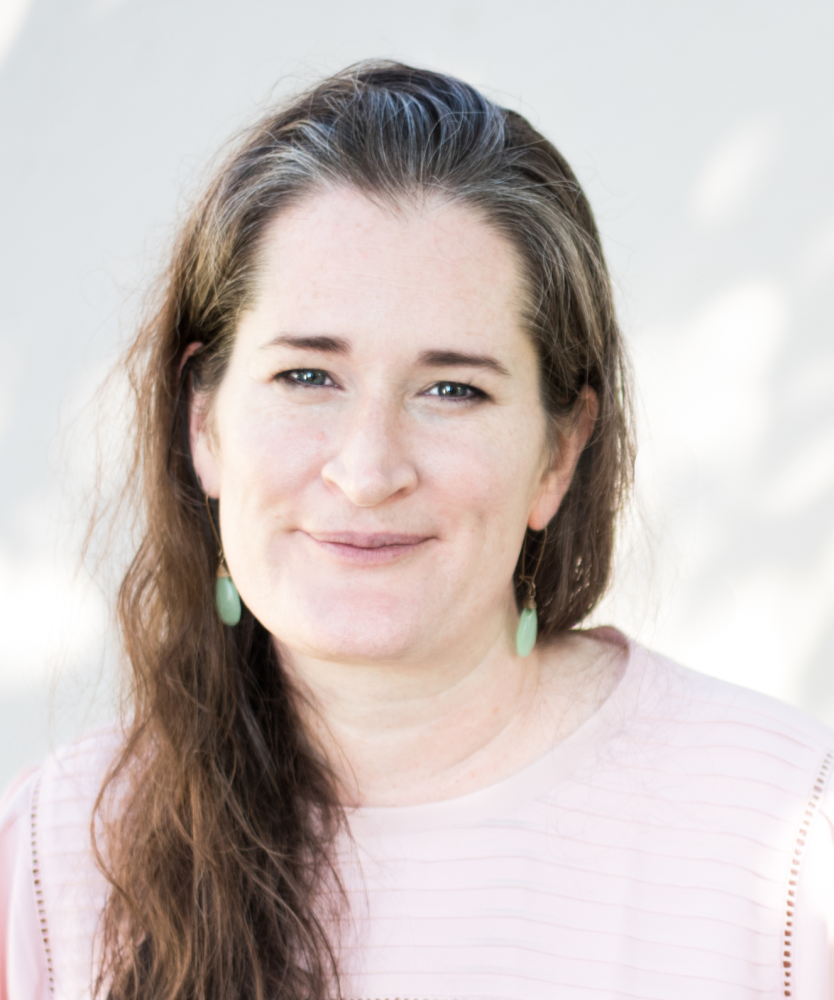
Dr. Panjabi has stepped back from day-to-day leadership. He now holds the title of president emeritus, and maintains his advocacy work for the organization.
CEO Lisha McCormick is now the face of Last Mile Health’s public messaging. She told the Hilton Foundation that “Last Mile Health believes that everyone, everywhere deserves care, and the Hilton Humanitarian Prize funding will help us accelerate a continent-wide shift in how healthcare is delivered and financed, bringing quality care within reach of millions more people.”
What the Prize Recognizes
The Hilton Humanitarian Prize, established in 1996, has awarded more than $50 million to 31 nonprofit organizations over three decades. Selection runs through a jury that this year included former New Zealand Prime Minister Helen Clark, Nobel laureate Leymah Gbowee, Conrad N. Hilton III, Sister Joyce Meyer, Queen Noor of Jordan, Kennedy Odede, Zainab Salbi, and former Mexican president Ernesto Zedillo.

Hilton Foundation President and CEO Peter Laugharn framed the award as recognition of a model built on local ownership. “These are neighbors caring for neighbors and communities building stronger systems from within,” he said in the foundation’s announcement. He also noted that the timing matters: reductions in global aid funding are straining health systems in the very regions Last Mile Health serves.
Dr. Panjabi highlighted the benefits of community-based health to NPR. “One of the most effective ways to get ahead of disease is to detect it at the earliest possible time. And community health workers are part of the answer.”
A Voice from the Field
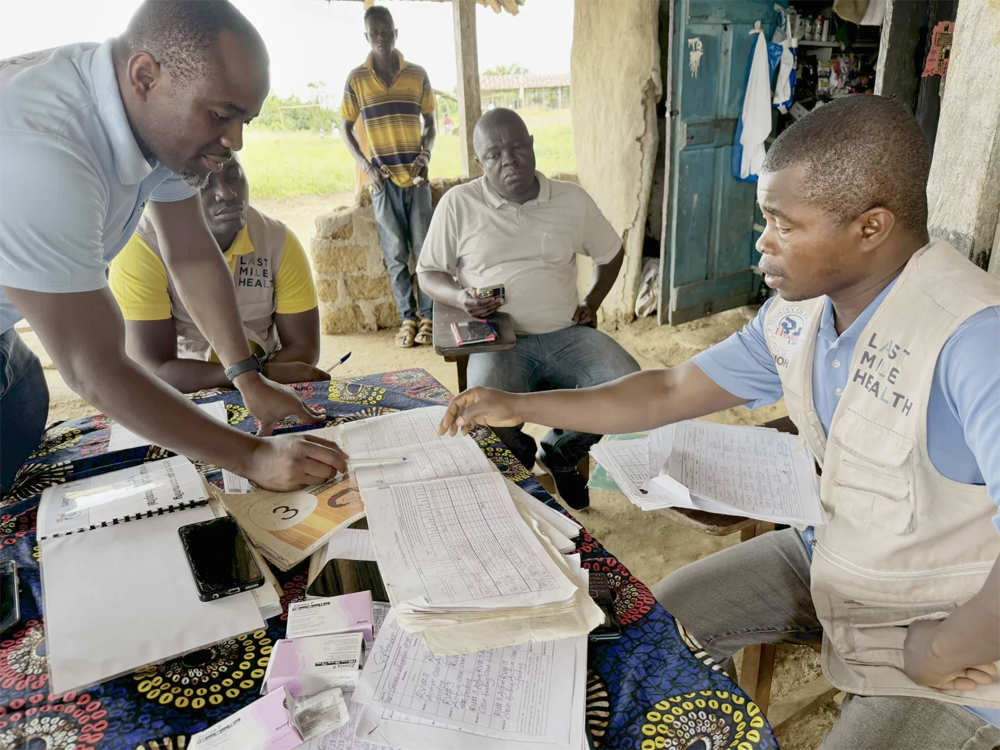
Genesis Whegelee is a community health worker who has covered Rivercess County, Liberia, since 2018. He is responsible for 42 households, rotating through roughly three visits a day, checking on sick children, pregnant women, and anyone who needs a diagnosis, using a small bag of medications and a job aid he consults in the field.
He described one case, a mother who carried her 22-month-old, feverish and weak, to his home in the middle of the night. A rapid test confirmed malaria; Whegelee started treatment and followed up daily for five days. “The child was better, and the mother is so happy that whenever I visit now the mother gives me a hug,” he told NPR. He also recalled talking a skeptical father into letting his wife deliver their baby at a clinic rather than at home, a decision that ended well for both mother and child.
Those are the kinds of encounters Last Mile Health’s model is built on, multiplied now across four countries and more than 32 million people. The Hilton Prize adds both money and visibility to that effort. McCormick hopes that this prize accelerates the “continent-wide shift” in care.
Watch this video to learn more:
This summary is based on the following articles:
- Last Mile Health Selected as the 2026 Conrad N. Hilton Humanitarian Prize Recipient, press release from The Conrad N. Hilton Foundation.
- Last Mile Health, from The Conrad N. Hilton Foundation.
- His wedding guests gave $6k to fund a health startup. Now it’s won a $3 million prize, by Diane Cole for NPR.
- Last Mile Health website
Related Articles
Affordable Microscope Speeds Up Malaria Diagnosis with AI
The Octopi microscope autonomously analyzes blood samples in minutes, detecting malaria-infected cells among millions. Its creators hope it will accelerate the fight against malaria. From Stanford Report.
Risky, Tiring and Worth it: the Volunteer Vaccinators Protecting Children in Rural Liberia
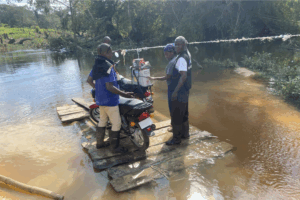
Vaccinators Harrison Moore and Jerry Karn ford rivers, navigate potholed, mud-slick roads, and do it all without pay. From Gavi, the Vaccine Alliance.
Last Mile Health: Bringing Healthcare to the Most Remote Communities
Last Mile Health transforms healthcare delivery in remote communities by training and paying local health workers, ensuring no patient is out of reach in Liberia, Ethiopia, Malawi, and Sierra Leone.