Direct Relief delivered requested medications to providers caring for displaced patients with urgent, severe conditions exacerbated by the Los Angeles County wildfires.
By Talya Meyers
First published January 10, 2025 by Direct Relief
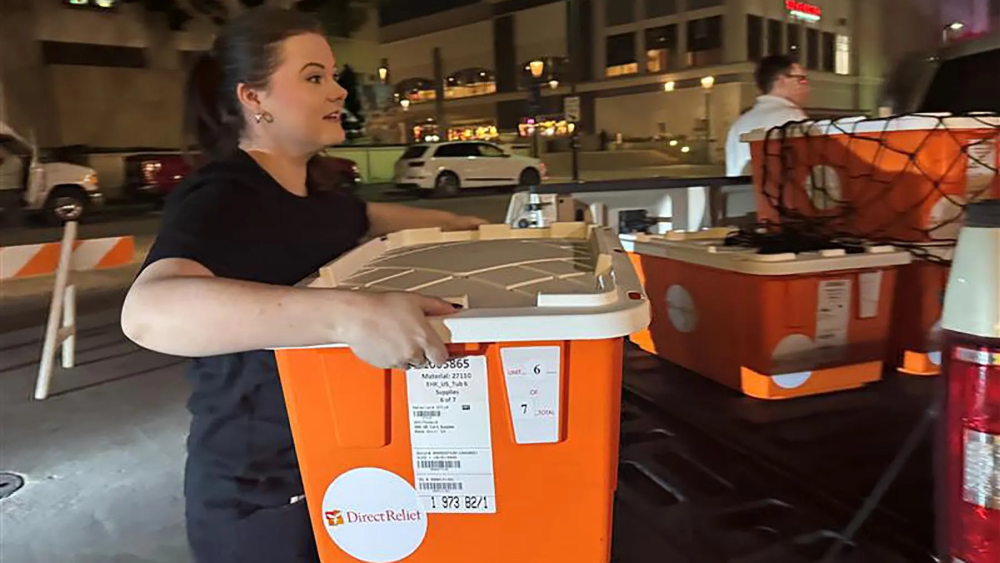
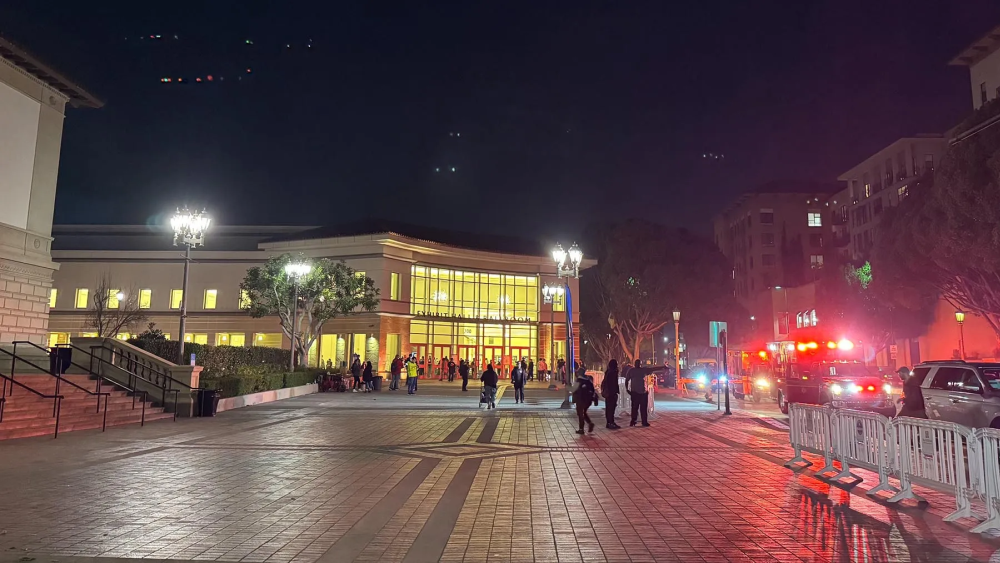
Smoke clouded the air as the pickup truck inched down congested backroads and out-of-order stoplights toward Pasadena on Thursday evening. People fleeing the Eaton Fire, including hospice patients, medically vulnerable seniors, and evacuees in need of emergency care, were receiving medical treatment at the Pasadena Convention Center.
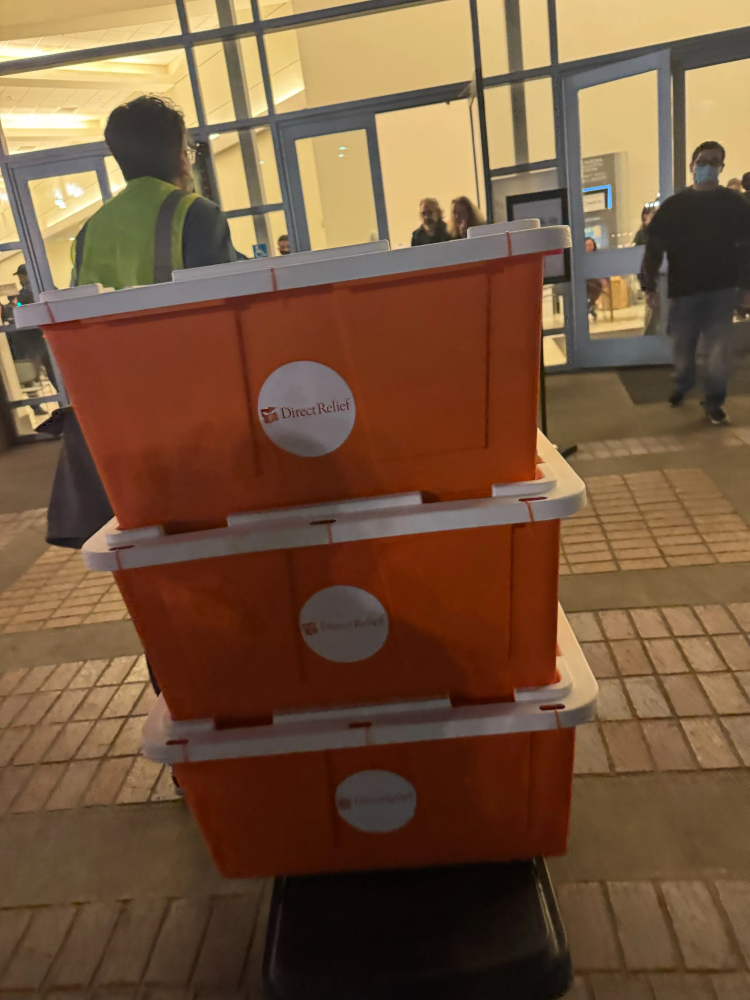
At the request of AltaMed Health Services, a community health center whose staffmembers were providing medical care to evacuees at the convention center, Direct Relief pharmacist Pacience Edwards was delivering an emergency health kit — a large-scale supply of medications and materials commonly requested during wildfires and other disasters.
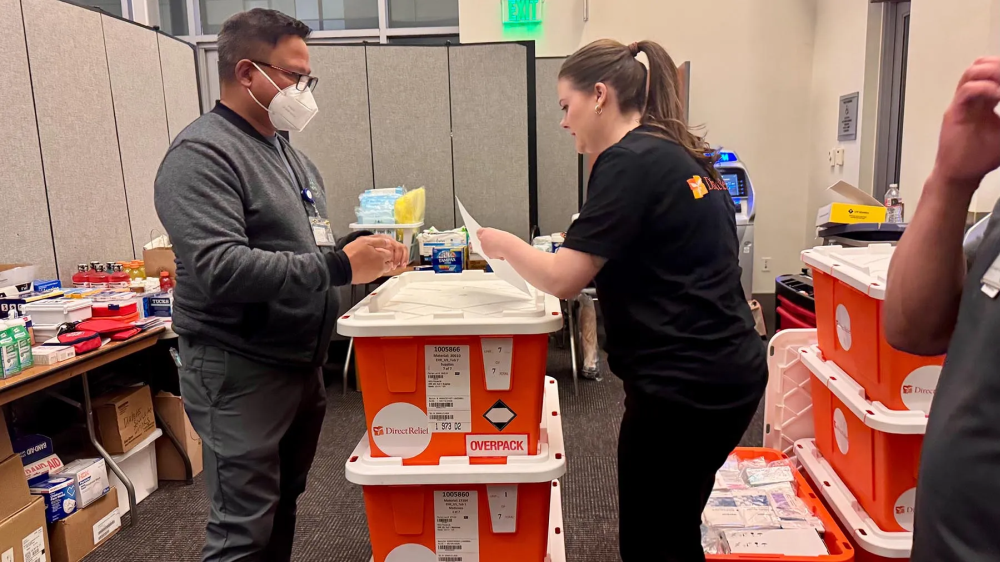
Police officers waved Edwards through the barricade outside the convention center, where the contents of the kit were put to instant, urgent use. A patient with severe respiratory symptoms had been waiting for a nebulizer — a machine that delivers medication directly to the lungs — and others urgently needed albuterol inhalers. One patient who seemed on the verge of a diabetic crisis needed their blood sugar tested immediately — but the glucometer the medical team already had with them wasn’t working.
“We ripped open the packaging on the glucometer [from the emergency health kit] to make sure they could use it right away,” Edwards recalled.
Patients whose hypertension was made worse by the stress of the fires needed medication to reduce their blood pressure. Healthcare providers working with medically vulnerable patients in close quarters were concerned about recent outbreaks of norovirus and RSV, both infectious diseases that can spread quickly in emergency shelters. Ambulances kept arriving to pick up patients in severe distress.
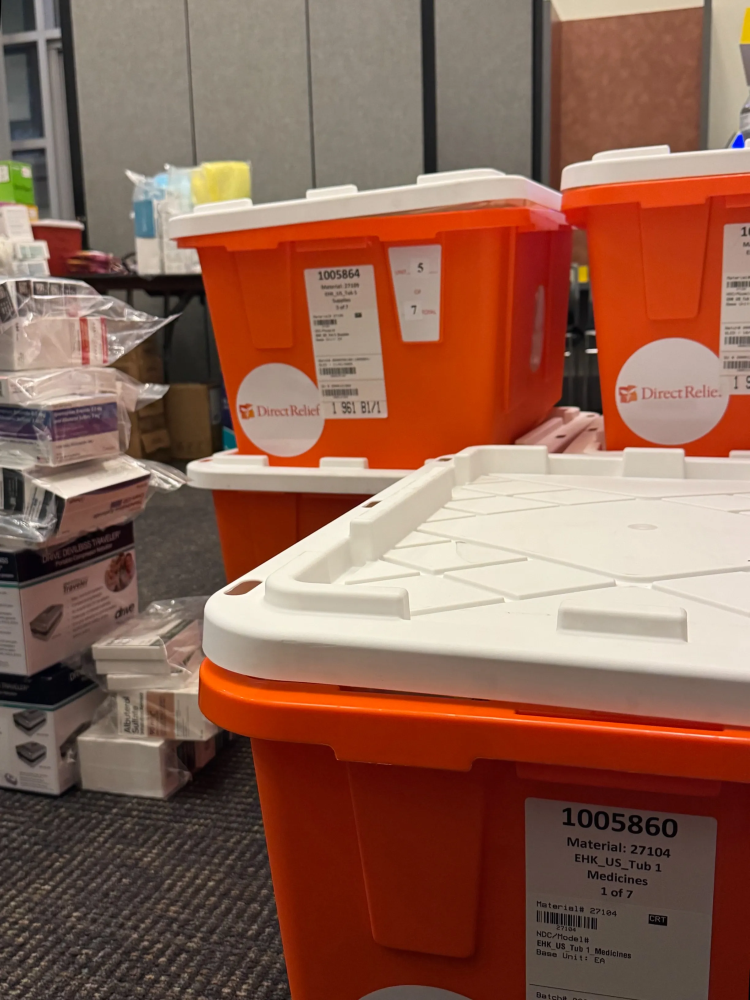
Direct Relief’s emergency health kits, which can treat about 100 patients affected by a disaster, include equipment and prescription medications for chronic diseases like diabetes and hypertension, respiratory equipment and medications, antibiotics, protective equipment, wound care, hygiene items, and other essential medicines and supplies.
“We had what they needed and they used it immediately,” said Alycia Clark, Direct Relief’s chief pharmacy officer. Clark had been at the Pasadena Convention Center for several hours already to assess needs with the medical teams who’d been working through the night.
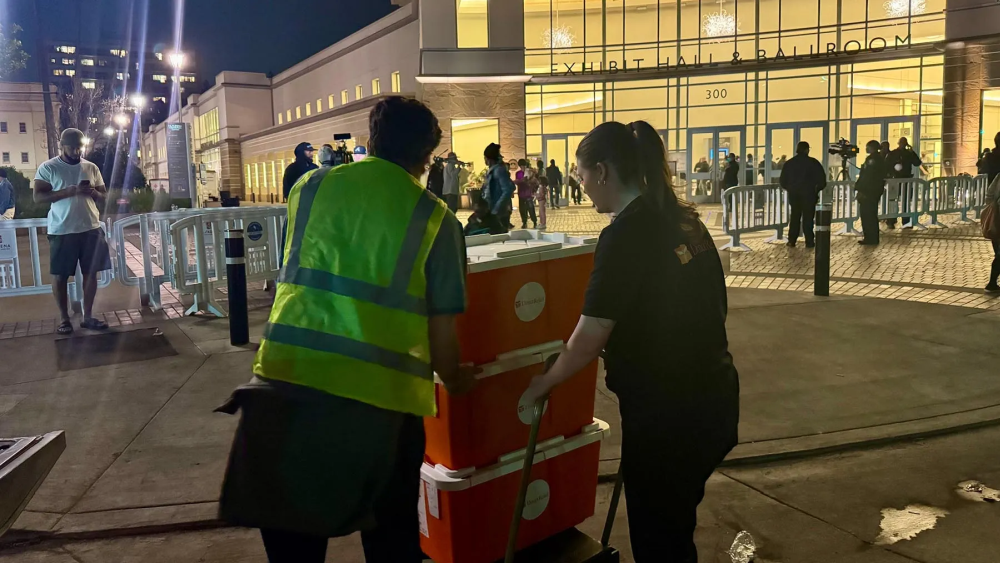
Edwards said the level of urgent need was high. She’d been expecting to see the minor wounds and routine medical issues common in emergency shelters. But instead, nurses triaged patients on cots, and ambulances kept arriving to pick up the patients in need of hospital care.
“The medical team was providing a much higher level of care,” she said. And while over-the-counter medications were easier to come by, medical providers told Clark and Edwards that prescription treatments like chronic disease and respiratory medicines were urgently needed.
As the constellation of wildfires across Southern California continues to displace more than 100,000 people, the area’s community health centers, free clinics, and other nonprofit healthcare organizations are coordinating to provide in-the-field care. AltaMed providers were working at the shelter even as the health center lost a facility to the flames and evacuated staff in the path of danger.
“They do not have the resources they usually do,” Edwards said. The level of care she saw physicians and nurses providing in an open shelter space “was just really impressive.”
In response to requests from partners across Los Angeles County, Direct Relief has provided N95 masks, hygiene kits, emergency medical packs, reentry kits, wildfire kits, and other support to healthcare organizations working on the ground. Direct Relief staff have been working in the ground in Los Angeles to distribute N95 masks at community sites like the Koreatown YMCA Center for Community Well-being and the Anderson Munger Family YMCA, deliver requested supplies to community health centers and other partners, and assess and prepare for the next stage of medical need.
“We’ll continue to support as long as needed,” Clark said.
Related Articles
Critical Medical Aid Arrives in Venezuela to Support Patient Care, Post-Earthquake
More than six tons of medicines and supplies, requested by the Venezuelan Red Cross and Acción Solidaria, arrived Saturday in Caracas, provided by Direct Relief.
Direct Relief Supports Venezuela Earthquake Recovery with On-The-Ground Initiatives to Strengthen Medical Logistics, Recovery Efforts
Acción Solidaria and Grupo de Rescate Metropolitano de Caracas, or GREMCA, received emergency funds from Direct Relief to support health efforts as the earthquake response continues.
Preventing the Quiet Deaths of Sudan’s War
When Sudan’s war shattered medical supply chains, patients with hemophilia, diabetes, and kidney disease began dying for lack of specialty medicines. Direct Relief, working with MedGlobal and other partners, is delivering clotting factor, insulin, dialysis support, and more to reach these neglected patients.