
Dr. Hadiza Galadanci, an OB-GYN and researcher in Kano, Nigeria, has spent decades confronting one of global health’s most persistent failures: women dying in childbirth from causes doctors already know how to treat.
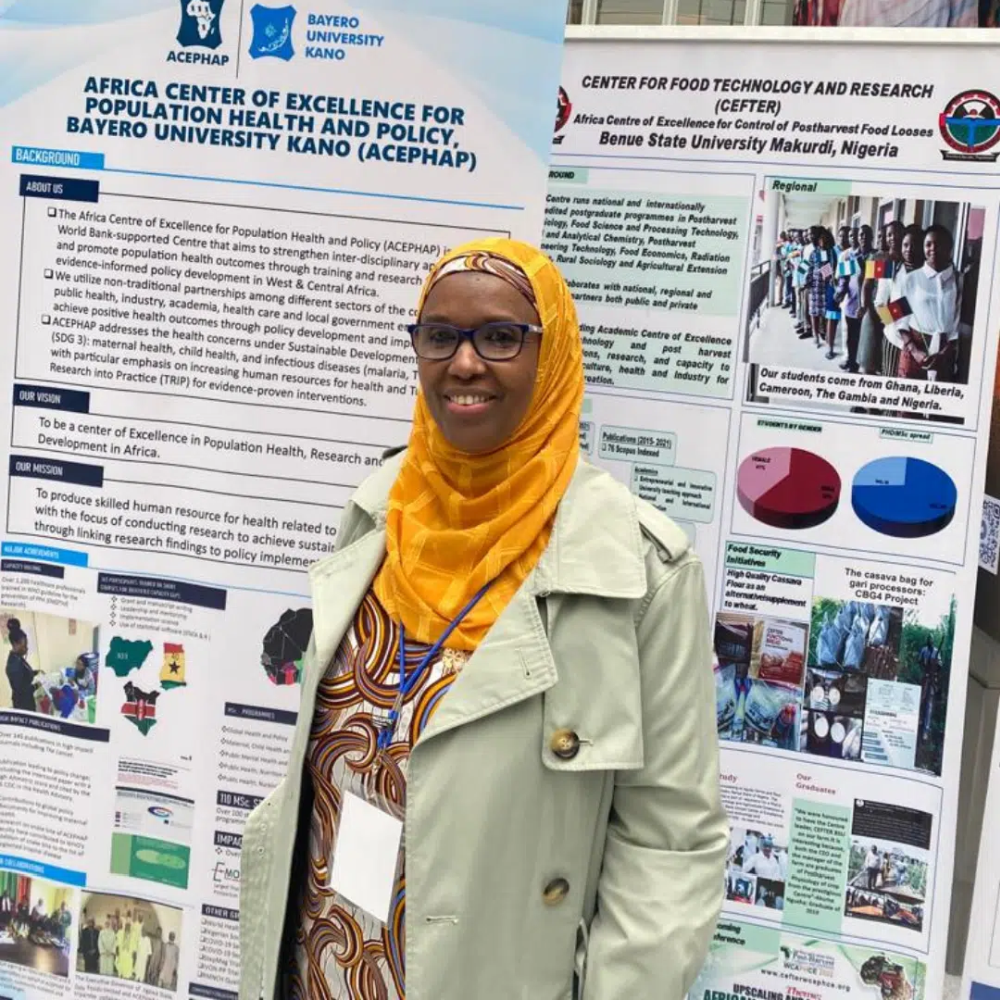
Postpartum hemorrhage kills thousands of women each year, accounting for more than a quarter of all maternal deaths, with nearly all of them occurring in sub-Saharan Africa. For Dr. Galadanci, a professor of obstetrics and gynecology at Bayero University and director of the Africa Center of Excellence for Population Health and Policy, the problem is not abstract. “You never forget the experience when a woman just slips away in your hands, and you know it is too late,” she said in a WHO interview.
Over more than two decades as a practicing OB-GYN, she found herself repeatedly asking the same question: why, when causes and treatments are known, are women still dying?
Her answer was to move from clinical practice into research. The result is E-MOTIVE, a bundled clinical protocol that begins with a simple plastic drape, costing less than $2, placed beneath a delivering mother to collect and measure blood loss in real time.
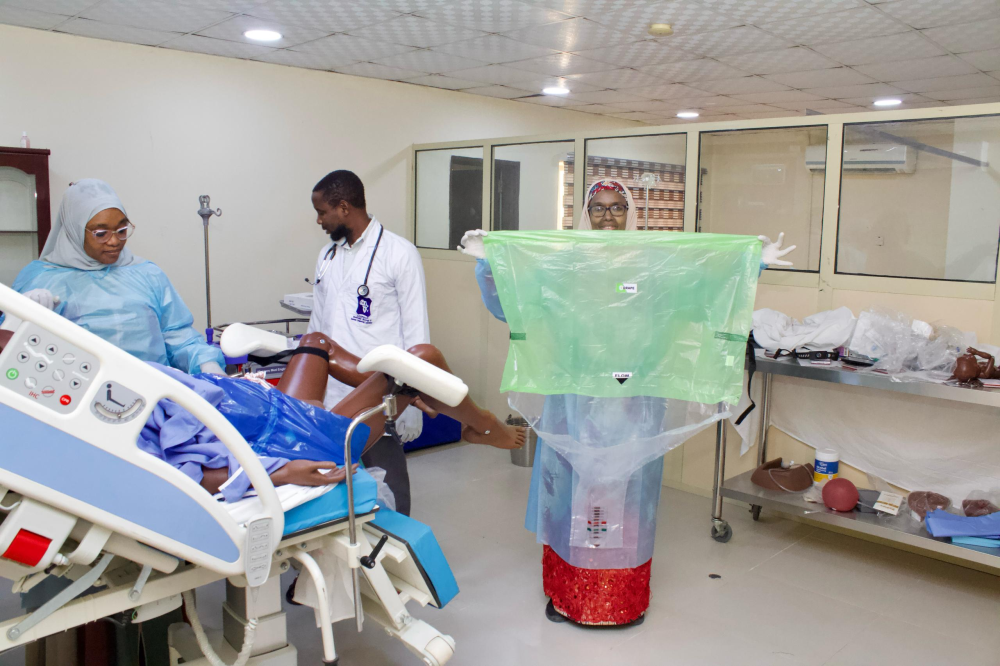
“You cannot accurately assess blood loss by just looking,” said Dr. Zahida Qureshi, a co-investigator on the E-MOTIVE trial, in an interview with the WHO. “By the time we decide to intervene, many women are already in shock.”
Once hemorrhage is detected, health workers administer a simultaneous suite of proven interventions — uterine massage, oxytocic drugs, tranexamic acid, and intravenous fluids — rather than trying them sequentially and losing critical time. A study of over 210,000 patients, published in the New England Journal of Medicine in 2023, found a 60% reduction in serious bleeding complications compared to standard care. Within six months, WHO had incorporated E-MOTIVE into its global guidelines.
This episode of Our Voices takes a closer look at maternal and infant mortality rates around the world while examining some successful initiatives put in place to ensure the survival of the mother and child. Dr. Hadiza Galadanci, an obstetrician and researcher from Nigeria, discusses how she led a team of researchers in four African countries with high maternal mortality. Plus, co-host of VOA’s Healthy Living Linord Moudou talks about her recent one-on-one interview with Melinda French Gates which focused on this year’s Gates Foundation’s Goalkeepers report.
The on-the-ground impact has been immediate. Frontline health workers implementing the protocol report that they haven’t lost a single patient to postpartum hemorrhage since adopting it. “I get to facilities where they’re using this system and they’re telling me they haven’t seen any women dying of postpartum hemorrhage since they started,” Dr. Galadanci told Time magazine. “That’s enough satisfaction that it is working.”
Her work has earned widespread recognition, including the FIGO Women Award in 2018 from the International Federation of Gynecology and Obstetrics, a Heroine of Health Award in 2023 from Women in Global Health, and a place on TIME magazine’s 100 Most Influential People in Health in 2024.
She is already turning her attention to the next challenge: studying whether a simplified regimen of magnesium sulfate injections can prevent eclampsia with greater efficiency and accessibility. The tools are evolving; the commitment behind them is not.
This summary is based on the following articles:
- Years of research are poised to dramatically alter the course of maternal mortality, for the WHO
- Come to work with an obstetrician in Kano, Nigeria, By Dr. Hadiza Galadanci for the Gates Foundation
- Hadiza Shehu Galadanci, by Jamie Ducharme for Time magazine
Related Articles
Ethiopia: Turning the Miracle of Healthcare Access into Reality
In a sandy area of southern Ethiopia, affected by malnutrition, climate shocks, water scarcity, and lack of healthcare, new life continues to emerge in the remote hospital of Hargelle, in Afder. From ALIMA.

A Doctor’s Vision Becomes France’s Model for Treating Female Victims of Violence
Dr. Ghada Hatem-Gantzer spent years listening to women describe abuse, mutilation, and trauma—then built a facility that brought all the help they needed under one roof. Now her template is spreading across France.

Saving Lives in the Central African Republic: An Inside Look
The Central African Republic can be a difficult and dangerous place to operate, but International Medical Corps is delivering hope and lifesaving care to communities in crisis.