Jay Patel returned to Kenya and built the AI behind PROMPTS, Jacaranda Health’s free text service that answers pregnant women’s questions and sends urgent cases to nurses. It now reaches millions of mothers in Kenya and other countries.
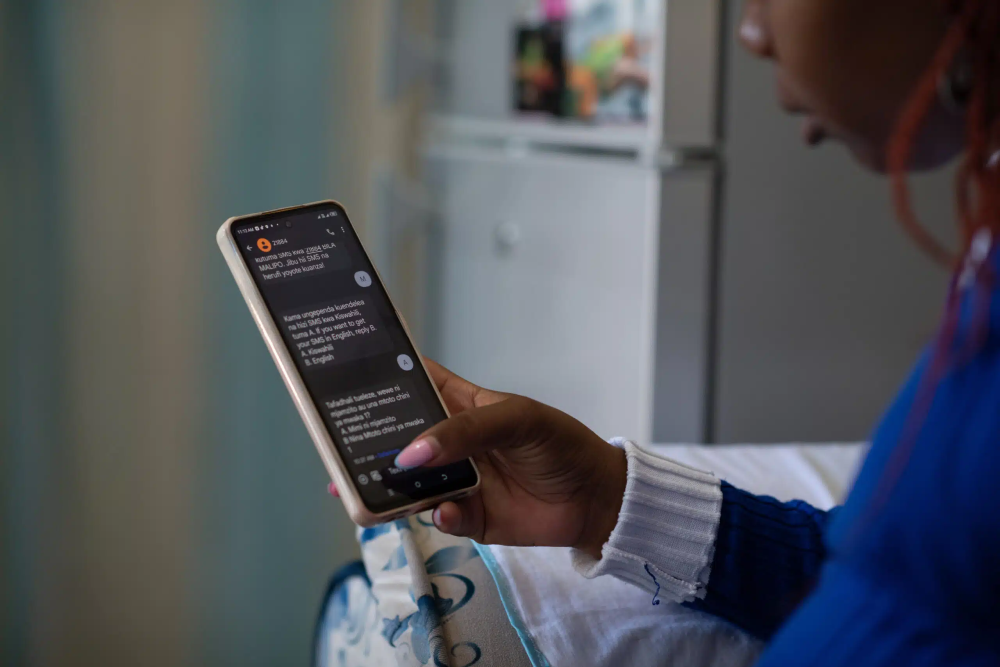
In her third trimester, a Kenyan woman named Millicent was anxious. A year earlier she had lost a pregnancy after complications went unnoticed, and like many women in rural Kenya, she lived far from the nearest hospital. At a prenatal visit she had signed up for PROMPTS, a free text-message service run by the nonprofit Jacaranda Health.
One afternoon she texted it about severe headaches and blurred vision. The reply came quickly: these could be signs of preeclampsia, a dangerous rise in blood pressure during pregnancy. A nurse called to follow up. At the hospital, doctors found her blood pressure dangerously high and treated her, and a few weeks later she delivered a healthy baby. “If I had waited at home, I might have lost another baby,” she said, in an account published by the Agency Fund, one of Jacaranda’s funders.
Moments like that are the reason PROMPTS exists. In Kenya, about 6,000 women die each year from causes related to pregnancy and childbirth, roughly 16 women a day, and almost a third of those deaths are thought to involve delays in seeking care. Many women live far from a hospital and have no internet connection.
What most of them do have is a basic mobile phone.
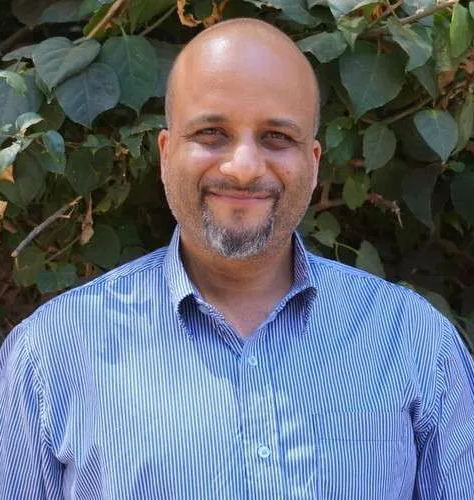
“If a mom in a rural part of Kenya starts bleeding at 2 a.m., she can’t just Google it,” Jay Patel, Jacaranda Health’s director of technology, told NPR. “But this service runs completely over SMS. It’s completely free to the user, and it’s accessible to anyone who has a basic phone.”
Patel has spent nearly eight years building the system that answers those messages. His work shows what it takes to put artificial intelligence to work for poor women in a public health system: good engineering, but also patience, local knowledge, and a steady insistence that a trained human being stays in the loop.
A conversation nobody planned
PROMPTS began as a one-way service. Jacaranda sent pregnant women text messages timed to their stage of pregnancy, with appointment reminders and advice on warning signs, breastfeeding, and newborn care. Then, as NPR’s Durrie Bouscaren reported, the mothers started writing back. Some asked whether it was safe to eat avocados while pregnant. Others described swelling or headaches and asked whether that was normal.
When Patel arrived in 2018, Jacaranda was not ready for the flood. By the organization’s own account, its technology amounted to an off-the-shelf messaging system, and a single agent answered mothers’ questions one at a time. Patel recalls about 100 questions a day coming in from mothers in three Kenyan counties. Today the number is 12,000 to 15,000 a day.
The road home
Patel did not set out to work in maternal health. He is Kenyan, and after high school he went to the United States, starting at a school in Indiana before friends drew him to Franklin University in Ohio. He earned a bachelor’s degree in computer science in 2006 and a master’s in 2009, and worked as an assistant project manager at JPMorgan Chase in Columbus. He then came home to do similar work at a Kenyan bank.
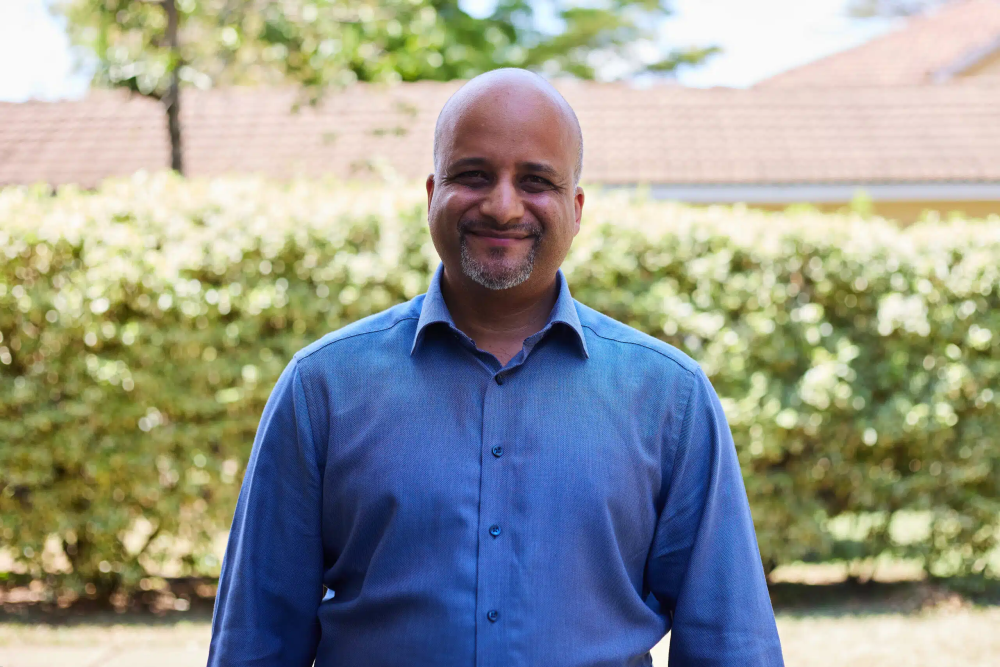
A detour followed. He left banking to help run his family’s business, which traded in hardware and locomotive parts, and automated its paper-based operations. He is candid that it was not the right fit: “I wasn’t very good at the actual running of the business,” he told CITO East Africa, a publication and networking group for chief information and technology officers in the region.
In November 2018 he joined Jacaranda as an innovation fellow, one of two hires brought in to look for improvements in its technology and workflows. He admits he knew almost nothing about the field. He recalls knowing little about maternal and newborn health and even less about public health. Nor was AI the plan. “AI wasn’t really in our sights at the beginning,” he said in a 2024 Jacaranda profile.
Teaching a machine to understand mothers
The volume of questions forced the issue. One of Patel’s first major projects was launching Jacaranda’s initial AI models in 2019. The system read each incoming text, worked out what the mother was asking and how urgent it was, and answered routine questions automatically. About 7 percent of messages were flagged as potentially urgent. Those skipped the AI entirely and went to a special queue for nurses, who could see the mother’s message history and call her.
The harder problem was language. Kenyan mothers write in English, Swahili, and Sheng, a Nairobi street mix of the two. Off-the-shelf chatbots could not handle it. Patel told CITO East Africa that ChatGPT’s Swahili is good but very formal, and that many mothers would rather use English than that register. Jacaranda’s models are built instead to use the informal, everyday Swahili that mothers actually speak. In 2023 his team released UlizaLlama, Swahili for “Ask Llama,” a large language model fine-tuned on more than a million question-and-answer pairs from PROMPTS. They made it freely available for others to build on, and have since extended it to Hausa, Yoruba, Xhosa, and Zulu.
“There’s local context,” Patel told NPR. “If there’s a question about nutrition in Kenya, and you give the same answer from a question about nutrition in Nigeria, you’re going to get laughed out of the room.”
For all the technology, the people remain central. A team of 18 nurses monitors, audits, and answers PROMPTS messages around the clock. “Humans are responsible for ensuring the quality of messages going out, and we audit the quality of the answers,” Javan Waita, Jacaranda’s director of programs in Kenya, told NPR. Keeping that human layer raises the cost, but it is the part of the design that answers the most important question critics ask of medical AI: what happens when the machine gets it wrong?
Patel has built a team to match the work. He told CITO East Africa that he tries to hire people smarter than himself and then acts as a force multiplier. He also named a problem common to nonprofits in Africa: talented Kenyan engineers are easy to find but hard to keep, because American employers often pay several times the local salary. He tries to hold them with autonomy, a good culture, and the mission itself.
From private hospitals to the public system
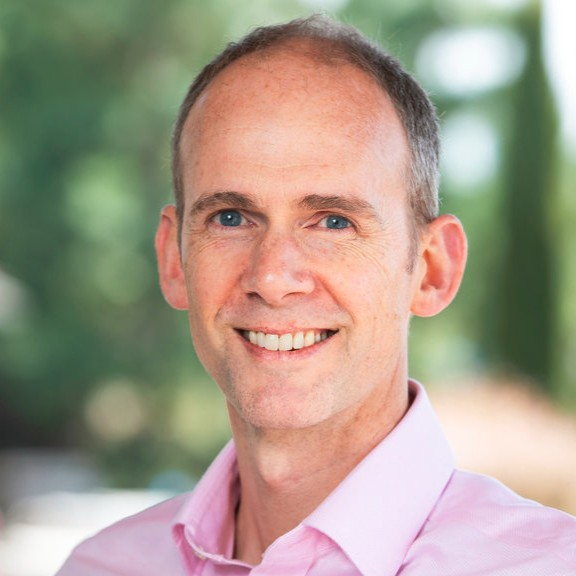
Patel’s work only makes sense against the history of the organization that hired him. Jacaranda Health was founded in 2011 by Nick Pearson, then working in Nairobi for the Acumen Fund, which invests in businesses serving the poor. His wife, Dr. Megan Huchko, is an obstetrician who had worked with low-income women in Kenya. She described a friend’s death in childbirth as “easily avoided with better care.”
Pearson’s first idea was a chain of high-quality, respectful, and profitable maternity hospitals for women on the outskirts of Nairobi. By 2017 Jacaranda ran a busy, well-loved hospital that was still struggling to break even. Meanwhile, 80 percent of Kenyan women were still giving birth in crowded government hospitals that struggled to provide good care. Looking back, Pearson has said that “the opportunity was really with the public health system.”
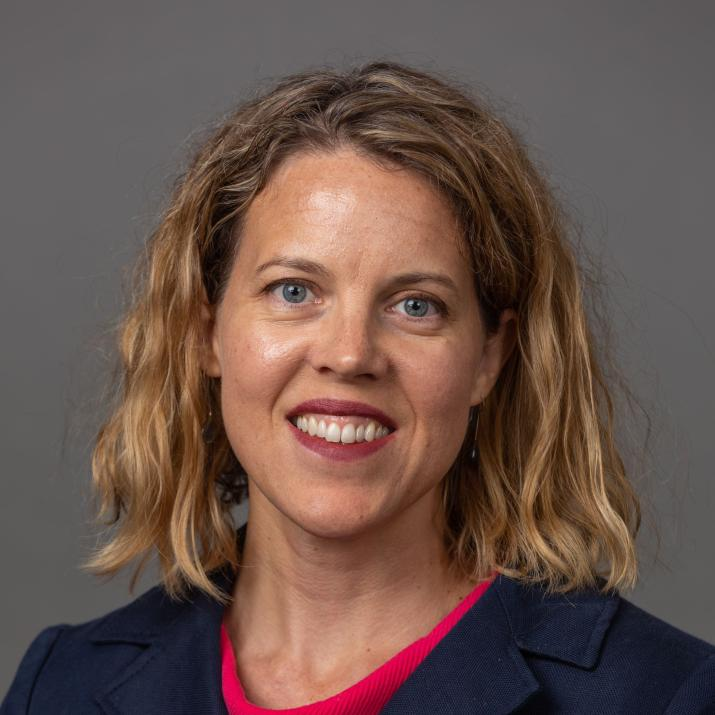
So Jacaranda split in two. The hospital became a separate private company, Jacaranda Maternity, supported by patient fees and impact investors, and the nonprofit turned to technology, nurse training, and data for the government system. Patel arrived the following year, as the first member of a technology team for an organization that now had to serve public clinics across a whole country.
Today the nonprofit runs two main programs. PROMPTS helps mothers get to care. MENTORS helps nurses give better care once they arrive, through a peer model in which government nurse champions coach their colleagues in emergency obstetric and newborn skills. A third tool, PULSE, gathers what mothers report about their care and turns it into dashboards for county health managers.
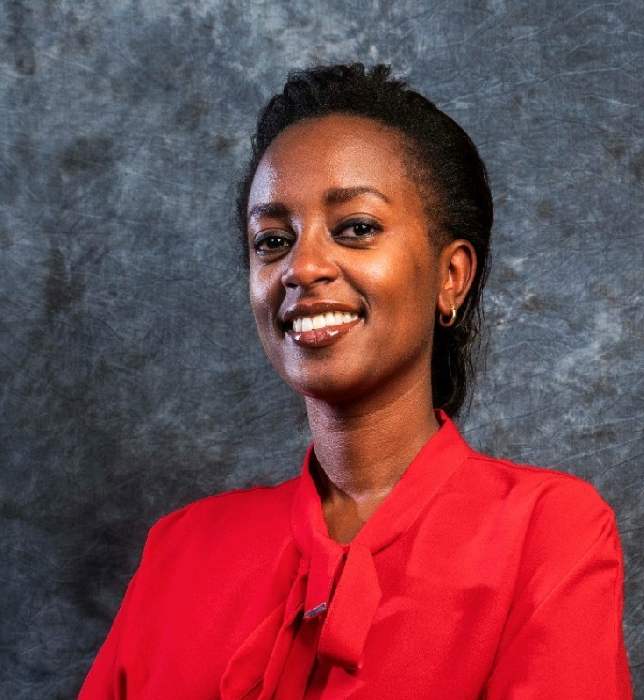
By spring 2025, Jacaranda’s programs had reached more than 3 million mothers and 10,000 frontline nurses across Kenya. The organization is led by Pearson and Cynthia Kahumbura, an engineer who joined as director of operations in 2020. She describes Jacaranda’s role as giving “people who wouldn’t otherwise have a voice in the health system” a channel to the top.
That voice has practical effects. Jacaranda’s 2026 to 2028 strategic plan reports that the Mombasa County government invested about $40,000 to staff a newborn unit at a main referral hospital after Jacaranda’s data showed a pattern of newborn deaths. Mothers’ messages have also revealed something no one set out to measure. Jacaranda has found a link between spells of extreme heat and spikes in mothers reporting headaches, swelling, and dehydration, and it now sends mothers alerts ahead of heat waves.
Does it work?
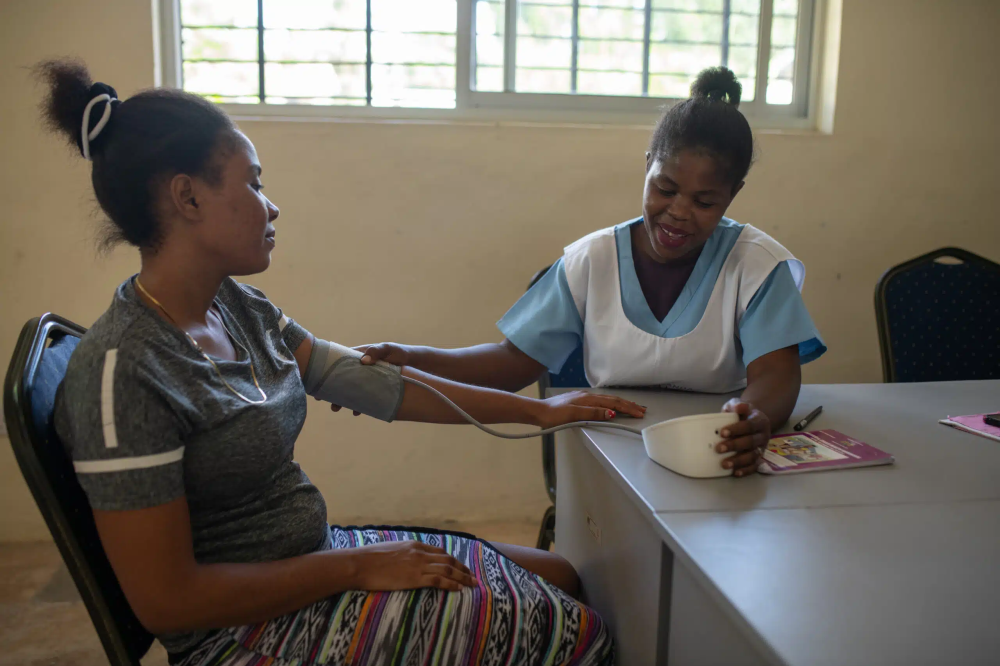
The best evidence comes from a randomized trial led by researchers at the Harvard T.H. Chan School of Public Health and published in PLOS Medicine in February 2025. The team followed 6,139 pregnant women recruited at 40 health facilities in eight Kenyan counties, half of which offered PROMPTS. Women at those facilities knew more about pregnancy warning signs, were better prepared for childbirth, and took better care of their newborns. The clearest gain came after birth, a period often neglected in Kenyan health care. The share of women receiving the recommended number of postnatal checkups rose from 41 percent to 48 percent, an 18 percent relative increase.
The researchers were frank about the limits. The improvements were modest, and PROMPTS did not significantly increase how often women sought care when they had danger signs such as bleeding or severe headache. The study also could not measure deaths. Even in Kenya, maternal deaths are too rare for a study of 6,000 women to show a difference. The trial also tested an earlier version of PROMPTS, with data collected in 2021 and 2022, before Jacaranda’s language model came into use.
Jacaranda acknowledges the same gap. Its new strategic plan says the organization could show changes in mothers’ behavior and in nurses’ skills, but had difficulty measuring what matters most: maternal and newborn deaths and complications. Its top goal for the next three years is to change that: a reduction of at least 10 percent in maternal and newborn deaths in the Kenyan counties where it works, backed by new investment in measurement. Early figures from a few sites are encouraging, including a 28 percent drop in maternal mortality at partner facilities in three counties since 2022, though these are Jacaranda’s own numbers without a comparison group.
Some benefits are harder to put in a table. Smisha Agarwal, director of global digital health at Johns Hopkins University, told NPR that public health messaging has traditionally been limited to what a health system decides a mother should know. “What the LLM really changes is the direction of conversation,” she said. “Because now we can center it on what the mother actually wants to know, and in a private space on her own phone. There is a fundamental change in power.”
What comes next
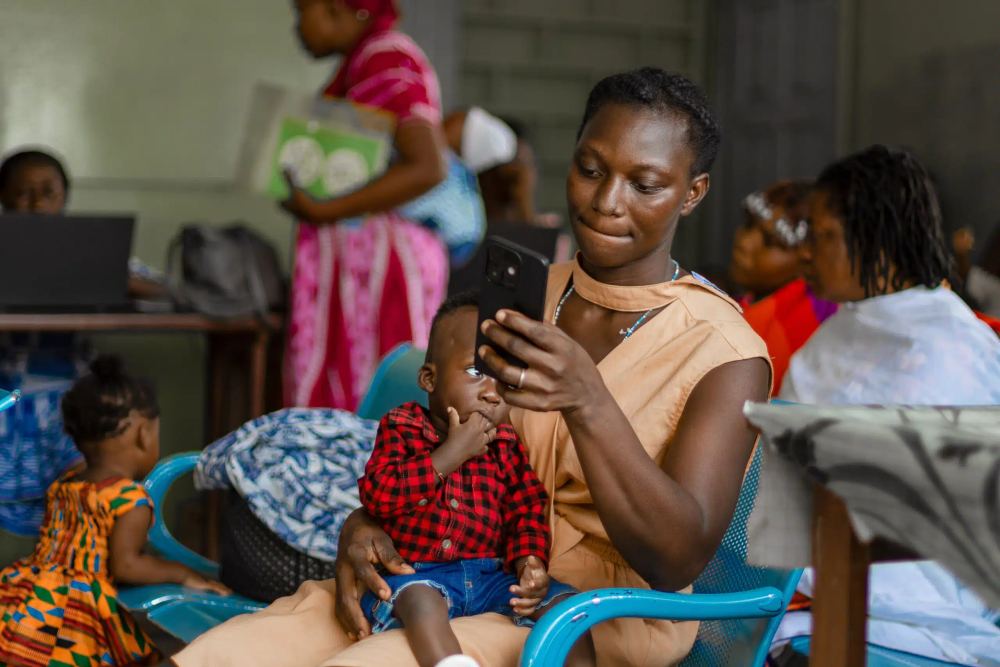
Jacaranda’s plan is written, in its own words, for “a post-USAID world,” in which local governments set their own health priorities with far less money. The trial that validated PROMPTS was itself funded partly by USAID. Jacaranda’s answer is to keep its programs cheap, about $2 per mother for PROMPTS, and to share the costs with governments, telecom companies, and technology firms. It aims to reach 70 percent of pregnant women in Kenya’s health system each year, roughly 800,000 women by the plan’s own figures, and more than 1.2 million women a year elsewhere in Africa.
That expansion is under way. In Ghana, PROMPTS has reached more than 80,000 women, and in March 2026 eight Ghana Health Service clinicians began staffing its helpdesk, a step toward government ownership. Ghana’s government has committed to covering half the cost of PROMPTS. That same month, Jacaranda and the Nigerian nonprofit eHealth Africa launched PROMPTS in Kano State, in Hausa and English, with an initial goal of reaching about 25,000 women.
Patel’s team is working on the next generation of the system, including AI that can guide each mother’s experience more personally. But the strategic plan is careful about where technology fits. The models, it says, “are only the (important) starting point, and mean very little without trusted pathways into mothers’ lives.” The rest is what the plan calls “the slow, less glamorous work of embedding them in government systems and budgets.”
That is the work Patel came home to do. A man who once automated a hardware business now runs a Kenyan team that builds AI in the languages Kenyan mothers speak, for the public clinics where most of them give birth. As Waita put it to NPR, the alternative is stark: “If PROMPTS isn’t there, it means more complications for mothers, more complications for newborns.”
Thanks to Global Health Now from the Johns Hopkins Bloomberg School of Public Health for sharing the story about Jay Patel.
This summary is based on the following sources:
- To prevent deaths in childbirth, Kenyan moms turn to an AI powered chatbot, by Durrie Bouscaren for NPR (All Things Considered), September 17, 2026
- A Lifeline for Mothers, Jakhongir Sadiev, Jay Patel, and Emmanuel Olang, The Agency Fund (Substack), September 2, 2025
- 3 principles for scaling technology, from Director of Technology, Jay Patel, Jacaranda Health, March 21, 2024
- Jay Patel, director of technology at Jacaranda Health, gives back to society, Georgina Guedes, CITO East Africa, May 6, 2025
- Jay Patel (executive profile), CITO East Africa
- Nick Pearson (fellow profile), Mulago Foundation
- Why Kenyan nonprofit Jacaranda Health spun out its hospital as a social venture, by Nick Pearson, ImpactAlpha, April 5, 2022
- Ep 26: Partnering with the Government to Improve Maternal Health with Nick Pearson and Sathy Rajasekharan of Jacaranda Health, hosted by Jonathan Jackson, Dimagi podcast
- Jacaranda Health appoints Cynthia Kahumbura as Co-Executive Director, Jacaranda Health, March 2024
- Jacaranda Health Co-Executive Director Sathy Rajasekharan stepping down to advisory role, Jacaranda Health, 2025
- Impact evaluation of a digital health platform empowering Kenyan women across the pregnancy-postpartum care continuum: A cluster randomized controlled trial, Rajet Vatsa, Wei Chang, et al.; senior authors Jessica Cohen and Margaret McConnell, PLOS Medicine 22(2): e1004527, February 3, 2025
- Jacaranda Health 2026–2028 Strategic Plan, Jacaranda Health, August 2026 (PDF)
- Building a sustainable future for PROMPTS in Ghana, Jacaranda Health, September 2026
- Kano gets AI maternal health push as eHealth Africa, Jacaranda launch PROMPTS platform, Vanguard (Nigeria), March 2026
- Firms target mothers with AI-Powered maternal health support, Daily Trust (Nigeria), March 17, 2026
Related Articles
Signs of Change: A Kenyan Community Health Worker Learns to Talk to his Deaf Patients
As county governments roll out inclusive healthcare programmes for people with disabilities, Community Health Promoters learn a new lexicon of care. From Gavi, the Vaccine Alliance/VaccinesWork
After an Elephant Attack, a Maasai Boy Needed Local Care. Years Later, He Helps Deliver it.
Andrew Kiranto is a nurse on the Health Wagon, which brings local health care to Maasai communities in Kajiado South County, Kenya. From Direct Relief.
The Kenyan Health Illustrator Explaining Vaccination in a Universal Language
For decades, artist Ben Nyangoma has been painting a safer Kenya into existence. From Gavi, the Vaccine Alliance.