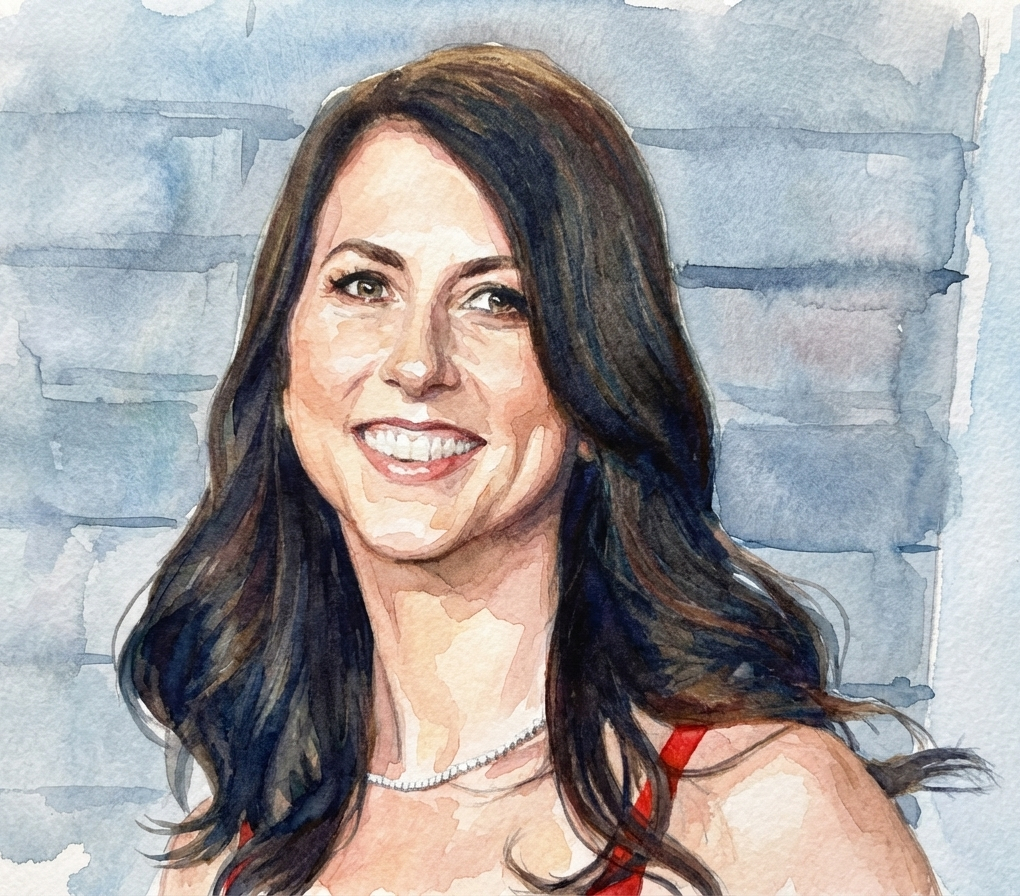
In early December 2025, philanthropist MacKenzie Scott quietly updated a blog post from October to announce she had donated nearly $7.2 billion over the past year, bringing her total giving to over $26 billion since 2019. But Scott’s approach to philanthropy is as remarkable as the dollar amounts involved. Unlike many major donors who attach strings to their gifts or dictate how organizations should spend their money, Scott gives unrestricted funds—trusting the organizations themselves to know how best to serve their communities.
In her characteristically understated style, Scott made the announcement by simply updating the fourth paragraph of an existing post, knowing that “this dollar total will likely be reported in the news.” Yet she urged readers to look beyond the numbers: “Any dollar amount is a vanishingly tiny fraction of the personal expressions of care being shared into communities this year.”
She highlighted the hundreds of billions of dollars Americans give in increments of less than $5,000, the volunteer labor, and the countless acts of kindness that don’t make headlines. As she wrote, “Who nurtured a child in the kitchen; who was kind to a stranger in line at a grocery store; who gave fifty dollars to a local food shelter: these are not news stories. But all of it matters.”
Scott’s December announcement came with an important message: she wanted to shift attention away from her donations and toward the organizations doing the actual work. This is the spirit behind this article, to honor her wish by shining a spotlight on the healthcare organizations she supports. These are the medical humanitarians, the mental health advocates, and the community health workers who are transforming lives on the ground, often in the most challenging circumstances.
Among the organizations that received donations in Scott’s latest round of giving, a remarkable group focuses on healthcare access, mental health, and improving health outcomes for underserved populations. Here are ten healthcare organizations that received support from MacKenzie Scott, each doing extraordinary work to bring healing and hope to communities around the world.
Active Minds

Active Minds is the largest nonprofit in the United States mobilizing youth and young adults to transform mental health norms across society. Founded in 2003 by Alison Malmon after her brother’s death by suicide, the organization operates through a peer-to-peer model with over 600 student-led chapters at high schools and colleges nationwide, reaching approximately 8 million students.
Through campus-wide events, national programs, and innovative campaigns like Send Silence Packing—a traveling display of 1,000 backpacks representing college students lost to suicide each year—Active Minds works to remove stigma and create comfortable environments for open conversations about mental health. The organization equips young people with skills and knowledge to help themselves and each other, while strengthening mental health support systems at schools and in communities across the country.
Last Mile Health

Last Mile Health partners with governments in Africa to build strong community health systems that bring primary healthcare to the world’s most remote communities. Founded by survivors of Liberia’s civil war, including Dr. Raj Panjabi (2017 TED Prize winner), the organization has helped design and launch national community health worker programs that professionalize and pay community health workers, 70% of whom are women.
Operating in Ethiopia, Liberia, Malawi, and Sierra Leone, Last Mile Health has supported over 32,000 rural and remote community and frontline health workers, serving more than 53 million people. The organization’s innovative approach includes the Community Health Academy, which uses open-source digital tools to improve training efficiency, and Africa Frontline First, an initiative aiming to professionalize 200,000 community health workers across 10 African countries by 2030.
Read more about this organization here: Last Mile Health: Bridging the Distance to Healthcare in the World’s Most Remote Communities
NAMI (National Alliance on Mental Illness)

NAMI is the nation’s largest grassroots mental health organization, dedicated to building better lives for the millions of Americans affected by mental illness. Founded in 1979 by two mothers whose sons had schizophrenia, NAMI has grown into an alliance of more than 650 local affiliates and 49 state organizations working in communities nationwide.
The organization provides free education programs, peer-led support groups for both individuals living with mental illness and their caregivers, and a toll-free helpline that responds to hundreds of thousands of requests each year. NAMI also shapes national public policy, fights stigma through public awareness campaigns like NAMIWalks, and works to ensure all people affected by mental illness have access to comprehensive, high-quality care that affords every opportunity for recovery and full participation in community life.
National Council for Mental Wellbeing
The National Council for Mental Wellbeing, founded in 1969, is the unifying voice of more than 3,400 mental health and substance use treatment organizations across America, serving over 15 million adults and children. The organization advocates for policies that ensure equitable access to high-quality care, builds the capacity of treatment organizations through training and technical assistance, and promotes greater understanding of mental wellbeing as essential to comprehensive healthcare.
Through its widely recognized Mental Health First Aid program, the National Council has trained more than 4.5 million people across the United States to identify, understand, and respond to signs of mental health and substance use challenges. The organization also works to expand Certified Community Behavioral Health Clinics (CCBHCs), government-endorsed facilities that provide comprehensive mental health and substance use care to everyone, regardless of insurance coverage, diagnosis, or ability to pay.
National Medical Fellowships

National Medical Fellowships has been working since 1946 to improve healthcare quality by supporting and increasing the number of underrepresented minority physicians and other healthcare professionals. The organization provides scholarships, service-learning opportunities, and clinical research leadership training to students and practitioners from communities facing the greatest health challenges, having awarded over $50 million to more than 32,000 students.
NMF’s programs include the Doctors in Clinical Trials Research program, which trains physicians to lead clinical research teams, and the Emergency Scholarship Fund for medical students facing unexpected financial hardships. Evidence shows that physicians of color supported by NMF are more likely to practice in underserved communities and advocate for health equity in both public and private sectors, creating a more diverse healthcare workforce that better serves America’s diverse population.
Projeto Saúde e Alegria (Health and Happiness Project)

Projeto Saúde e Alegria is a Brazilian nonprofit that has been operating in the Amazon region since 1987, promoting participatory, integrated, and sustainable community development in rural riverside communities of Western Pará state.
The organization serves approximately 30,000 people through innovative programs that combine healthcare, education, environmental conservation, and cultural activities. PSA operates two hospital boats—Abaré I and Abaré II—that travel along the Tapajós and Arapiuns rivers every 40 days, bringing doctors, nurses, dentists, and healthcare teams (along with clowns and art-educators from the Mocorongo Circus) to 72 remote communities.
In 2010, PSA’s hospital-boat model inspired Brazil’s Ministry of Health to launch the Riverside Family Health Program as a public health policy for the entire Amazon and Pantanal regions, and 64 additional boats now operate across the country. The organization’s approach emphasizes using art, recreation, and popular communication to engage communities in health education, disease prevention, and sustainable development.
Read more about this organization here: Bringing Healthcare to the Heart of the Amazon: Floating Clinics Saving Lives
SIRUM (Supporting Initiatives to Redistribute Unused Medicine)
SIRUM is a nonprofit social enterprise that serves as the nation’s largest redistributor of surplus medicine, addressing a critical healthcare access gap by connecting unused medications with patients in need. Founded by Stanford University students, SIRUM uses technology to match surplus medicine from donors like nursing homes, pharmacies, and manufacturers with safety-net providers such as free clinics and charitable pharmacies.
With up to $11 billion of unopened, unexpired medicine wasted annually in the United States, while one in four Americans struggle to afford their prescriptions, SIRUM has facilitated the redistribution of over $280 million worth of medicine, helping more than 300,000 uninsured and underinsured patients access life-saving medications. The organization works under Good Samaritan laws in 44 states, provides free shipping for donations, and uses an online platform to handle record-keeping and logistics, making medicine donation easier than destruction while reducing environmental pollution and improving health outcomes.
Read more about this organization here: SIRUM: Making Use of Unused Medicine
The Jed Foundation
The Jed Foundation is a leading nonprofit that protects emotional health and prevents suicide for America’s teens and young adults. It was founded in 2000 by Phil and Donna Satow after losing their son Jed to suicide in 1998. JED partners with more than 550 colleges, 150 high schools, and 20 school districts representing over 400 schools, collectively reaching more than 7 million students nationwide with evidence-based programs, policies, and systems strengthening.
The organization’s comprehensive approach focuses on three key areas: equipping individuals with skills and knowledge to help themselves and each other, strengthening schools’ mental health and suicide prevention programs, and mobilizing communities through awareness campaigns. Students at schools that completed JED’s Campus program reported being 25% less likely to attempt suicide, 13% less likely to make a suicide plan, and 10% less likely to experience suicidal ideation, demonstrating the significant impact of the organization’s work in addressing youth mental health and reducing suicide rates.
Upstream USA

Upstream USA works to ensure that patient-centered contraceptive care becomes a standard part of primary healthcare across America, addressing the reality that nearly half of all pregnancies in the United States are unplanned. Founded in 2014, the organization partners with healthcare systems, community health centers, and state health departments to provide comprehensive training and technical assistance that enables them to offer the full range of contraceptive options through a patient-centered approach.
Upstream’s intervention model includes training entire healthcare teams, implementing routine pregnancy intention screening, providing bias-free counseling using shared decision-making, and ensuring same-day access to all methods in a single appointment. After launching its program in Delaware, the state saw a 25% drop in unplanned pregnancies among Title X patients and a 37% reduction in abortions. By 2030, Upstream aims to transform contraceptive care in healthcare organizations serving 5 million women of reproductive age annually, with particular focus on communities that have been historically underserved by the healthcare system.
Women’s Refugee Commission

The Women’s Refugee Commission is a research and advocacy organization founded in 1989 that works to improve the lives and protect the rights of women, children, and youth displaced by conflict and crisis worldwide. For over 30 years, the organization has advocated for laws, policies, and programs that ensure displaced populations have access to lifesaving sexual and reproductive health services, protection from gender-based violence, opportunities for economic empowerment, and access to education.
The Women’s Refugee Commission operates programs like the Village Health Worker initiative in Nigeria that trained 219 workers to provide basic health information and encourage use of health services, and houses the Inter-Agency Working Group on Reproductive Health in Crises. In the United States, WRC is a trusted expert on the intersection of gender and migration, advocating for policies that protect migrant and refugee women’s access to comprehensive healthcare, including reproductive health services, while holding governments accountable to their obligations to respect the rights and dignity of all displaced populations.
The Power of Trust and Unrestricted Giving
What makes MacKenzie Scott’s philanthropy particularly powerful is not just the scale of her giving, but her philosophy of trust. By providing unrestricted gifts, she allows these organizations to deploy resources where they’re most needed, whether that’s hiring staff, building infrastructure, expanding programs, or simply having the financial stability to plan for the future.
Phil Buchanan, president of the Center for Effective Philanthropy, noted that Scott’s gifts have a median size of approximately $5 million, compared to foundations’ median grant size of about $123,000. “A lot of folks predicted all kinds of problems with gifts this size,” he was quoted as saying by the New York Times. “Across our data we’re seeing positive, transformative effects for these organizations.”
These ten healthcare organizations represent just a fraction of Scott’s giving, but they exemplify her commitment to supporting work that advances equity and racial justice, addresses climate change, and serves refugees and historically marginalized communities. From mental health support for young people to primary healthcare for remote African villages, from medicine redistribution in America to healthcare for displaced refugees worldwide, these organizations are the ones doing the daily work of healing, preventing disease, and saving lives.
As Scott herself emphasized, we are all part of creating the world we want to see. Like starlings in flight, we create our direction together through our responses to the needs around us. While Scott’s billions make headlines, she reminds us that every act of care matters. Perhaps that’s the most important message of all.
For more information about MacKenzie Scott’s philanthropy, visit Yield Giving. To read her recent post, see “We Are the Ones We’ve Been Waiting For.” The New York Times article about her latest donations can be found here (free link).
Related Articles

MrBeast, Operation Smile and Cleft Palates
Beast Philanthropy has taken on a medical challenge: funding Operation Smile to repair cleft palates in children living in Puebla, Mexico.

MrBeast’s Prescription for Medical Philanthropy
Through his charitable organization Beast Philanthropy, this 24-year old viral video creator has amassed an army of fans and leveraged his online influence to raise millions for costly healthcare, bringing relief one stunt at a time.