
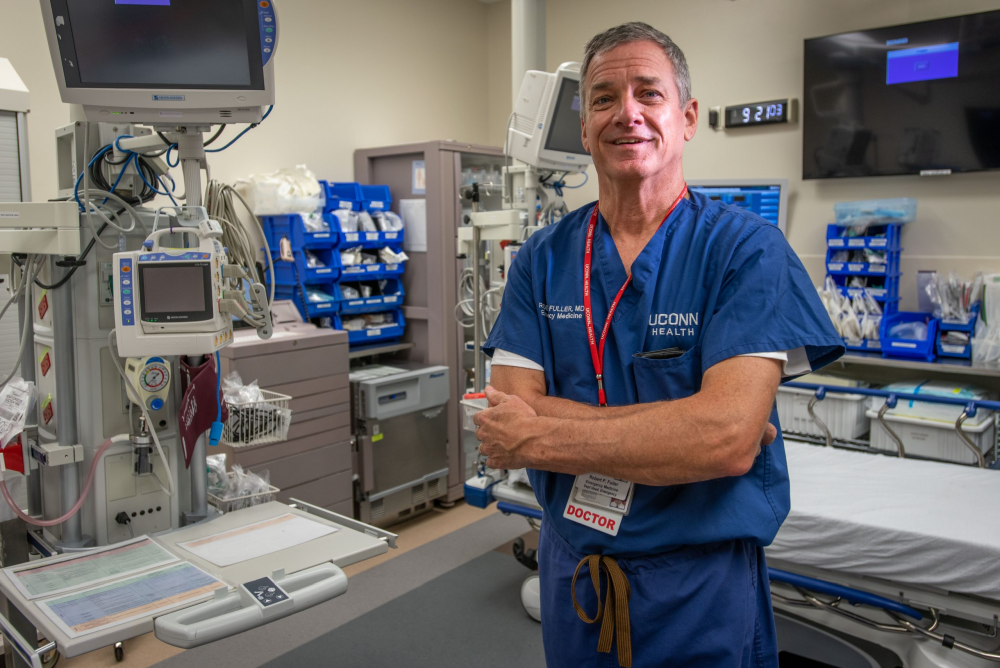
On November 12, International Medical Corps held its 2026 Annual Awards event, marking 42 years of the organization’s work. Among the honorees was Dr. Robert Fuller, the recently retired chair of emergency medicine at UConn Health, who received the Dr. Henry H. Hood Distinguished Service Award. The award is named for one of IMC’s earliest board members, who helped start its training programs in Afghanistan, and it suits Fuller well. Over more than two decades of disaster deployments, he has made a point of leaving behind local health workers who can carry on after the volunteers go home.
Fuller grew up in southeastern Massachusetts, the second of five children. He majored in biochemistry at the University of Massachusetts and became a licensed EMT, working summers and winter breaks in Brockton.
His specialty found him almost by accident. His medical school, Loyola in Chicago, had no emergency medicine residency, but as a senior student he did an away rotation at St. Jude Hospital in Vieux Fort, St. Lucia, where an “accident ward” opened each evening after the clinics closed and patients arrived all night with whatever problems they had.
He loved the work. He trained in emergency medicine at Hennepin County Medical Center in Minneapolis, and then spent a year back in St. Lucia as a volunteer, helping the hospital’s nurses and doctors build an emergency department, triage process and protocols for trauma and critical cases. For roughly 18 years afterward he brought UConn medical students or residents there for a month annually.
When Fuller arrived at UConn Health in 1996, emergency medicine was still a division within the Department of Surgery. He served as medical director for emergency medical services, and on September 11, 2001, he and members of a special-operations team drove a fire truck and a van to Ground Zero, where they treated patients, helped rescue a person trapped in the rubble, and worked for about 36 hours.
In 2015 he was named to lead a new Department of Emergency Medicine, and in 2016 a 40-bed emergency department opened in UConn’s new University Tower. He also founded the International Disaster Emergency Medicine Fellowship, later turning it over to its first graduate, Dr. Natalie Moore. He retired in 2025 after 30 years, the last ten as chair, though he still works occasional weekend shifts and plans to keep deploying with IMC.
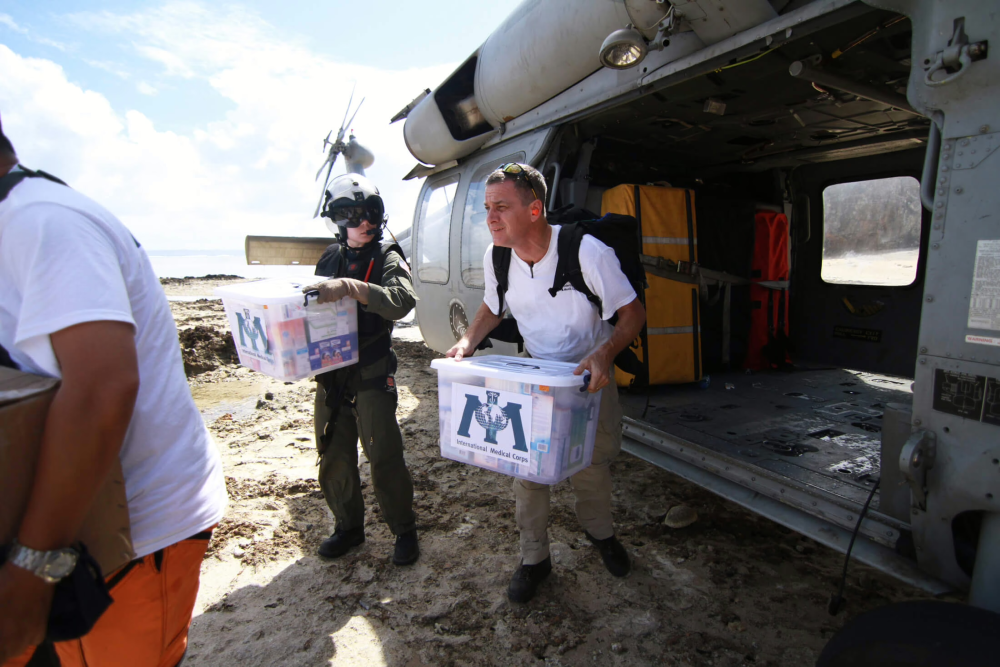
His IMC work began with a phone call. After the December 2004 Indian Ocean tsunami, Matt Howell, an emergency physician he’d befriended in St. Lucia, suggested they respond; IMC accepted them after a phone interview, and the relationship grew from there.
In 2010 he was among the first physicians to reach Port-au-Prince after the Haiti earthquake, and later that year he ran IMC’s response in St. Lucia after Hurricane Tomas damaged a local hospital, helping equip St. Jude Hospital’s temporary facility and train its staff.
Other deployments followed, including Typhoon Haiyan in the Philippines in 2013, Hurricane Maria in Puerto Rico in 2017, and IMC’s mobile hospital in Pobba Thiri, Myanmar, after the 2025 earthquake.
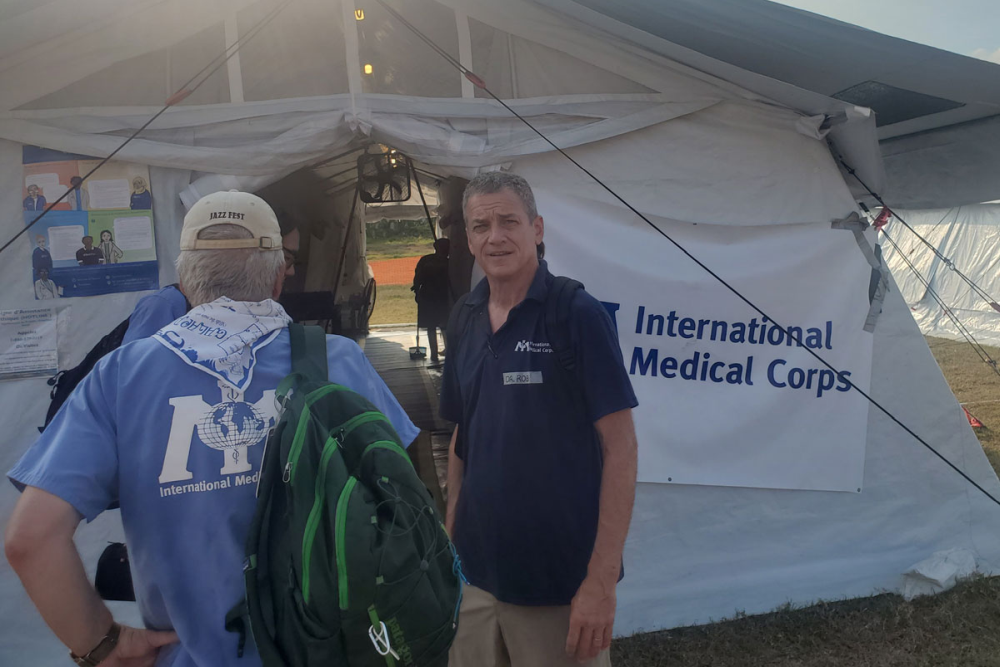
The 2021 Haiti earthquake shows how he works. As medical coordinator of IMC’s tent clinic on a soccer field in Aquin, he oversaw care for as many as 170 people a day, visited every hospital within a two-hour radius to learn what each could handle, and recruited local doctors and nurses to keep the clinic running without drawing staff away from other facilities. By the time he left on October 1, he had hired two physicians and six nurses.
One case from that deployment, recounted by IMC, captures the improvisation such work demands. A mother brought in her 16-day-old son, severely malnourished at about 3.5 pounds and too weak to nurse, and his breathing slowed to a dangerous rate. While nurses Colleen Donovan-Batson and Erin Riley took turns breathing for him by hand, Fuller searched for a hospital with a working newborn intensive care unit that would treat him free of charge. He reached Dr. Moise Compere at Saint Boniface Hospital, who agreed to take him.
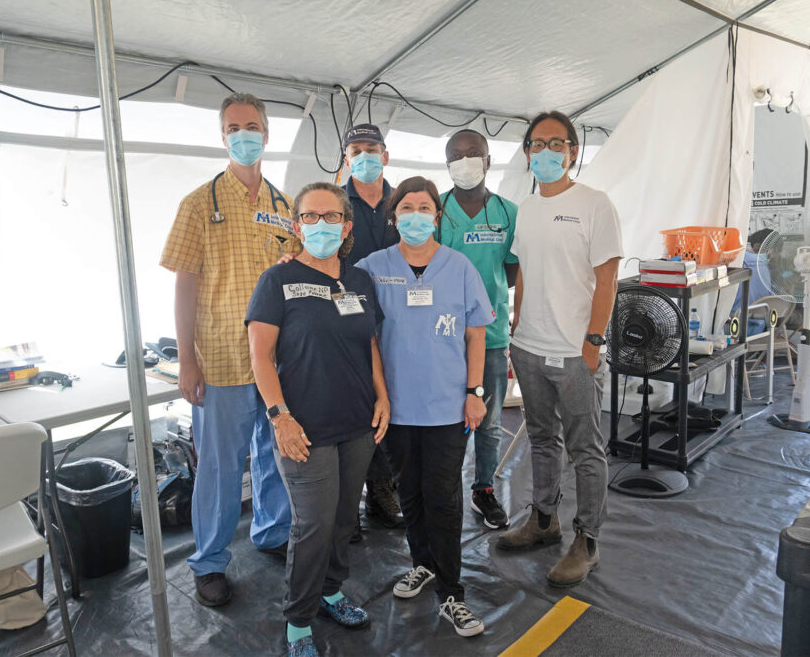
With no drill, Dr. Alex Wang placed a needle into the baby’s shin bone by hand to hydrate him, and Fuller cut a small plastic bottle in half and taped it around the leg to hold the needle steady. When the vehicle ran out of fuel, a logistics worker fetched gas by motorcycle while the security team mapped a safe route, and Fuller turned a tent shelf into a stretcher for the nearly two-hour drive. Two days later, Dr. Compere called to say both baby and mother were doing well.
Fuller frames the case in terms of systems rather than heroics. He describes assessing emergencies in low-resource settings on three levels: what the field hospital has, what local hospitals have, and what the family has. It is the same habit of mind that led him to build an emergency department in St. Lucia as a young physician, and later to hand off his fellowship and his department to the people he had trained. As he put it to UConn when he retired, service before self is part of the mantra of emergency medicine.
Related stories:
View From the Ground in Quake-Ravaged Haiti
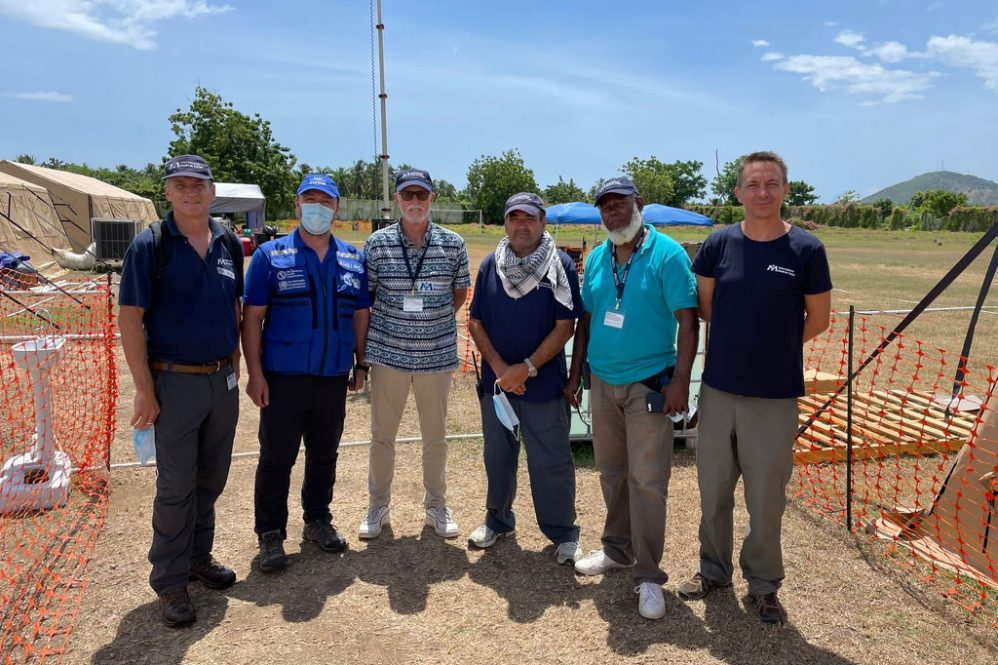
Dr. Robert Fuller, UConn Health’s chair of emergency medicine, is back after spending three weeks in Haiti running a medical clinic and preparing local providers to sustain it.
Related Articles
Last Mile Health Wins the 2026 Hilton Humanitarian Prize
Last Mile Health trains and pays community health workers who reach isolated villages in Liberia, Ethiopia, Malawi, and Sierra Leone, bringing basic medical care to communities that once had none. They have now received the world’s largest annual award to a nonprofit.

Healthcare Without Walls: Rachel Melson’s Mission to Restore Dignity
A Kansas City nurse practitioner was honored with the inaugural Kauffman Uncommon Leader Award for a decade of bringing medical care directly to homeless residents, and treating them as people first.
A Legacy of Health Equity: Agnes Binagwaho Receives Cameron Award
The Cameron Award, from the RCSI School for Population Health, honors Professor Agnes Binagwaho for her transformative work rebuilding Rwanda’s health system and advancing equitable healthcare access in resource-limited settings worldwide.