
For the anniversary of the fall of Asad
By Lucy Lyon
First published December 7, 2025 by the David Nott Foundation
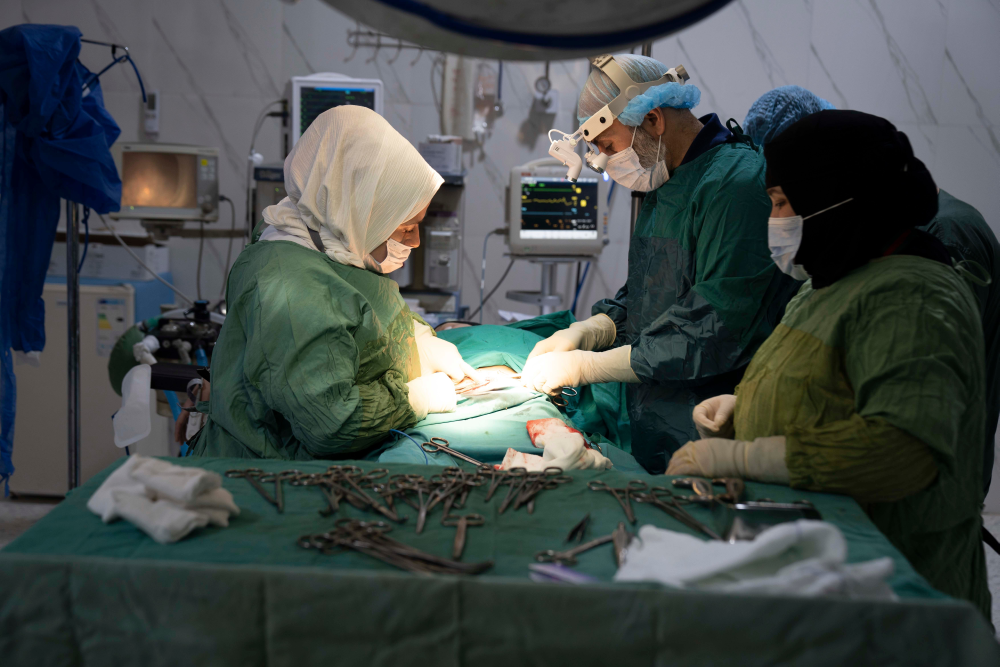
Two Syrian surgeons in green scrubs peer under the searing light in the operating theatre at a cancerous tumour they are about to remove from a young woman’s ovary.
The two surgeons are connected by passion for their practise and for saving lives, and for the past few years have worked tirelessly for the well-being of Syrian women in Idlib, northwest Syria. Even at the height of the devastating war, as many Syrian people were battling for their freedom from a tyrannical regime, the women’s ward in Idlib University Hospital never ceased to serve both the war wounded and the sick.
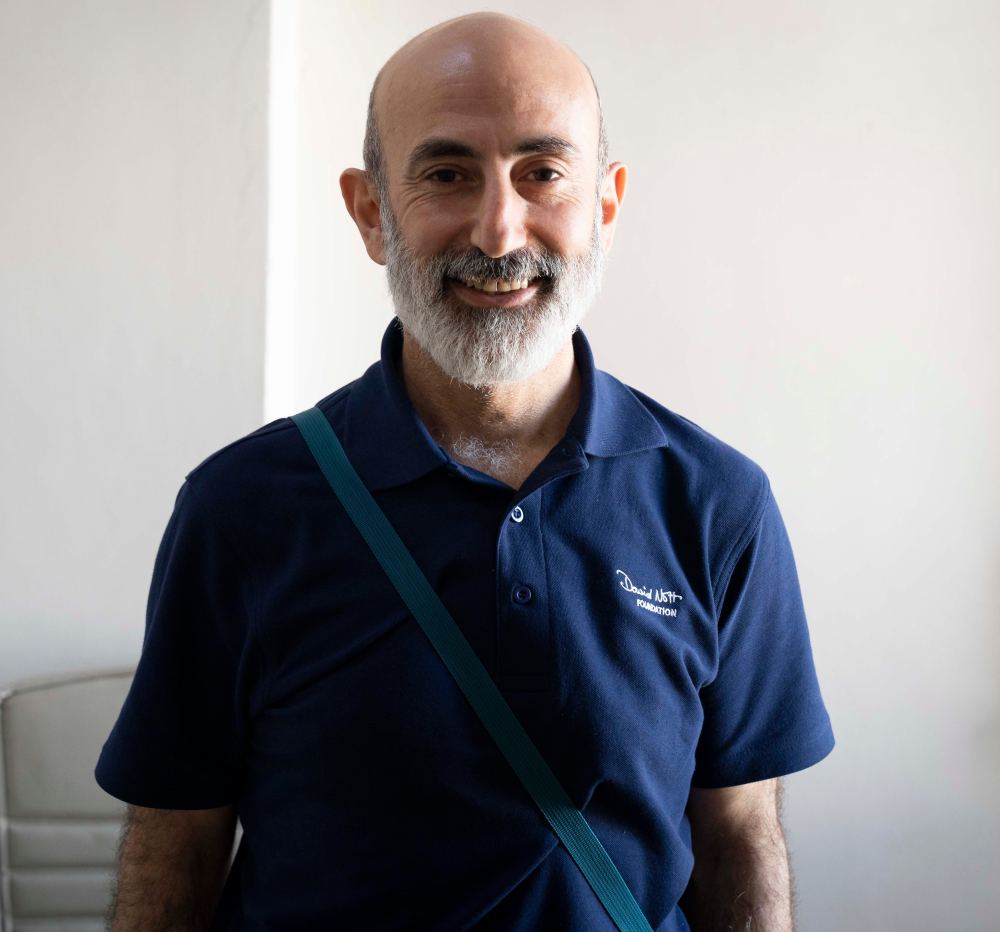
This October, while our surgical training teams arrived with 35 suitcases filled with state-of-the-art prosthetic kit, to train 93 doctors in Aleppo and Homs (something that would have been impossible only a year ago), Saladin Sawan, a Syrian British gynaecologist oncologist headed to Idlib University Hospital on a surgical mission.
Like many similar trips over the past 8 years – his mission was to perform gynaecological and oncological surgery, and to train surgical residents, as well as establishing a system to screen for and treat women with cervical cancer.
Dr Sawan has been committed to the well-being of womankind since the beginning of his medical career. The doctor explains: “Funnily enough my score in the gynaecology module was the highest they’d had for years.”
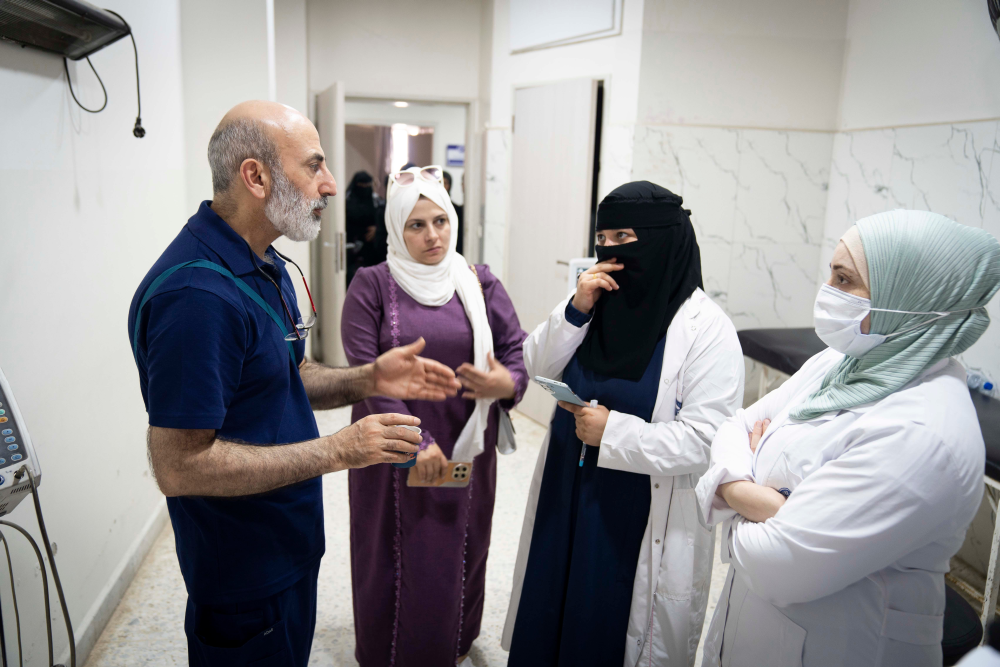
At Aleppo University where he completed his medical degree, inspired by this result, he made the conscious decision to concentrate on the weird and wonderful world of women’s health.
He says: “I mean for a man, life is very boring, going in one direction, no changes – at least that was how it felt to me. While women, you have the monthly hormonal changes, like the moon, and that really intrigued me.”
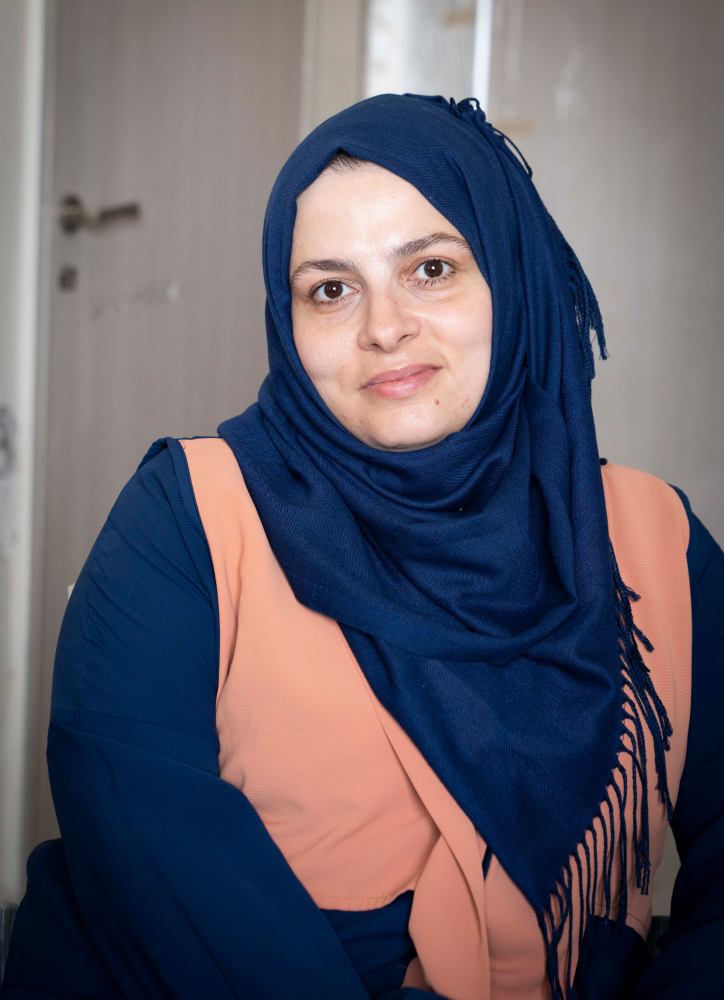
Leaning in beside him under the light, is one of his mentees – Dr Ikram Habboush, a gynaecology and obstetrics surgeon from Idlib, who works with Dr Sawan highlighting the most complex cases for him to treat during his visits, enabling him to train herself and her team as he works.
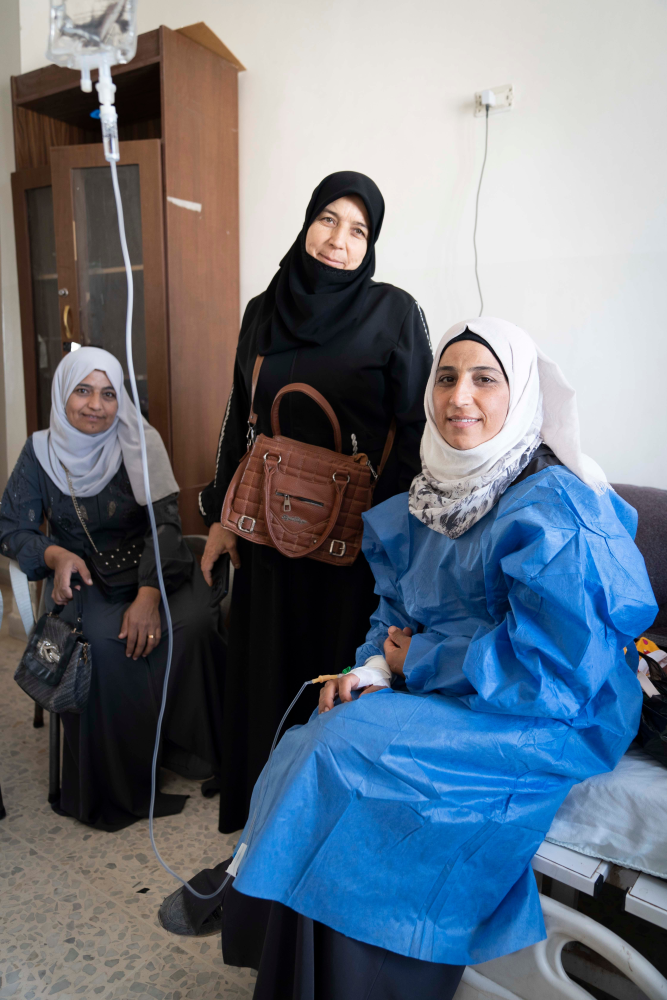
For this one mission Dr Habboush has brought over 20 patients for Dr Sawan to treat – they are all there waiting for him in the ward, women of all ages – with a wide range of issues. There are mothers and daughters, grandmothers and very young girls with cancers that would not be treated otherwise. The look of relief on their faces as they watch Saladin walking the corridors is tangible. He is literally their only hope.
Dr Habboush tells me as she glides around registering the women: “We do many kinds of operations – particularly for gynaecological cancers. Women need these operations and there is no one to do it here, and nowhere else for women to go.
So, I prepare the patient lists and do all the tests before Dr Sawan comes, and then I do these operations with him to learn. First, I do the operation with him, and the next time I do it without him.”
One of the other striking connections between the surgical mentor and mentee, is the huge personal sacrifice they make for their vital work.
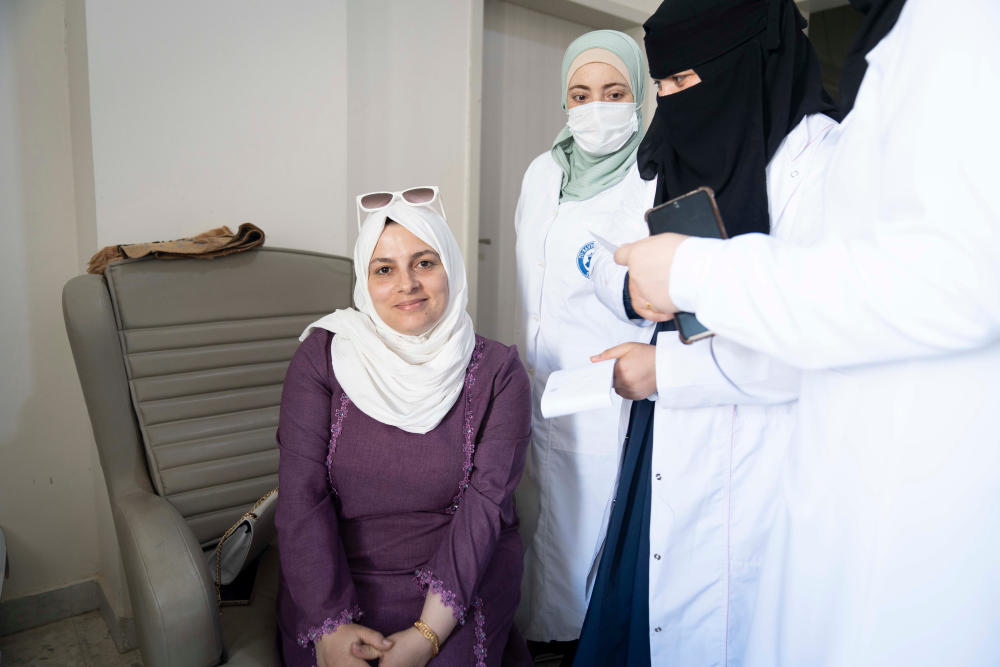
Dr Habboush is one of the only female gynaecology surgeons in her hometown, but she is also a mother of 4 children herself – juggling a busy homelife with her work in a health system emerging from over a decade of war.
Unlike many other surgeons who understandably sought safety abroad at the height of the war, Dr Habboush stayed put to serve her people.
She says quietly: “I stay here all the time in the war, for all the war details I was here. I watch it.
I see many people and suffering from all the things of the war. I don’t want to remember anything taking place in the past.
It’s very harmful to me, and I want to not remember anything, and I look for the future.”
She explained to her husband that if all doctors were to leave Syria, who would stay here and help the people? With skills like hers – she knew she could be useful and there was no doubt about what she wanted from her life, despite the personal cost.
Equally heroic, by the time Dr Sawan arrives for this Syrian mission this autumn, he has already completed 4 surgical trips to Gaza this year – 2025.
Though a spirited character with a wry humour, the strain is visible in the doctor’s face – himself a married father of two.
“The type of injuries you see in Gaza, it just makes you think, how on earth would a human being inflict that on another human being?”
He explains that before he goes on each visit to Gaza, he prepares to die, and makes all the arrangements for his family back in the UK should this be the case.
“You are so close to death – your own could happen any minute. You see people die in front of you of their injuries, and people you know will die because you can’t do anything for them. You’re surrounded by death.
So, I think that helps me settle and focus more on the job I am there to do, which is to operate and help the injured, rather than spend too much worrying about my own life.”
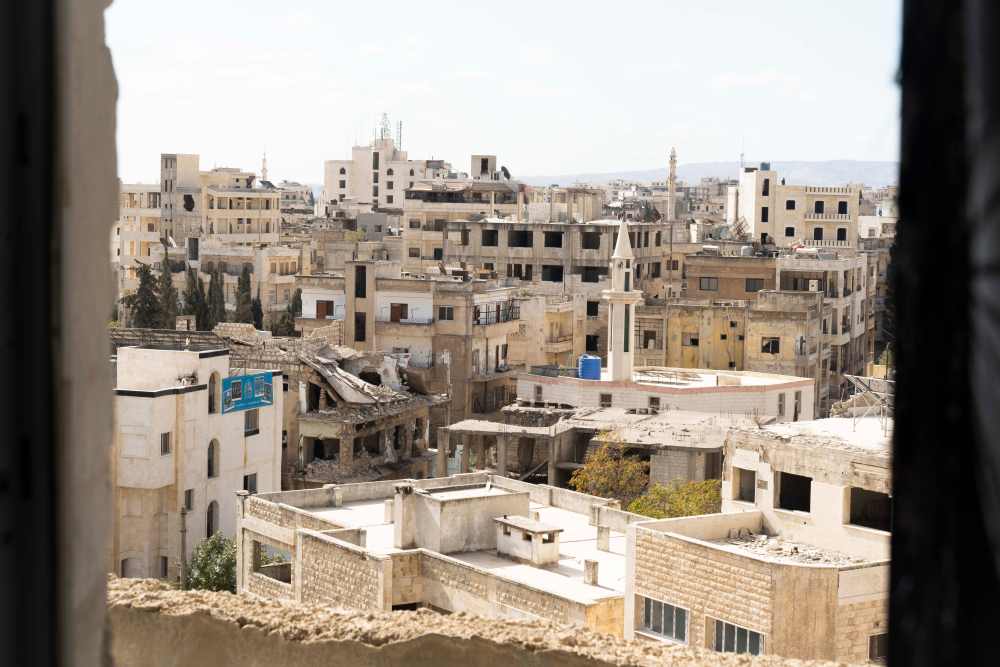
It’s sobering to be in Syria – it has a long road to recovery ahead. Driving through cities like Aleppo – the extent of the destruction is deeply alarming – the skeletal silhouettes of what once were living neighbourhoods line our way as we drive. The faces of teenagers belie a childhood of deprivation and war.
Syria has been at the core of our Foundation since its creation just over a decade ago. During the height of the conflict, our founder David Nott risked his life to save others – working tirelessly alongside Syrian colleagues in M1 hospital in Aleppo – its charred shell still standing as a gloomy reminder.
But to be in the presence of these skilled, determined surgeons putting others before themselves day in day out, gives a lightness of feeling – a notion of hope.
As we leave Idlib I ask Dr Habboush about her dreams: “I don’t have a personal dream. My dream is a dream for Syria – to become an advanced country and because my concern is medicine – to reach an advanced stage in the future.”
I question how she relaxes: “There are many plants in my house – I speak to them, I see them. It’s beauty and I take care of them. I go to my friends, drink coffee and we talk and prepare food.”
For Dr Sawan, he admits things have improved a little since the Asad regime was toppled.
“I think there will be tough times for Syrians. But I’m here this time and in the future because of the support I’m having from the David Nott Foundation. I mean, I’m a war surgeon now – and I don’t think there’s many doctors who started as gynaecology surgeons and want to be full blown war trauma surgeons – who also recognise the other needs such as women’s health in these circumstances. I’m so grateful to the Foundation for their support.”
Related Articles
Helping Children with Disabilities in Syria
International Medical Corps’ Syria teams recently had an opportunity to serve children with visual, hearing, mental and physical impairments, after the government asked for their help.
From the US to Damascus: Syrian American Doctors Tackle Preventable Infant Blindness
Syrian American ophthalmologists are banding together to improve pediatric tests for retinopathy of prematurity. From Think Global Health.

Global Relief in Focus: 10 Images that Defined Humanitarian Aid in 2025
2025 was a year filled with conflict, disaster and disease—as well as the work of committed and courageous humanitarians who did everything they could to help. These photos from International Medical Corps highlight the people who made it happen.