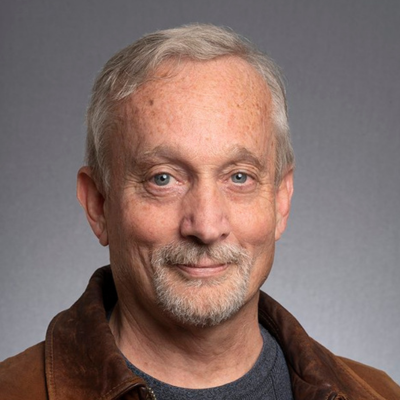
In 1992, an internal medicine physician at Pittsburgh Mercy named Jim Withers began doing something unusual for a hospital doctor: he left the building. At night, dressed so as not to draw attention, he went out with Mike Sallows, a man who had once been homeless himself, into the alleys, under the bridges, and along the riverbanks of Pittsburgh, looking for people too sick, too distrustful, or too disconnected from the health system to ever walk through a clinic door.
What began as an informal partnership between the two men became Operation Safety Net, one of the first full-time street medicine programs in the country, and the model from which the modern street medicine movement largely grew.
The program became an official outreach effort of Pittsburgh Mercy in 1993, seeded by a grant from the health system’s Care for the Poor Fund. It operates, as Pittsburgh Mercy describes it, “in the tradition of the Sisters of Mercy,” and Withers has remained its full-time medical director for more than three decades. Today the program reaches well over a thousand people a year in Allegheny County.

Outreach teams are made up of nurse practitioners, physicians, behavioral health nurses, medical students, and outreach specialists — many of whom were often once homeless themselves. They go out to encampments and street corners to deliver wound care, manage chronic conditions like diabetes and hypertension, hand out socks and sleeping bags in winter, and slowly build the kind of trust that a scheduled clinic appointment rarely can. Operation Safety Net has since grown to include an emergency shelter, a legal aid program, and a fellowship that trains students in the discipline Withers pioneered.
That discipline did not have a name until Withers gave it one. In 2004 he coined the term “street medicine” to describe what he and a small, growing number of clinicians around the country were doing: meeting patients where they live rather than waiting for them to arrive somewhere else.
He founded the International Street Medicine Symposium the following year and, in 2008, established the Street Medicine Institute to help other cities build their own programs. That work has since spread to more than 200 cities on six continents and helped establish street medicine curricula at more than eighty medical schools. In 2015, CNN named Withers one of its Top 10 Heroes for the work.
His own account of why he attends to the homeless traces back further than 1992. Withers has said the practice grew out of childhood memories of riding along on house calls with his father, a small-town family physician in central Pennsylvania, and his mother, a nurse who made home visits of her own.
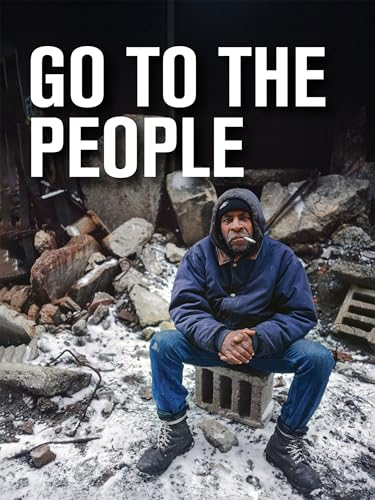
“It was normal in my family to care,” he told the Pittsburgh Quarterly. “And my parents didn’t just talk about it; they put caring into action.” That throughline, from a country doctor’s house calls to a movement now practiced worldwide, is the subject of a 2024 documentary, Go to the People, directed by the Pittsburgh filmmaker Jeff Sewald, who followed Withers not only through Pittsburgh but to street medicine programs in Europe, Africa, and India.
For most of its history, street medicine survived on grants, hospital subsidies, and the willingness of clinicians to do work that didn’t fit neatly into a billing code. That began to change in 2023, when the federal Centers for Medicare and Medicaid Services created a dedicated place-of-service code for care delivered in nonpermanent, street-based settings, opening a reimbursement pathway that had never existed before.
The effect has been substantial: in California alone, the number of street medicine programs grew from twenty-six in 2023 to more than seventy by 2025, according to a 2026 analysis in NEJM Catalyst. Clinicians and researchers involved in that growth have been careful to note that the recognition is welcome but incomplete. Reimbursement structures built for brick-and-mortar clinics don’t always fit a form of care whose value often shows up as a wound that didn’t become an amputation, or a psychiatric crisis that didn’t end in an emergency room, rather than as a billable visit.
Writing in the New York Times, the emergency physician Helen Ouyang, who spent time with Withers and his team in Pittsburgh, put the case for the work plainly: “Street medicine embodies what health care should be: tending to those who need it most. It is also a stark indictment of our society that such care is as in demand as it is.”
That paradox, a program built to fill a gap that shouldn’t need filling, is close to how Withers himself describes it. He has compared street medicine to a fire department: not a charity or an experiment, but a basic piece of civic infrastructure that any community with people sleeping outside ought to have. More than three decades after his first night rounds with Mike Sallows, that idea has outgrown Pittsburgh many times over, even as the original program that gave rise to it keeps doing the same unglamorous work it started with: going on foot to find the people who won’t come to the clinic.
This summary is based on the following sources:
- These Doctors Perform Daily Miracles, No Hospital in Sight, by Helen Ouyang for the New York Times (free link)
- About Pittsburgh Mercy’s Operation Safety Net, from Pittsburgh Mercy
- Street Medicine & Outreach, from Pittsburgh Mercy
- James Withers bio, from the University of Pittsburgh
- Advancing Street Medicine — Aligning Research, Implementation, and Policy for Impact, by Kaitlin J. Schwan, PhD, Corinne T. Feldman, MMS, PA-C, and Brett J. Feldman, MSPAS, PA-C in NEJM Catalyst
- Jim Withers, M.D., Street Doctor, by Jeff Sewald for the Pittsburgh Quarterly
- Documentary tells story of Operation Safety Net, by Andy Sheehan for CBS News Pittsburgh
- Dr. Jim Withers, Street Medicine Pioneer, Visits The Night Ministry
Related Articles
John Muir Health Marks 25 Years of Mobile Care for Contra Costa County
A quarter century in, John Muir Health’s Mobile Health Clinic keeps bringing free primary care, mental health support, and vaccinations straight to Contra Costa County’s uninsured and underserved, wherever they are.
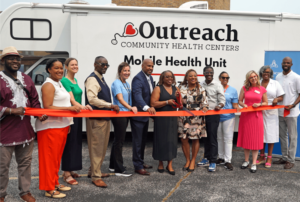
A New Mobile Clinic Brings Care to Milwaukee’s Most Vulnerable Neighborhoods
Ascension Wisconsin and Outreach Community Health Centers have launched a mobile health clinic bringing preventive and acute care directly to underserved Milwaukee neighborhoods, including the homeless, building on both organizations’ decades-long commitment to serving the city’s most vulnerable residents.
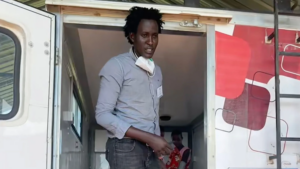
After an Elephant Attack, a Maasai Boy Needed Local Care. Years Later, He Helps Deliver it.
Andrew Kiranto is a nurse on the Health Wagon, which brings local health care to Maasai communities in Kajiado South County, Kenya. From Direct Relief.