
When labor becomes life-threatening in rural Tanzania, minutes matter. The m-mama program uses mobile technology and community drivers to get mothers and newborns to hospitals—and it now serves all 63 million Tanzanians.

Each year, hundreds of thousands of women and newborns die from complications during pregnancy and childbirth. Not for lack of medical knowledge, but because they cannot reach a facility in time.
In Tanzania, where maternal mortality stands at 556 deaths per 100,000 live births, this “second delay” has long been one of the most stubborn barriers in maternal health. The m-mama program (Mobilizing Maternal Health) was designed specifically to eliminate it.
Launched as a pilot in Tanzania’s Shinyanga region in 2013 by Pathfinder International, the Vodafone Foundation, and the Touch Foundation, m-mama addresses the three classic delays in obstetric emergencies: the decision to seek care, the journey to a facility, and the receipt of appropriate treatment once there. Its approach is elegantly practical. When a community health worker or family member identifies a maternal emergency, they dial a free hotline staffed around the clock. A trained nurse-dispatcher uses a smartphone app to assess the patient’s condition, identify the nearest available transport—ambulance, community taxi, motorcycle, boat, or even horse, depending on terrain—and coordinate the journey while alerting the receiving facility and arranging payment for the driver.
Before m-mama, taxi drivers routinely refused emergency transfers because fares were negotiable and payment uncertain. The program solved this by pre-negotiating rates and reimbursing drivers directly upon trip completion—a small logistical fix with enormous consequences. Community Care Groups spread awareness of the toll-free numbers among pregnant and postpartum women, and health workers at receiving facilities received training in emergency obstetric care, ensuring that transport alone didn’t become a bottleneck in front of an unprepared clinic.
The results have been striking. Since 2013, m-mama has responded to more than 125,000 emergencies and is estimated to have saved over 5000 lives. Roughly 58% of women transported by m-mama ultimately require cesarean sections, far above the general population rate of 10–15%, confirming that the system is reaching the highest-risk cases. In supported regions, maternal emergency transports more than doubled after the program launched.
Critically, m-mama achieves this without building new hospitals or purchasing expensive equipment. It works by coordinating resources already present in communities and health systems, filling gaps with low-cost local transport. The financial model was designed for sustainability: in Shinyanga, the government assumed full operational costs by year three. Tanzania officially adopted m-mama as its national maternal emergency transportation system, and in September 2023, the program achieved full national scale, now serving all 63 million Tanzanians and projected to transport 50,000 women and newborns annually.
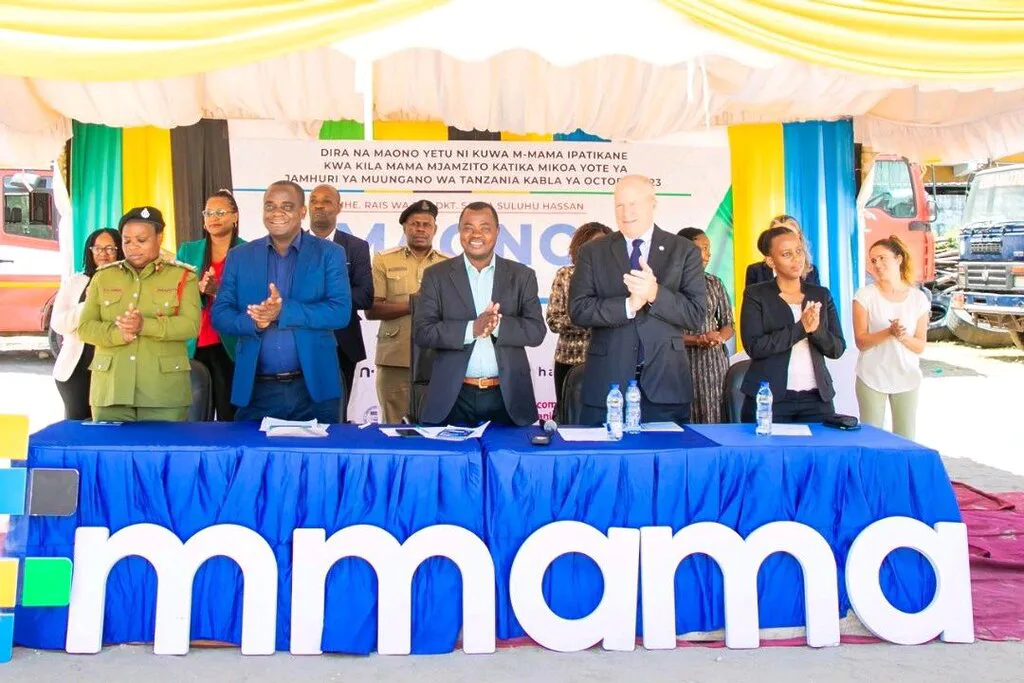
M-mama has also expanded beyond Tanzania. It has gone nationwide in Lesotho, launched in Malawi, and is scaling in Kenya, with further expansion across sub-Saharan Africa supported by the Beginnings Fund, a partnership that includes the Gates Foundation and the Mohamed bin Zayed Foundation for Humanity.
As Bill Gates observed in a recent profile of the program, m-mama is a reminder that not every breakthrough in global health requires a new drug or sophisticated technology. Sometimes it requires asking a simple question: what if you could build a 911 system using whatever transportation already exists in a community? And then having the persistence to answer it at scale.
This summary is based on the following articles:
- A phone call that saves lives, by Bill Gates for GatesNotes
- m-mama: An Emergency Transport System in Tanzania is Saving Mothers’ Lives, for Pathfinder International
- Factsheet: Tanzania: Mobilizing Maternal Health (M-Mama), for Pathfinder International
- M-mama Achieves National Scale-up In Tanzania, for Touch Health
- A Blueprint for Smarter Aid, by Lisa Felton for the Vodafone Foundation
Related Articles
The Lengths to Which Health Workers Go to Reach Every Child with Vaccines
Vaccines can prevent disease outbreaks now and in the future. From UNICEF
Affordable Microscope Speeds Up Malaria Diagnosis with AI
The Octopi microscope autonomously analyzes blood samples in minutes, detecting malaria-infected cells among millions. Its creators hope it will accelerate the fight against malaria. From Stanford Report.

Tanzania’s Newly Trained ‘Army’ of Community Health Workers
The country aims to train and equip nearly 140,000 frontliners by 2028, in what leaders hope represents a transformative shift for healthcare at the grassroots. From Gavi, the Vaccine Alliance.