In Dori, Burkina Faso, the Integrated Malnutrition Care Unit at the Urban Medical Center treats children with severe acute malnutrition with complications. Its upgraded facilities include additional beds, oxygen, solar power, and more staff. The ALIMA–KEOOGO–SOS Médecins BF Alliance provided this support, working alongside the Ministry of Health to improve care.
First published November 9, 2026 by ALIMA
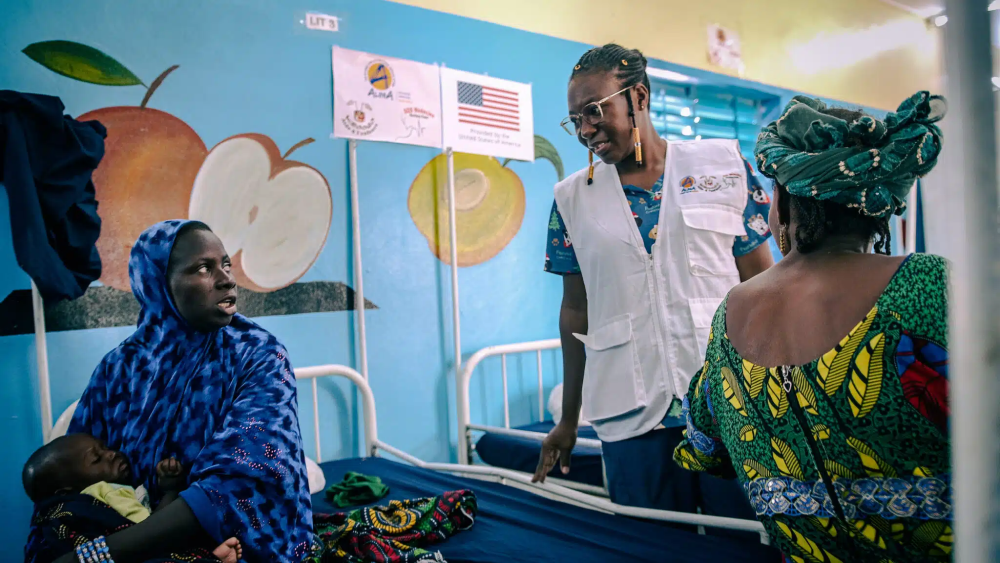
“We got here, and he received care. Since then, he hasn’t had diarrhea.”
Mariam Amadou
Mariam Amadou, 45, was displaced from Lougolkola and now lives in Dori. When her child was admitted to the Integrated Malnutrition Care Unit at the Urban Medical Center, she stayed by his side throughout his treatment. As his care progressed, she saw him getting better.
“My child is much better. They give us food and drink, and he is really feeling relief,” she says.
Like Mariam, thousands of mothers and their children have come through the doors of Dori’s health services seeking care. This care is provided in a unit that has also evolved in recent years to better meet the needs of malnourished children. The children admitted suffer from severe acute malnutrition with complications and require regular monitoring, medical care, therapeutic feeding, reassessments, and psychostimulation activities.
To meet these needs, the Integrated Malnutrition Care Unit has gradually strengthened its capacity with support from the ALIMA–KEOOGO–SOS Médecins BF Alliance.
A unit that can take in more children
The rehabilitation of the unit increased its capacity from 9 to 20 beds, with a dedicated intensive care room equipped with multi-outlet oxygen sources. A solar system was also installed to ensure better continuity of care and a more reliable power supply. Equipment, medications, and nutritional supplies were also provided. For Dr. Zombra, a government general practitioner at the Integrated Malnutrition Care Unit, these additional resources make a direct difference in daily work:
“This support doesn’t just lighten our workload, above all it makes everything run more smoothly, because we have more equipment and more support.”
The increased capacity also means more children can be treated on site. For families, this can mean not having to immediately seek another facility.
“It keeps them from having to go farther. It allows them to stay closer,” the doctor adds.
In a context where access to care can be difficult, proximity matters. But a care unit also depends on the people who look after the children every day.
More staff for better care
At the unit, doctors, nurses, nutrition assistants, and hygienists work together around each child. Support from the ALIMA–KEOOGO–SOS Médecins BF Alliance has strengthened the teams with four nutrition assistants and four hygienists, while also supporting training for existing staff. For Samba Fatimata Marie-Louise, a medical nutritionist and the nutrition focal point for the Dori health district, this reinforcement has a direct impact on the quality of care:
“The Alliance’s support with human resources helps improve the quality of care. Care was already good before, but with the Alliance’s support, many things have improved.”
She has also seen a change in how hospitalized children progress through their care. According to her, closer monitoring allows some children to move more quickly to the next stage of their treatment.
“We have all the staff we need. We have assistants, doctors, and hygienists available to us,” she sums up.
When electricity becomes a condition for care
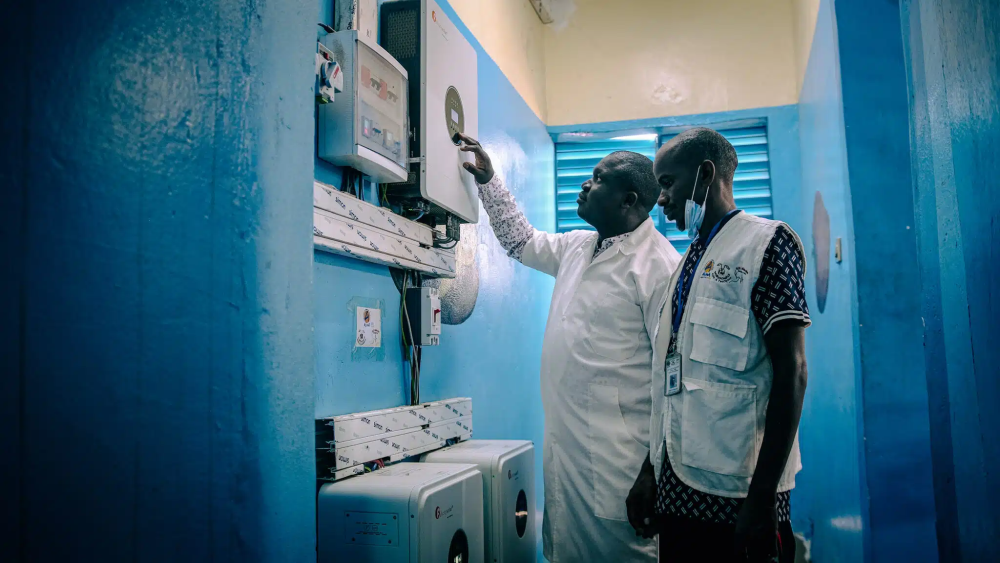
At the Integrated Malnutrition Care Unit, electricity is not just a convenience. When a child needs oxygen, a power outage can directly complicate treatment. Sirema Makhunémo, a state nurse, remembers these situations:
“Before, when there was a power cut, we could have a child who needed oxygen and no electricity to take over. Today, we can stabilize patients in better conditions before transferring them, if necessary, to the regional hospital.”
The solar system thus helps secure continuity of care, reduce mortality, and enable teams to monitor and stabilize children in better conditions. It is a technical improvement whose effects can be seen directly in day-to-day care.
Until the day the child can go home
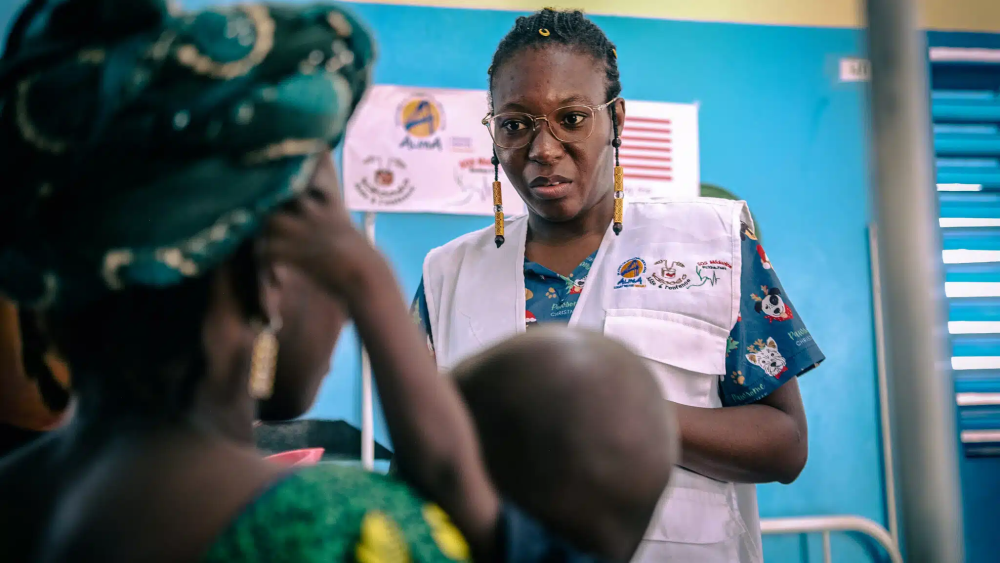
At the Integrated Malnutrition Care Unit, some stays are short. Others are much longer. Dr. Kaboré, an attending physician with the Alliance, recalls one child in particular who stayed 43 days in the unit after arriving in critical condition. Throughout that time, the child received free, quality care, nutritional treatment, and psychostimulation sessions. Despite the games and daily encouragement, the child never smiled.
Then came the day of discharge. The day before, the doctor had told the mother they would probably be able to go home the next day. On Friday, after rounds, the mother left to get ready before coming back to thank the team.
“To my great surprise, the child came up, held out his hand, and smiled. Everyone was astonished because we had never seen him smile. He smiled, said goodbye to us, and left,” says Dr. Kaboré.
In a unit where care indicators are counted in beds, treatments, days of hospitalization, or discharges, this moment is also a reminder of what those numbers represent: a child gradually regaining strength and able to go home with their family.
After the hospital, mothers are trained to screen for malnutrition
The work continues beyond the unit’s walls. While the children take part in psychostimulation activities, their mothers attend sessions on hygiene, nutrition, care, and prevention.
They are also trained to use the mid-upper arm circumference (MUAC) band, which can help them spot early signs of malnutrition in children aged 6 to 59 months and know when to seek care or refer the child from home.
In an area where access to health services can be difficult, this transfer of knowledge complements the care received at the hospital. The band is a screening and referral tool that helps families identify sooner when a child needs to see a health worker.
In Dori, the strengthening of the Integrated Malnutrition Care Unit translates every day into a more available team, a better-equipped unit and, above all, children who can continue their treatment in better conditions until they are able to go home. For Mariam, as for so many other parents, it means one thing above all: seeing her child get better and soon being able to take him home.
These activities are co-funded by U.S. humanitarian assistance and the Sahel Regional Fund (SRF).
Related Articles
Niger: In Dakoro, Children are Accessing Care Earlier and Receiving Better Treatment
In Dakoro, Niger, a simple bracelet is changing the way malnutrition is addressed. Trained to measure their children’s arms themselves, mothers can spot the first warning signs earlier.
During Crises, Mother-to-Mother Groups Benefit Moms and Babies
FHI 360 supports mother-to-mother groups in Yemen, helping combat malnutrition amid the ongoing crisis. These groups educate women on proper infant feeding practices, improving child health, and empowering mothers with accurate information and peer support.
Vitamin Angels Advances Its Mission to End Malnutrition
In its 30th year, Vitamin Angels advances toward goal of doubling its impact to reach 140 million underserved pregnant women and children annually with essential nutrients by 2033.