
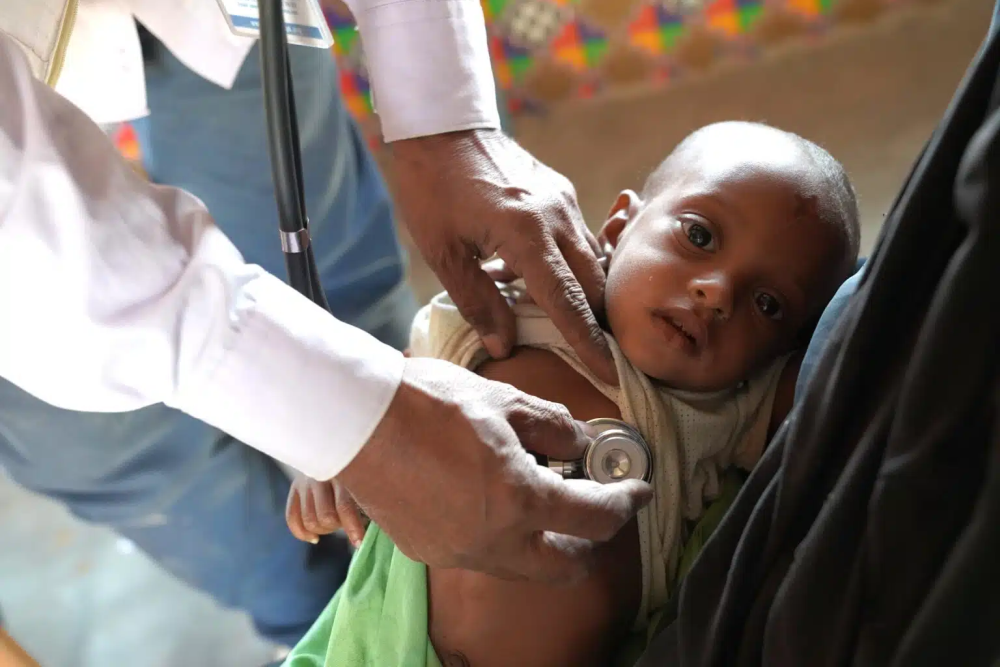
In eastern Mauritania, population displacement, malnutrition, and lack of access to healthcare are putting communities at risk. In the Hodh El Chargui region, ALIMA is deploying mobile clinics and strengthening care for children suffering from malnutrition.
Testimonies and photographs: Cora Portais/ALIMA
First published June 5, 2026 by ALIMA
In eastern Mauritania, the humanitarian situation has reached a critical level. In the Hodh El Chargui region, located approximately 50 kilometers from the border with Mali, over 120,000 Malian refugees are living in a camp initially thought for 70,000 people.* Around the camp, 90 villages are also home to over 170,000 refugees,** often in precarious conditions.
This demographic pressure is weakening access to water, food, and healthcare. Children and women are particularly vulnerable to malnutrition, vaccine-preventable diseases, and epidemics.
Present in the region since 2019, ALIMA has been supporting local health facilities and deploying mobile clinics to reach the most isolated populations who have no access to healthcare.
Mobile clinics: bringing care to patients

To reduce the distance between patients and healthcare, ALIMA runs mobile clinics across several sites, including Kindjerlé. Teams provide medical consultations, monitoring care for pregnant women, childhood vaccinations, and treatment for malnutrition. They also distribute dignity kits and offer mental health support, which is essential in a context marked by exile and forced displacement.
“Mobile clinics allow us to directly reach patients. Rather than asking them to travel several kilometers to receive care, we go to them,” explains Mohamed El Moctar, a nurse with the mobile program. “Without these clinics, thousands of people would remain without access to healthcare.”
Fighting malnutrition, a priority in the region
At the Intensive Nutritional Recovery and Education Center (CRENI), supported by ALIMA at Bassikounou Hospital, medical teams are facing a constant influx of children suffering from acute malnutrition.

Despite these difficult conditions, the determined teams continue their work to provide free treatment for children suffering from malnutrition. Like little Zenabou Wallet Mohamed, who came with her family to seek refuge in Mauritania and arrived suffering from malnutrition, many children are able to return home recovered after receiving appropriate treatment.


In 2025, over 1,900 children suffering from severe acute malnutrition were treated by ALIMA in the region.
Behind these figures are families searching for stability
For refugee families, access to healthcare is part of a daily life marked by uncertainty, loss of livelihoods, and dependence on humanitarian aid.
Aya Hamadi Ba, a Malian refugee, fled her village with her children after an attack.

Fatoumata, her 18-month-old daughter, is now being monitored by ALIMA’s mobile teams.


Mohamed Ag Ahmedou, head of the Aghor site, shares the same view:

Providing lasting support to the local health system
Beyond the emergency response, ALIMA is working with local healthcare actors to strengthen existing capacities. The project includes training healthcare workers, supporting community health workers, and improving epidemic alert systems.

Given the scale of the needs, humanitarian funding remains insufficient. In 2024, only 51% of estimated needs were covered. Without additional resources, continuity of care could be at risk.
In Hodh El Chargui, where crises overlap—displacement, poverty, malnutrition, and limited access to essential services—support from the Crisis and Support Centre (CDCS) is enabling ALIMA teams to maintain a vital medical response.
* According to the Refugee Coordination Forum, Bassikounou, January 29, 2026
** According to the UNHCR Refugee Coordination Forum, January 29, 2026
Related Articles
Ethiopia: Under the Lights of the Delivery Room
In the Tigray region, in Ethiopia, solar energy is saving lives during complicated childbirths. From ALIMA.
Niger: In Dakoro, Children are Accessing Care Earlier and Receiving Better Treatment
In Dakoro, Niger, a simple bracelet is changing the way malnutrition is addressed. Trained to measure their children’s arms themselves, mothers can spot the first warning signs earlier.
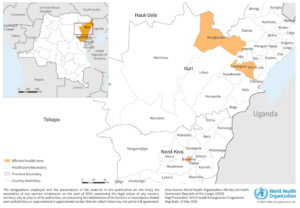
Ebola Outbreak in the DRC and Neighboring Countries
The WHO has declared the Bundibugyo Ebola outbreak in the DRC and Uganda a Public Health Emergency of International Concern. Direct Relief, ALIMA, and International Medical Corps are mobilizing supplies, medical teams, and treatment units, working alongside the WHO, the health ministries of both countries, and partner organizations to contain the spread.