
One of roughly 1,200 Black midwives practicing in the U.S., Nadia Gramby drives hundreds of miles across Alabama to bring prenatal, birth, and postpartum care directly to families in underserved communities, continuing a tradition of Black midwifery in the South.

When Nadia Gramby earned her credentials as a Certified Professional Midwife, she joined a small and historically significant group: she is among the first Black midwives to practice in Alabama since the 1980s, continuing a tradition of Black midwifery that runs deep in the American South, long predating the modern hospital system. Today she is one of roughly 1,200 Black midwives practicing anywhere in the United States.
Gramby founded Crown of Glory Birth Services in 2018, based in Chelsea, a suburb of Birmingham, to bring that tradition to families across Alabama who might otherwise have nowhere close to home to turn for maternity care. More than half of U.S. counties lack a hospital with labor and delivery services, and about a third have no obstetric clinician at all, according to the March of Dimes. Gramby’s answer has been simple and demanding in equal measure: go to the families herself, wherever they are.
From Doula to Midwife
Gramby’s path into birth work began in 2017, when she started as a professional doula, childbirth educator, and placenta encapsulation specialist. Over the years that followed, she attended hundreds of births while training toward her midwifery credentials, building along the way a reputation for care that families describe as culturally attuned and deeply personal. She now holds both Certified Professional Midwife and Licensed Midwife credentials and serves families across Alabama and the broader Southeast.
Her practice today covers the full arc of pregnancy and beyond: home birth midwifery, prenatal and postpartum care, newborn exams, women’s wellness visits, childbirth education, and mentorship for doulas entering the field. Gramby holds a bachelor’s degree in Human Resources Management from Faulkner University and studied psychology at Alabama A&M. She is also a licensed minister, ordained in 2018, and describes her approach to birth work as blending clinical training with what she calls Spirit-led care for families who want faith-centered support.
Meeting People Where They Are

The heart of Gramby’s model is relationship rather than routine. She has said her care starts not with vitals but with questions about how a mother is doing emotionally and spiritually, who’s around to support her, and what she’ll need in the weeks after birth as much as during it. That kind of attention is part of why many of her clients seek her out specifically. For Black mothers in particular, she has noted, being cared for by someone who shares their culture and takes their pain seriously can make a real difference in how safe and heard they feel through pregnancy and delivery.
That philosophy costs her something in mileage. In one recent stretch reported on by NPR, she logged 302 miles in a single day driving between prenatal appointments in Anniston, Montgomery, Helena, and Alabaster.
She recently opened an office in Birmingham, a shift from her earlier practice of visiting every family exclusively in their own homes, but the long drives haven’t stopped. Reaching families in under-resourced parts of the state still means hours behind the wheel, often without knowing in advance when a birth will bring her home.
A Family Affair
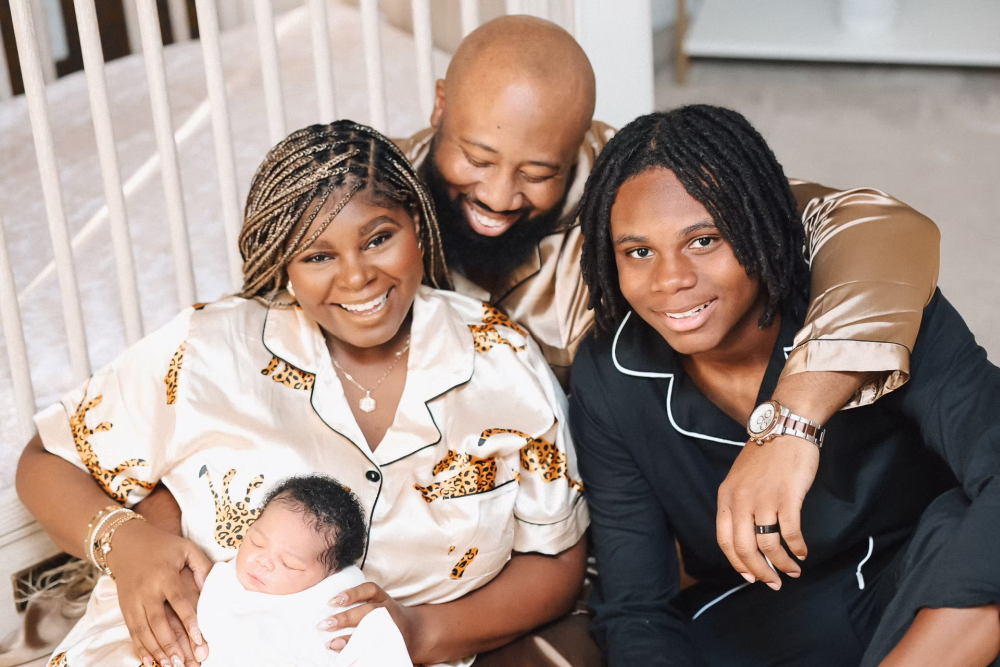
Gramby is a mother of two young children, Khalil and River Emmanuel, and credits her husband, Shamar, with keeping her demanding schedule workable. It’s a fitting note for someone whose work is, at its core, about showing up for families: she extends to her own household the same kind of steady presence she brings to the ones she serves.
Research on midwifery care broadly bears out what practices like Gramby’s offer: midwife-attended births are associated with fewer cesarean sections, fewer interventions, and higher patient satisfaction, according to the March of Dimes, and the share of U.S. hospital births attended by midwives has grown from 8.4 percent in 2016 to 11.6 percent in 2024. Barriers to licensing and scope of practice still limit how far that workforce can reach in many states, including Alabama.
Gramby’s own practice is one answer to that gap, mile by mile.
This summary is based on the following sources:
- Crown of Glory Birth Services
- A midwife crosses ‘maternity deserts’ to make a difference for Black moms and babies, by Kristin Wright for NPR
- Nowhere to Go: Maternity Care Deserts Across the U.S., by the March of Dimes
Related Articles
Ukrainian First Responders Learn Life-Saving Birth Skills in Lviv
The Ukrainian Midwives’ Union is training paramedics and other first responders to support women giving birth in emergency settings. From Direct Relief
“She Has Given Us a Sense of Security”: The Humanitarian Midwives Deployed to Sudan’s Blue Nile State
In Sudan’s Blue Nile State, UNFPA-trained midwives like Sa’aida and Safya deliver babies, refer complicated cases, and track pregnant women camp to camp amid displacement and flooding, offering safe births and reassurance where health facilities have collapsed and funding has fallen short.

“Midwifery Is Where Humankind Begins!”
South Sudan suffers from a drastic shortage of skilled birth attendants. International Medical Corp’s Senior Midwife Supervisor Chuol Ker Yat Pan is one of a growing cohort of midwives helping to fill the gap.