
South Africa’s school-based HPV vaccination programme is delivering measurable population-level benefits.
By The Conversation
First published October 19, 2026 by The Conversation and reprinted October 22, 2026 by Gavi, the Vaccine Alliance/VaccinesWork
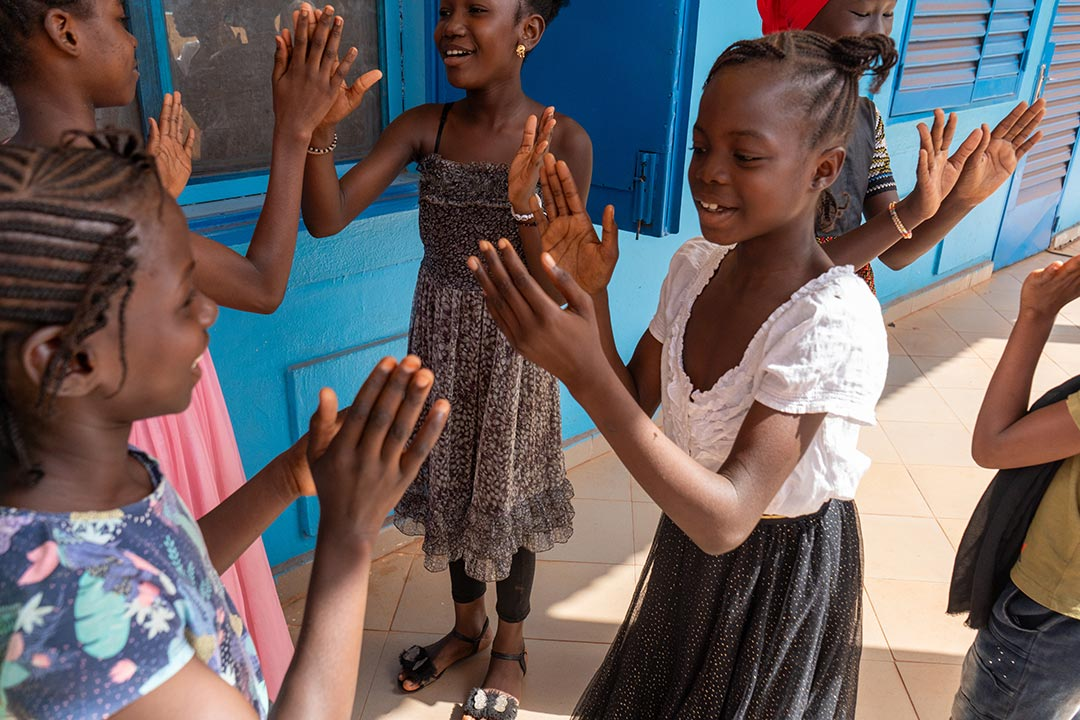
South Africa introduced a vaccination for human papillomavirus (HPV) in public schools in 2014. The programme offered the vaccination to grade 4 girls aged nine years and older. Uptake was high from the start. About 87% of eligible girls received at least one dose during the first year.
Almost all cervical cancers are caused by persistent infection with HPV, a very common virus transmitted through sexual contact. Most HPV infections clear naturally, but some high-risk types can persist and can eventually lead to cervical cancer. HPV types 16 and 18 alone are responsible for around 70% of cervical cancer cases worldwide.
Cervical cancer is one of the most preventable forms of cancer, yet it remains a major cause of illness and death among women worldwide. Each year, more than 660,000 women are diagnosed globally, and over 90% of new cases and deaths caused by cervical cancer happen in low- and middle-income countries.
The challenge is particularly acute in South Africa because HIV increases the risk of HPV infection persisting and progressing to cervical disease. Women living with HIV are much more likely to develop cervical cancer during their lifetime than women without HIV. South Africa had an estimated 7.9 million people living with HIV in mid-2025, accounting for 12.3% of the total population.
We are public health researchers dedicated to advancing prevention and treatment of sexually transmitted infections.
We evaluated the 2014 vaccination programme’s impact on HPV prevalence among adolescent girls in a setting of high HIV prevalence in South Africa.
Our findings were striking. They showed that:
- infections with HPV types 16 and 18 fell by 83% between pre-vaccine and post-vaccine groups
- infections with the HPV types responsible for most cervical cancers have fallen by more than 80% among adolescent girls eligible for vaccination, including those living with HIV.
This is encouraging news for a country that carries one of the world’s highest burdens of cervical cancer. It also provides important evidence for other African countries with high HIV prevalence that are working towards eliminating cervical cancer as a public health problem.
Measuring the impact
Because cervical cancer can take decades to develop after HPV infection, it is still too early to measure the programme’s success by looking at cancer rates alone.
Instead, our research examined whether vaccine-targeted HPV infections are becoming less common among vaccine-programme eligible generations. A substantial reduction in these infections is a strong early sign that future cervical cancer rates will fall.
To assess the programme’s impact, we conducted the HPV One and Two Dose Population Effectiveness (HOPE) study in 2019 and 2023.
We compared how common HPV was among adolescent girls aged 17-18 years who were too old to receive the HPV vaccine when the national programme began, with girls of the same age who had been eligible for vaccination through the school-based programme.
The study included 2,357 participants recruited from public healthcare facilities across four South African provinces. Importantly, about one-quarter of participants were living with HIV. This allowed us to examine vaccine impact in a population that faces a higher risk of cervical cancer.
Our findings
Across all participants, infections with HPV types 16 and 18 fell by 83% between pre-vaccine and post-vaccine groups. Before the vaccination programme, about one in five girls carried one of these high-risk HPV types. Among girls eligible for vaccination, that number fell to approximately three in every 100 girls.
The programme performed equally well among girls living with HIV. In this group, HPV 16/18 infections fell from 29% to 4%, representing an 82% reduction.
We also observed reductions in high-risk HPV types that are genetically related to HPV 16 and 18, a phenomenon known as cross-protection. This increased the overall impact of the vaccination programme.
At the same time, other HPV types did not fall. This strengthens confidence that the observed reductions were due to vaccination, not other factors such as changes in sexual behaviour.
Another important finding was evidence of indirect protection also known as “herd protection”. Girls in the post-vaccine era who had no documented record of being vaccinated, or did not report having been vaccinated, had much lower rates of HPV 16 and 18 than girls in the pre-vaccine group.
This suggests that when most people are vaccinated, the virus spreads much less in the wider community, helping protect unvaccinated individuals.
What this means for South Africa and the region
The findings provide compelling evidence that South Africa’s HPV vaccination programme is achieving its primary goal: preventing infections that would otherwise place young women at risk of developing cervical cancer later in life.
They also demonstrate that the benefits extend to adolescent girls living with HIV, a group that stands to gain substantially from effective cervical cancer prevention. This is especially important for countries in eastern and southern Africa, where both HIV and cervical cancer remain major public health challenges.
In 2022, the World Health Organization recommended a single-dose HPV vaccine for the general population, with the aim of simplifying delivery and increasing global coverage for settings that need it most. Since October 2024, South Africa has adopted a single-dose HPV vaccination approach. Continued monitoring will be important to ensure long-term protection, particularly among people living with HIV.
A decade after its introduction, the country’s school-based HPV vaccination programme is delivering measurable population-level benefits and providing a model for other countries seeking to prevent one of the world’s most avoidable cancers.
Website
This article is republished from The Conversation under a Creative Commons license. Read the original article.
Authors
Dorothy Nyemba-Machemedze, Data Analyst – Epidemiologist/Biostatistician at Wits RHI, University of the Witwatersrand and Sinead Delany-Moretlwe, Associate Professor and Director: Research at the Wits Reproductive Health and HIV Institute I, University of the Witwatersrand
Related Articles
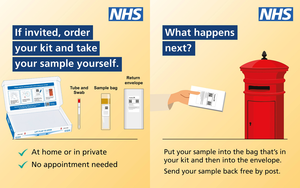
England’s NHS Rolls out Discreet Cervical Cancer Home-Testing Kits for Millions of Women
Nearly four million women who’ve missed screening invitations will be offered free HPV self-testing swabs to complete at home, part of NHS England’s push to increase screening and eliminate cervical cancer entirely by 2040.
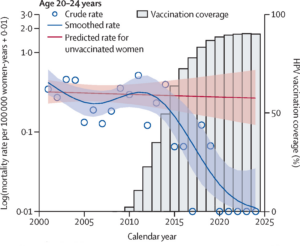
Fewer Young Women Are Dying of Cervical Cancer in England
A landmark study found no cervical cancer deaths among women aged 20 to 24 in England from 2020 to 2024, the first direct evidence that HPV vaccination saves lives, not just prevents infections. Researchers estimate it has already prevented roughly 200 deaths.

Student Champions in Mozambique Promote HPV Vaccination in the Fight to Prevent Cervical Cancer
In Mozambique, VillageReach’s INTEGRATE HPV initiative is reshaping cervical cancer prevention. When trained teachers and student peer champions led the conversation, fear gave way to enthusiasm. School-based HPV vaccinations surged nearly tenfold across intervention sites.