
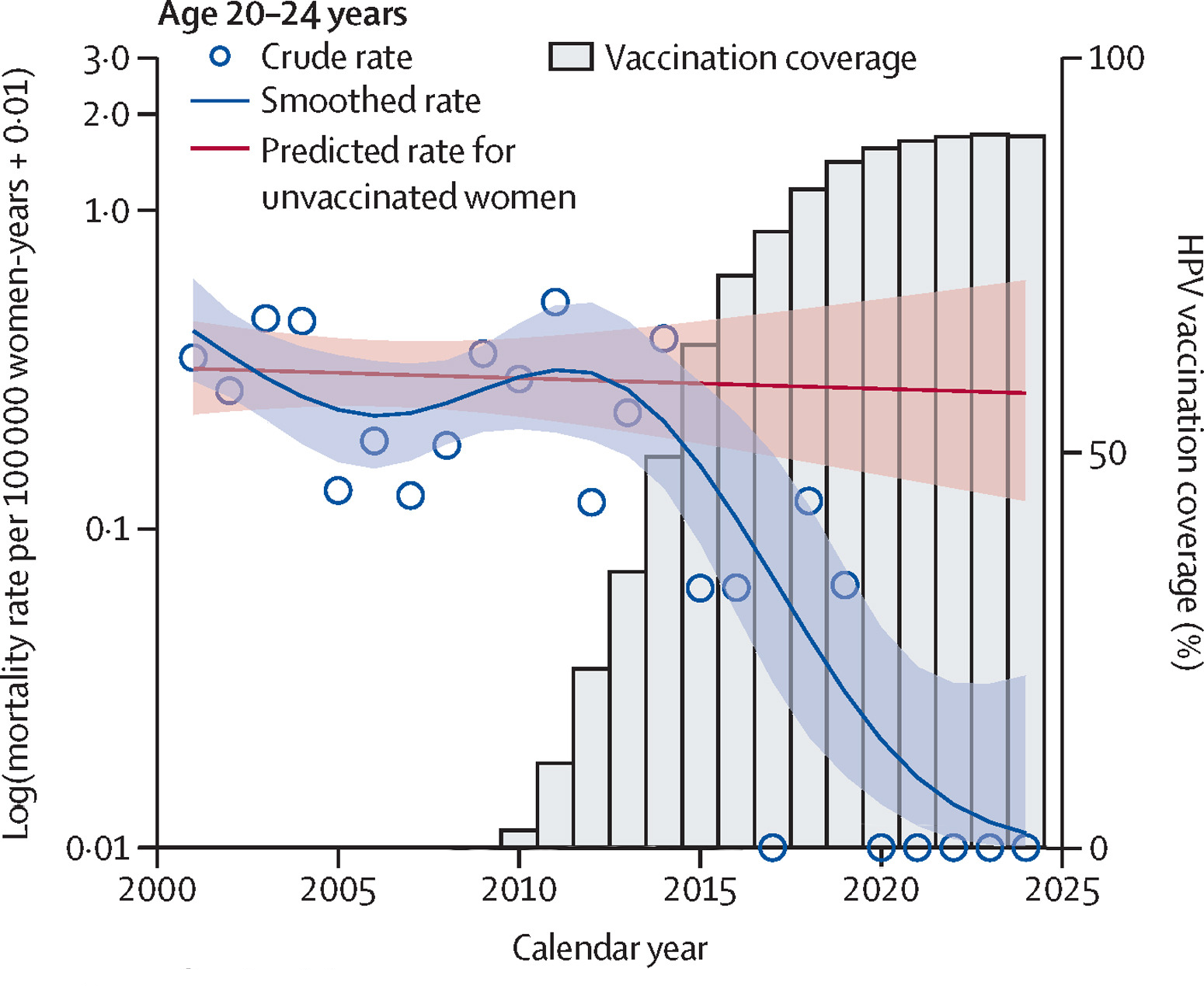
A landmark study found no cervical cancer deaths among women aged 20 to 24 in England from 2020 to 2024, the first direct evidence that HPV vaccination saves lives, not just prevents infections. Researchers estimate it has already prevented roughly 200 deaths.
For the first time since records began, no woman aged 20 to 24 in England died of cervical cancer between 2020 and 2024. Based on historical rates, around 23 deaths would have been expected in that group. The finding, published in The Lancet, is the first direct evidence that the HPV vaccine doesn’t just prevent infections and precancerous changes, but also saves lives.

The study came from Peter Sasieni and Milena Falcaro at Queen Mary University of London, who compared cervical cancer deaths in England from 2001 to 2024 against vaccination coverage. The women who had no deaths from cervical cancer were part of the cohort offered the vaccine at age 12 or 13, with uptake around 88 to 90 percent.
Sasieni called the results “stunning,” telling New Scientist that this is “a real triumph for vaccination, a real triumph for science and a real triumph for public health.” He and Falcaro estimate the vaccination program has already prevented roughly 200 deaths, and described that figure as just the start.

Cervical cancer deaths are rare among women in their early twenties, so the numbers involved here are small. That is precisely why a drop to zero is statistically meaningful, and why the greater benefit is still to come. As these young women enter their 30s, 40s, and 50s, when cervical cancer risk rises sharply, the protective effect should become far more pronounced.
As quoted in Fortune, Sasieni added that “as vaccinated generations grow older, we’ll see many more lives saved from cervical cancer.”
In an accompanying Lancet commentary, Allison Portnoy of Boston University and Emily Burger of Harvard called the results “outstanding news,” while also urging some caution about confirming a direct causal link and noting that a true zero rate may partly reflect how low the underlying risk has already fallen.
The less encouraging note: HPV vaccine uptake among UK teenagers has been declining since the pandemic. Sasieni and NHS vaccination director Caroline Temmink both stressed that keeping coverage high is essential to reaching the NHS’s goal of eliminating cervical cancer by 2040, a reminder that this success depends on sustaining, not just celebrating, high vaccination rates.
This summary is based on the following articles:
- Cervical cancer mortality trends following HPV vaccination in England, 2001–24: an analysis of population-based mortality data, by Prof Peter Sasieni, PhD and Milena Falcaro, PhD, in The Lancet
- HPV vaccination and early declines in cervical cancer deaths, by Allison Portnoy and Emily A Burger, in The Lancet
- Cervical cancer deaths have plummeted thanks to HPV vaccine, by Michael Le Page for New Scientist
- For the first time ever, no young women in England died of cervical cancer, by Catherina Gioino for Fortune
Related Articles
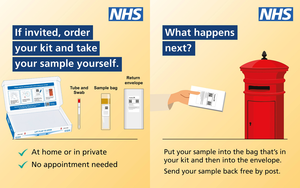
England’s NHS Rolls out Discreet Cervical Cancer Home-Testing Kits for Millions of Women
Nearly four million women who’ve missed screening invitations will be offered free HPV self-testing swabs to complete at home, part of NHS England’s push to increase screening and eliminate cervical cancer entirely by 2040.

Student Champions in Mozambique Promote HPV Vaccination in the Fight to Prevent Cervical Cancer
In Mozambique, VillageReach’s INTEGRATE HPV initiative is reshaping cervical cancer prevention. When trained teachers and student peer champions led the conversation, fear gave way to enthusiasm. School-based HPV vaccinations surged nearly tenfold across intervention sites.

In Rural Zimbabwe, ‘Vaccine Cyclists’ Brave Heat, Dust and Elephants to Get Girls Protected from Cancer
Amid shortages of doctors and nurses, village health workers are the keystone of care in rural Zimbabwe. To get further, faster, they’re now on bikes. From Gavi, the Vaccine Alliance