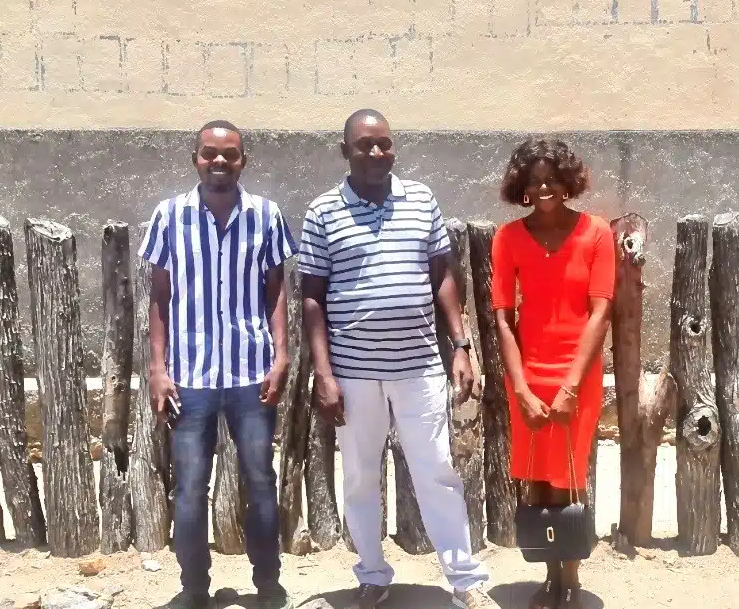
By Timoteo Chaluco and Arsenio Manhice
First published April 23, 2026 by VillageReach
Just a few kilometers from the district headquarters of Cahora Bassa, in Tete Province, a transformation is taking place in the local community. At Chirodzi Ponte Primary School, previously rare conversations are now part of everyday learning. Students are talking openly about HPV, cervical cancer and how vaccination can protect their future.
Mozambique faces one of the highest cervical cancer burdens in the world, with an age-standardized incidence rate of about 47.8 cases per 100,000 women, contrasted with the global rate of 14.1 cases per 100,000 women. Vaccination against the human papillomavirus (HPV) offers a powerful way to prevent the disease, but awareness and access remain challenges in many communities.
The shift taking place at the school is part of a broader effort led by VillageReach in partnership with district health and education authorities. Through the INTEGRATE HPV implementation research project, teachers in intervention sites receive training and tools to introduce HPV education in the classroom and health teams coordinate vaccination visits with schools. By preparing students ahead of vaccination days, the approach turns immunization from a one-time campaign into an ongoing conversation led by teachers and students themselves.
During our visit in February 2026, we met the school’s director, Artur Caetano Afonso Tamanja. After the usual introductions, Tamanja explained that students had little knowledge of HPV or the vaccination that prevents cancer. Some had vague ideas, often confusing it with pregnancy or “diseases,” but they didn’t understand what HPV is, how it spreads or why vaccination matters.

“Before VillageReach’s intervention, the topic wasn’t known or understood,” he said.
The situation began to change when the District Health and Education Services informed the school that two teachers would receive training on HPV topics. Once those teachers returned from the training, they brought new knowledge about HPV, its link to sexual and reproductive health and the prevention of cervical cancer.
The training also helped teachers understand how schools could prepare students ahead of vaccination visits. By learning about HPV in advance, girls arrive informed, confident and ready to participate when health teams come to the school to provide vaccination.
A Strategy That’s Driving Change
The school immediately treated HPV awareness as a priority. Too many Mozambican women lose their lives to cervical cancer, which HPV vaccination can largely protect against, and Tamanja recognized the need to act; preventing HPV infections could avoid future preventable deaths.
The school organized an internal strategy. Trained teachers shared their knowledge with colleagues. Other teachers supported the logistical organization of HPV awareness sessions by allowing them to take place during regular class time. Additional educational sessions were conducted at strategic moments, including during assemblies, breaks, and other moments when students were gathered.
This collective effort sparked a wave of student champions. During lectures, many students stood out, actively engaging and demonstrating they understood their role in driving change.
“The champions emerged naturally during the sessions,” the director explained.
Once they understood the information, many girls began explaining it to classmates, answering questions, and correcting rumors. What began as classroom participation quickly evolved into peer leadership. Students were no longer just listening to lessons but were helping others understand why HPV vaccination matters.
Older girls often gave the clearest answers, even though they weren’t the immediate target group of 9-year-old girls. They were more open, quick to grasp the content, and able to explain it naturally to others.
Before VillageReach and district authorities’ intervention, when mobile health brigades arrived for vaccination, some girls would escape through windows out of fear, but “Now, almost all participate voluntarily,” Tamanja assured.
Today, the situation is different because students learn about HPV before vaccination teams arrive. Girls already understand what the vaccine is for and why it matters, and many encourage their friends to participate.
Girls’ Openness and the Power of Local Language
Adolescent girls felt more comfortable hearing HPV explained by their peers. Seeing another girl speak gave them courage: “If she can talk, I can too,” one girl said. Many asked for a chance to give talks and take part in peer education activities, shouting, “Me! Me! Me!” when volunteers are sought.
Speaking in the local language dialect with each other made understanding even easier and created an environment where students felt safe asking questions. When information comes from another student, the conversation feels more relatable and less intimidating.
The director noted that the impact of girls speaking was far greater than when male teachers spoke when it came to breaking community myths and fears, such as embarrassment about naming body parts, fear of ridicule or hesitation to discuss “adult topics.”
Teachers encouraged students: “Say the name [cervical cancer]—it’s not an insult, it’s learning.”
Champions reinforced that it wasn’t taboo, and that speaking openly helped others. This dismantled myths and boosted confidence.
Cross-sector Collaboration to Improve Knowledge and Access
Coordination between the health unit and the school has also improved. The school provides space, mobilizes students and supports logistics, while the health team explains HPV and then administers HPV vaccinations to adolescent girls who would like to be vaccinated. HPV vaccination was also integrated into the flow of other health services typically provided at the schools. Adolescents were able to access HPV vaccination alongside other health services, including de-worming, iron supplementation, menstrual hygiene counseling, and more.
Teachers also refer girls to the facility for HPV vaccination and encourage them to seek any other services they might like to receive, such as family planning, STI concerns, body-related questions or emotional issues.
VillageReach supports this collaboration by strengthening coordination between schools and health services. Teachers receive tools and training to discuss HPV confidently, health teams align vaccination schedules with school activities and students themselves help spread accurate information among their peers. Now when health teams arrive to provide vaccination opportunities, the girls understand the purpose of the visit and the vaccination, and participation is higher.
School Vaccinations Increase Ten-Fold Across Sites with Integrated Delivery
The data echo what students and school administrators told us about the intervention activities’ impact.
Across the intervention sites, the number of girls vaccinated during the baseline period more than doubled at endline, from 916 girls vaccinated to 1,970 girls during comparable 9-month periods, representing a 115.1% increase. While comparison sites also saw an increase from baseline to endline (+88.4%), the increase fell short of improvements in the intervention arm.
In Chirodzi Ponte health catchment area specifically, total vaccinations doubled—183 more girls were vaccinated at endline relative to the same baseline period.
The increase across the intervention arm was driven by school-based delivery, where vaccinations in intervention sites increased by 896.2% from baseline to endline (105 vaccinations to 1,046 vaccinations), compared to a 236.1% increase in comparison sites.
Reflecting on What Works and Looking Ahead
This multi-pronged integrated approach helped ensure that education, peer leadership and vaccination reinforce each other—transforming vaccination campaigns from one-time events into ongoing conversations that begin in the classroom, with trusted teachers and peers.
“This combination helps students understand why vaccination matters, join voluntarily and take the information home to involve the community,” the director emphasized, as he shared that he plans for these highly effective HPV interventions to continue.
Strengthened coordination between the health and education sectors has proven instrumental in improving vaccine quantification, aligning service delivery with school and community platforms, reducing missed opportunities for vaccination, and ultimately expanding coverage among eligible girls. By shifting from one-off campaigns to routinely offered sessions, we have multiple opportunities to reach girls who may have been sick on the one vaccination day, or who move to a new school before her current school’s vaccination day and after her new school’s vaccination day has already taken place.
Moving forward, continued multisectoral coordination between schools, health facilities and community linkages will be critical to successfully reaching girls in school. Intensified efforts are needed, however, to ensure that girls who are out of school are not left behind, and that all girls are able to access this life-saving vaccination. Strengthening community-based outreach and leveraging local leadership will be essential to closing these gaps and sustaining equitable HPV vaccine coverage over time.
What began as a classroom lesson is now part of a broader effort linking schools, students and health facilities in a collective effort to increase HPV vaccination and protect their community from cervical cancer.
INTEGRATE HPV is a VillageReach–led initiative to test approaches to strengthen integrated HPV vaccination delivery and uptake in Mozambique and Malawi. Launched in January 2025 in partnership with Mozambique’s Ministry of Health, the study tested integrated, community-driven approaches to increase HPV vaccination uptake in Cahora Bassa and Tsangano districts in Tete Province.
Using a quasi-experimental, mixed-methods design, we worked across twelve catchment areas—six intervention and six comparison sites—to co-design, implement and evaluate solutions that could integrate HPV vaccination with other adolescent health services, and ultimately increase uptake. Adolescents, caregivers, health workers, educators and community leaders identified barriers to vaccination and prioritized strategies that addressed both demand and supply challenges. The project included activities to strengthen integration at facility, outreach, and school settings, and schools emerged as a critical entry point. Interventions at schools focused on strengthening coordination between schools and health facilities, improving planning and vaccine quantification, and equipping teachers and health staff to jointly deliver school based vaccination sessions.
This work was supported by Gavi, the Vaccine Alliance and the Gates Foundation. The conclusions and opinions expressed in this work are those of the authors alone and shall not be attributed to Gavi or the Foundation.
Related Articles

Carlota’s Mission: Bringing Vaccines Closer to Every Child in Rural Mozambique
For four years, Carlota, a community health worker in Nawitela-Namuli, Mozambique, has built trust door to door. Through VillageReach’s Bate-Papo project, she helped bring the community its first mobile health brigade, closing the distance to routine childhood immunization.
A Doctor’s Mission to Save Sight — and Futures — in Mozambique
In Mozambique, Dr. Isaac Vasco da Gama, one of only three pediatric ophthalmologists in the country, leads crucial efforts to save children’s vision through surgeries, mobile clinics, and community training. His work transforms lives in a nation where eye care resources and awareness are scarce.
In Mozambique’s Zambezia province, mothers go the extra mile to get kids protected with malaria vaccines
Mozambique introduced the malaria vaccine in its worst-hit province on 5 August 2024.