
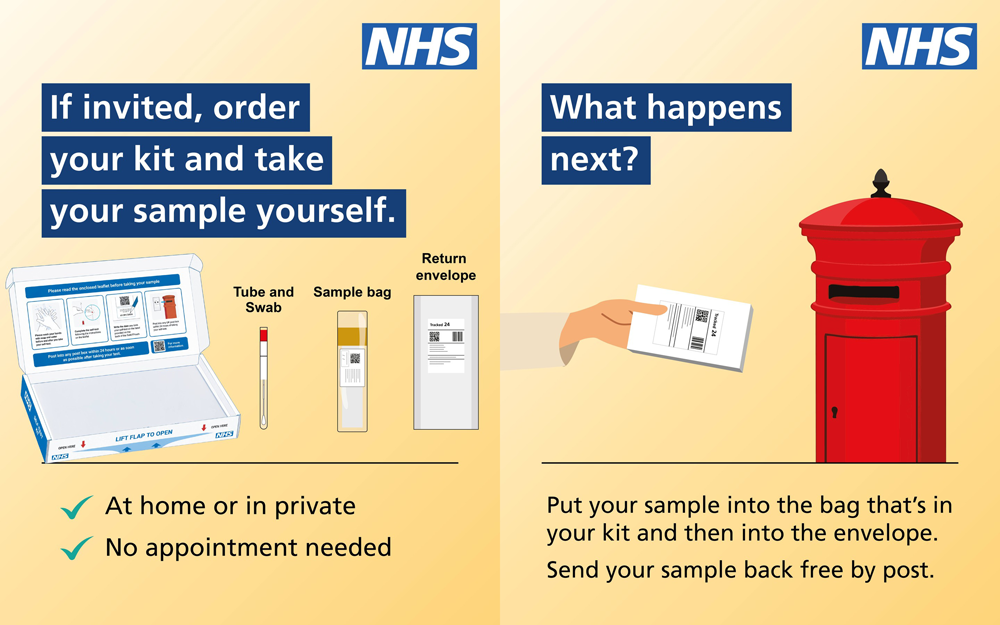
“Offering millions of women an alternative test they can do from the comfort of their own homes will be a gamechanger,” said Dr. Sue Mann, National Clinical Director for Women’s Health at NHS England, announcing a new free HPV self-testing kit for women who have missed cervical screening.
Nearly four million women in England who have missed cervical screening appointments are now being offered the kits. They contain a swab used to collect a vaginal sample, which is tested for high-risk human papillomavirus (HPV), the virus responsible for the vast majority of cervical cancer cases. Anyone who tests positive is invited to book a follow-up screening appointment with a clinician, where a nurse or doctor takes a sample to check for cell changes. The offer is for women aged 30 to 65 who have not attended screening despite previous invitations.

Dr. Mann pointed to the barriers that keep women away from appointments in the first place. “There are lots of reasons that may stop women from getting their cervical screening — embarrassment, lack of time, or worries about discomfort — and these kits provide a discreet and convenient option we hope will encourage more women to take up the life-saving test.”
The rollout builds on the YouScreen trial, run in 2021 by North London cancer alliances in collaboration with NHS England and King’s College London. The trial found that offering self-testing kits, either through GP practices or at home, could boost screening numbers in England by around 400,000 a year.
The scale of the problem is significant: the latest figures show just 68.8% of eligible women are up to date with their cervical screening, well short of NHS England’s 80% target, leaving roughly four million women behind on routine checks. Women aged 24 to 64 are invited for screening every five years, or more often if HPV is detected.

Health and Social Care Secretary Yvette Cooper framed the kits as part of a broader shift in how the NHS operates. “Cervical cancer is preventable… that’s why we want to make it as easy and convenient as possible for women to keep up with their screening.”.
“This is the future NHS we are building — there for all of us when we need it, and acting as early as possible to stop preventable deaths.”

Charities working in the space welcomed the move while stressing it complements, rather than replaces, clinician-led screening. Michelle Mitchell, Chief Executive of Cancer Research UK, said the kits would widen access without diluting the underlying goal.
“Cervical screening is a powerful tool that saves lives — it can prevent cervical cancer or spot it at an earlier stage when treatment is more likely to be successful,” she said. “While it’s best for cervical screening to be done by a nurse or doctor, there are barriers that make it challenging for some people to attend. At-home HPV self-testing kits will help more people take part in a way that works for them.”
“Beating cervical cancer means beating it for everyone,” she said, “and this move brings us closer to that goal.”
Athena Lamnisos, Chief Executive of The Eve Appeal, said the barriers to screening are often more practical than medical. “Challenges around the type of test it is, limited awareness around HPV and its role in cancer development, as well as practical barriers such as problems around booking and attending an appointment, stop many from going,” she said.
“Cervical screening is designed to prevent cervical cancer rather than respond to symptoms. Attending a clinic requires people to actively prioritise an appointment among the many competing demands of everyday life.”
She added, “Self-testing which can be done at home will be a step-change for many. We have the incredible opportunity to see the back of cervical cancer. How brilliant would that be? But to achieve this, we need to support everyone eligible to attend screening. This is not a replacement for clinician screening, and we will continue to work with and support those attending their traditional cervical screening, to help make their appointments more comfortable and accessible.”
The rollout is one part of the NHS’s stated aim to eliminate cervical cancer in England by 2040, alongside continued efforts to boost uptake of the HPV vaccine.
For Dawn Bryant, 62, from Hertfordshire, the case for screening is personal. Her grandmother died of cervical cancer, and Bryant’s own diagnosis came after a routine test at age 32 found severe high-grade cell changes.
“I am so lucky it was found at an early stage and could be easily treated,” she said. “It was a very scary time, but who knows what would have happened if I’d delayed having the test.”
She has continued regular monitoring since. “I know lots of women who have put off having screening, and sadly, some who have been diagnosed with advanced cervical cancer after putting it off for years. It is so important women go for these check-ups or do the home-testing kit if invited.”
This summary is based on the following source:
- NHS rolls out discreet home-testing kits against cervical cancer for millions of women, from NHS England
Related Articles
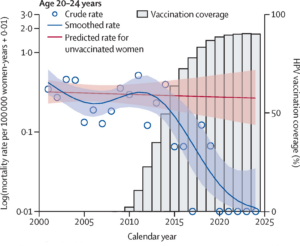
Fewer Young Women Are Dying of Cervical Cancer in England
A landmark study found no cervical cancer deaths among women aged 20 to 24 in England from 2020 to 2024, the first direct evidence that HPV vaccination saves lives, not just prevents infections. Researchers estimate it has already prevented roughly 200 deaths.

Student Champions in Mozambique Promote HPV Vaccination in the Fight to Prevent Cervical Cancer
In Mozambique, VillageReach’s INTEGRATE HPV initiative is reshaping cervical cancer prevention. When trained teachers and student peer champions led the conversation, fear gave way to enthusiasm. School-based HPV vaccinations surged nearly tenfold across intervention sites.

In Rural Zimbabwe, ‘Vaccine Cyclists’ Brave Heat, Dust and Elephants to Get Girls Protected from Cancer
Amid shortages of doctors and nurses, village health workers are the keystone of care in rural Zimbabwe. To get further, faster, they’re now on bikes. From Gavi, the Vaccine Alliance